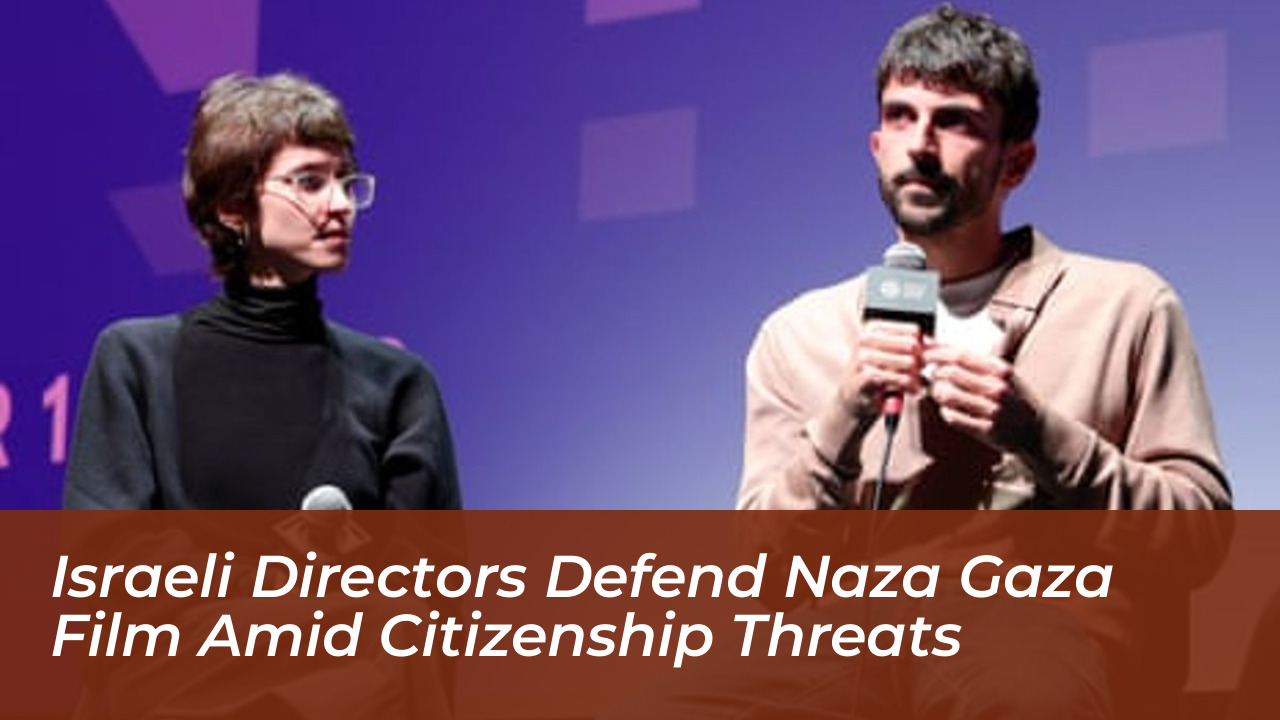
The investigative documentary NAZA examines the operational mechanics of automated targeting systems deployed during military operations in the Gaza Strip. Directed by Yuval Abraham and Rachel Szor, the eighty-minute film draws upon testimonies provided by twenty-four anonymous Israeli soldiers and intelligence officers. These whistleblowers detail how advanced algorithms generate expansive target lists and establish acceptable casualty thresholds for airstrikes. Produced collaboratively by The Guardian, +972 Magazine, and Local Call, the title originates from a Hebrew military acronym designating collateral damage calculations. The fierce political fallout following its premiere highlights a profound collision between wartime state censorship and investigative documentary filmmaking.
- Introduction to the NAZA Documentary Controversy
- The Spark That Ignited State Backlash
- Core Revelations of the Film
- The Mechanics of Military AI Exposed in NAZA
- Algorithmic Target Generation
- Internal Military Dissension
- Political Retaliation and Threats to Citizenship
- Legislative Proposals and Ministerial Accusations
- Legal Precedents and Constitutional Shifts
- Escalation of Public Harassment and Safety Concerns
- Targeting Families and Physical Intimidation
- Media Amplification and Hostile Rhetoric
- Global Reactions and Press Freedom Implications
- International Solidarity and Journalistic Backlash
- Comparative Analysis of Controversial Israeli Documentaries
- Frequently Asked Questions
- What is the documentary NAZA about?
- Who directed NAZA?
- Why are Israeli officials threatening the directors’ citizenship?
Introduction to the NAZA Documentary Controversy
The Spark That Ignited State Backlash
The documentary secured its world premiere at the Venice Film Festival, where it earned a twenty-five-minute standing ovation and won the special jury prize. Following this international recognition, the North American premiere took place at the Lincoln Center during the New York Film Festival. This high-profile rollout placed co-directors Yuval Abraham and Rachel Szor at the center of an unprecedented political storm.
The collaborative production model between The Guardian, +972 Magazine, and Local Call ensured global distribution and deep investigative credibility. State officials immediately recognized the reach of the project and mobilized a coordinated pushback across political and military channels.
Core Revelations of the Film
The investigation centers on the deployment of automated military algorithms operating inside the Gaza Strip. Twenty-four anonymous whistleblowers from intelligence and combat units describe how software interfaces map urban infrastructure and calculate casualty thresholds before strikes are authorized. Testimonies within the film assert that command structures approved actions where calculated civilian fatalities reached hundreds per targeted individual.
Military leadership rejected the documentary findings immediately upon release. Prime Minister Benjamin Netanyahu characterized the film as an intolerable slander against the Israel Defense Forces, accusing the creators of portraying military personnel as war criminals. Chief of General Staff Eyal Zamir dismissed the documentary as a collection of blood libels and deliberate distortions designed to undermine national security.

The Mechanics of Military AI Exposed in NAZA
Algorithmic Target Generation
Machine learning models scale urban destruction in modern conflict zones by processing vast amounts of surveillance data without direct human oversight. The Hebrew military acronym NAZA represents automated systems that calculate collateral damage thresholds to accelerate target approval rates. Software architecture processes expansive target lists faster than traditional human analysts, changing the fundamental nature of combat decision-making.
These algorithms ingest signals intelligence, aerial imagery, and communications metadata to predict human behavior and operational locations. The documentary demonstrates how this technology removes friction from target acquisition, allowing military commands to generate thousands of potential strike locations within brief operational windows.
Internal Military Dissension
The production of the film required whistleblowers to breach non-disclosure oaths, revealing operational intelligence details that expose structural cracks within intelligence units. Career officers and analysts chose to speak anonymously to document the internal moral crisis consuming parts of the military establishment. These disclosures prompted immediate state leak investigations and domestic security agency interventions to identify the sources.
The involvement of domestic security agencies highlights the severity with which military leadership views internal dissent regarding AI warfare. Intelligence units traditionally maintain strict information silos, making the extraction of these operational details a major security breach from the perspective of state authorities.
Political Retaliation and Threats to Citizenship
Legislative Proposals and Ministerial Accusations
The reception within Israel’s political establishment triggered rapid legislative proposals targeting the filmmakers. Culture Minister Miki Zohar publicly accused Yuval Abraham and Rachel Szor of treason against the state, writing directly to the Population and Immigration Authority to examine the revocation of their citizenship. Zohar argued that freedom of expression does not protect collaboration with external entities during wartime.
Prime Minister Netanyahu advanced two specific legislative measures through the justice and interior ministries to address similar future leaks. The first proposed bill doubles defamation claims against anyone defaming military personnel to one million shekels without requiring proof of actual damage. The second bill establishes explicit legal pathways to strip citizenship from individuals who criticize or defame the Israel Defense Forces or the state of Israel abroad.
Legal Precedents and Constitutional Shifts
Legal scholars note that while Israeli law allows citizenship revocation for breaches of loyalty or terrorism convictions, applying these provisions to Jewish citizens for political speech lacks historical precedent. The legal framework governing Israeli nationality traces its origins to the 1950 Law of Return and the 1952 Citizenship Law. Historically, provisions concerning disloyalty applied primarily to Palestinian citizens under military administration.
When past petitions demanded the revocation of citizenship for Yigal Amir, the assassin of Prime Minister Yitzhak Rabin, the Israeli Supreme Court ruled that the foundational right to nationality for Jewish citizens superseded punitive stripping. Netanyahu’s current legislative push represents a departure, extending national security penalties into the realm of documentary filmmaking and political critique.
Escalation of Public Harassment and Safety Concerns
Targeting Families and Physical Intimidation
Government rhetoric quickly translated into severe public hostility across the country. Far-right activists and campaign organizers gathered outside the family home of co-director Rachel Szor, chanting slogans that demanded capital punishment for traitors and the demolition of family residences. Police and border forces deployed to manage the aggressive crowds as physical safety threats mounted against both directors.
The translation of state-level condemnation into neighborhood-level intimidation created an untenable living situation for the filmmakers and their relatives. Law enforcement agencies found themselves balancing the protection of citizens with the reality of widespread public fury fueled by political figures.
Media Amplification and Hostile Rhetoric
Media commentators amplified the hostile environment through television and online platforms. Channel 14 journalist Yehuda Schlesinger publicly urged that the directors be pursued and prevented from returning to Israel. Online platforms circulated photographs of family members alongside crosshairs and swastikas to maximize intimidation.
A mural depicting the filmmakers with violent imagery appeared in Ashdod before local journalists painted over it. International organizations, including human rights groups and cinematic associations, condemned the intimidation campaign, comparing the institutional response to authoritarian governance models.
Global Reactions and Press Freedom Implications
International Solidarity and Journalistic Backlash
International press freedom organizations and documentary film networks rallied around Abraham and Szor. Laura Poitras, director of the Academy Award-winning whistleblower documentary Citizenfour, publicly characterized the threats from Israeli officials as a direct assault on global journalism. Major cinematic institutions argued that suppressing investigative reporting undermines democratic accountability during armed conflicts.
Foreign ministry sources acknowledged that state-level denunciations paradoxically amplified global interest in NAZA. Outlets across Europe and North America expanded coverage of the technological dimensions of modern warfare, focusing heavily on the algorithmic targeting data presented by the whistleblowers.
Comparative Analysis of Controversial Israeli Documentaries
The progression from the critical reception of No Other Land in 2024 to the legislative retaliation against NAZA highlights an escalation in state intolerance toward documentary evidence. While earlier projects focused on territorial friction in the West Bank, NAZA exposes automated military algorithms, striking directly at the operational integrity of current campaigns.
| Film Title | Directors | Primary Subject Matter | State Response |
|---|---|---|---|
| No Other Land | Yuval Abraham, Basel Adra, Rachel Szor, Hamdan Ballal | Palestinian displacement in the West Bank | Condemnation by officials, local harassment of families |
| Tantura | Alon Schwarz | 1948 military actions and historical displacement | Academic pushback, public debate, institutional defense |
| NAZA | Yuval Abraham, Rachel Szor | AI-driven targeting systems and casualty thresholds in Gaza | Proposed citizenship revocation laws, criminal leak investigations, direct political vilification |
Frequently Asked Questions
What is the documentary NAZA about?
The eighty-minute investigative film examines automated military targeting systems deployed in the Gaza Strip. It features testimonies from twenty-four anonymous soldiers and intelligence officers detailing how machine learning models generate expansive target lists and calculate civilian casualty thresholds before airstrikes.
Who directed NAZA?
The documentary is co-directed by Israeli filmmakers Yuval Abraham and Rachel Szor, who collaborated with journalistic outlets including The Guardian, +972 Magazine, and Local Call.
Why are Israeli officials threatening the directors’ citizenship?
Ministers and lawmakers argue that the filmmakers collaborated with external entities to defame the military during wartime. This backlash prompted proposed legislation that creates explicit legal pathways to strip citizenship from individuals who criticize state military operations abroad.