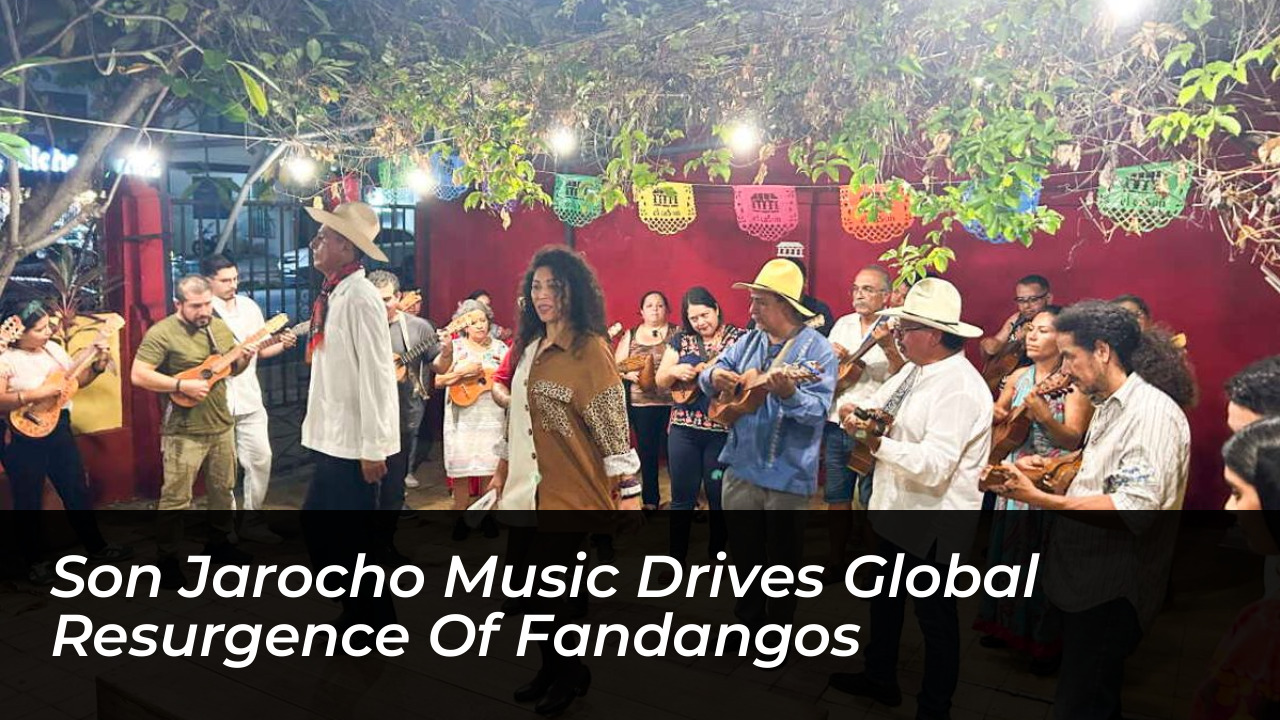
A centuries-old Afro-Indigenous musical tradition is experiencing a worldwide revival as community fandango gatherings expand from their traditional roots in Veracruz, Mexico, to major international metropolitan cities.
Son jarocho, a rhythmic folk genre blending European, Caribbean, and Indigenous influences, originated over 300 years ago following the establishment of the Veracruz port by conquistador Hernán Cortés in the early 1500s. The traditional art form centers on community fandangos, where participants gather to dance, sing, and play string instruments like the diminutive eight-string jarana and the traditional requinto.
Performance percussions rely heavily on el zapateo, a dynamic tap dancing style executed on raised wooden platforms known as tarímas. Dancers strike the wooden surface with their heels, acting as both performers and percussionists to keep the string players in rhythm. While the genre experienced a decline during the mid-20th century when it was considered low-brow music, local community organizations have led a remarkable resurgence over recent decades.
Today, cultural hubs like the caSon Cultural Center in Veracruz host regular monthly gatherings, and classes in jarocho music and dance fill up quickly. The style’s appeal has also crossed international borders. Enthusiasts can now hear son jarocho not only across Mexico, but also in global cities and countries such as:
- Madrid and Barcelona, Spain
- Buenos Aires, Argentina
- Tokyo, Japan
- Paris, France
- Los Angeles and New York, United States
- Canada, Finland, Germany, Switzerland, and Denmark
Whether celebrating baptisms, birthdays, or simply the joy of existence, participants use the word convivencia to describe the unique vibe of a fandango. While its literal translation is “coexist,” practitioners explain that a more apt meaning within the community is “alive together.” As modern society searches for authenticity and deeper connections, this historic Veracruz tradition continues to invite new generations into its vibrant, unending jam sessions.