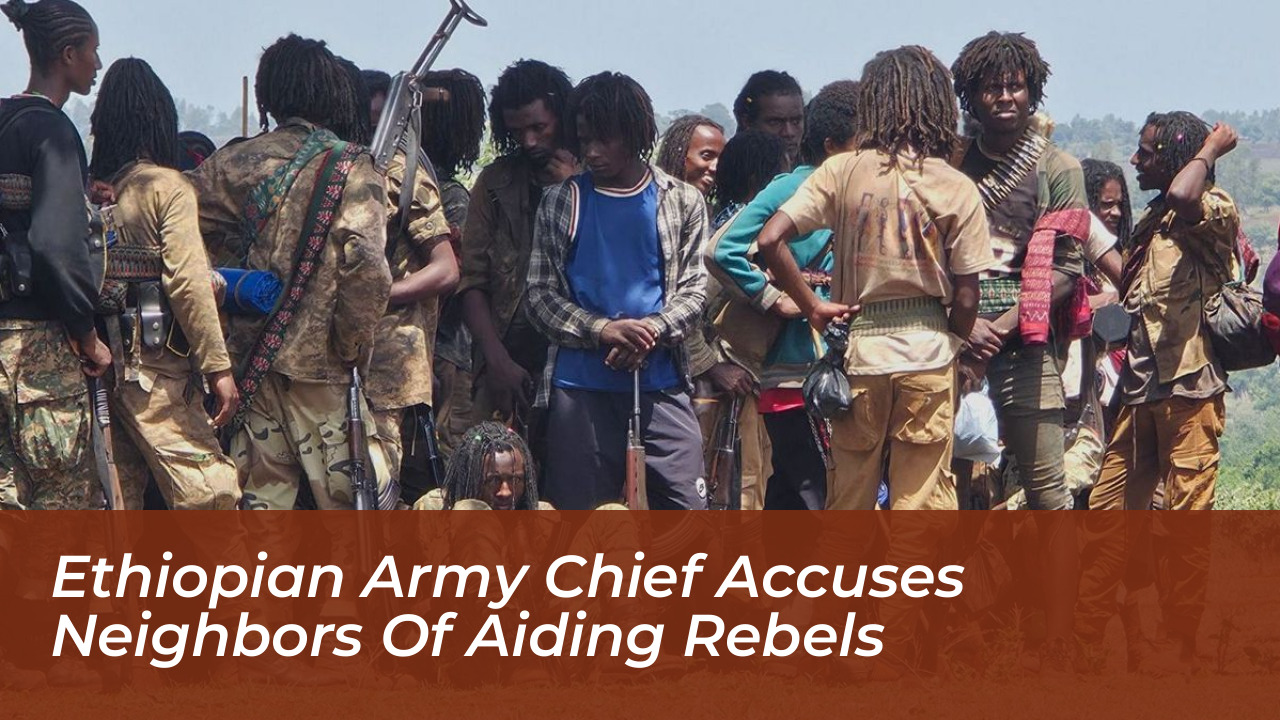
Ethiopian military chief Field Marshal Birhanu Jula accused neighboring Eritrea, Sudan, and Egypt of providing crucial assistance to rebel combatants. These rebels captured strategic northern territory as regional fighting intensified on September 28, 2026. Speaking on the army’s official media channels, Birhanu stated that Eritrea was mobilizing financial resources for the Tigray People’s Liberation Front (TPLF). He added that Eritrea and the TPLF required backing from Egypt and Sudan to sustain military operations.
The escalation follows the weekend capture of Erebti, a key strategic town in the northern Afar region, by TPLF fighters. The territorial expansion threatens vital transportation corridors connecting mainland Ethiopia to the port of Djibouti. Officials from the neighboring nations quickly issued public denials regarding any involvement in the unfolding conflict.
Renewed Fighting and Strategic Shifts in Northern Ethiopia
The heavy clashes mark a dangerous resurgence of hostilities between the TPLF and the federal government. This threatens a fragile peace deal signed in Pretoria, South Africa, in November 2022. That two-year civil war resulted in a massive humanitarian toll, with independent researchers estimating hundreds of thousands of deaths from violence, famine, and health service collapses.
According to local reports and humanitarian organizations, the latest offensive has triggered massive displacement. Valerie Browning, co-founder of the Afar Pastoralist Development Association, noted that approximately 150,000 people have been displaced by the fighting in the Afar region. Medical facilities are also feeling the strain. Doctors Without Borders (MSF) reported a sharp spike in wounded patients, with hospitals in Korem and Alamata registering a surge from roughly 180 to more than 420 patients within a 48-hour window.
Field Marshal Birhanu maintained that the opposition groups cannot act independently. “Neither Shaebia (Eritrea) nor the TPLF can achieve anything alone, even if they are allied, unless they are backed, supported and supplied by Sudan, Egypt and other external powers,” Birhanu stated.
Regional Reactions and Denial of External Interference
The accusations drew swift rejections from regional capitals. Eritrean Information Minister Yemane Meskel stated on social media that Ethiopia was attempting to shift blame for its internal instability. Meskel pointed to Ethiopia’s contentious pursuit of sovereign access to the Red Sea port of Assab and its foreign policy moves as sources of regional friction.
Meanwhile, a spokesperson for the Sudanese armed forces rejected Addis Ababa’s claims. They countered that the Ethiopian government was instead offering support to militias fighting the Sudanese military, referencing the Rapid Support Forces (RSF) locked in a civil war in Sudan since 2023. Egypt has refrained from official statements regarding the specific battlefield claims, though bilateral tensions remain high over the operation of the Grand Ethiopian Renaissance Dam (GERD) on the Blue Nile.
Formation of the New Opposition Alliance
The military escalation coincides with a political realignment among several armed and political organizations opposed to Prime Minister Abiy Ahmed’s administration. Seven groups recently announced the formation of the Ethiopian Peoples’ Forces Alliance for Survival, an umbrella coalition aimed at removing the federal government and establishing a transitional administration.
- Tigray People’s Liberation Front (TPLF): Ruling party in Tigray, pushing south into Afar and Amhara regions.
- Oromo Liberation Army (OLA): Active insurgency group operating in western and southern Oromia.
- Ogaden National Liberation Front (ONLF): Regional political and armed movement from eastern Ethiopia.
- Amhara Fano National Movement: Militias operating within the Amhara region.
International bodies have expressed profound concern over the deteriorating security situation. United Nations Secretary-General António Guterres urged all parties to exercise maximum restraint. He highlighted the troubling use of drone strikes and reports of civilian casualties as the Horn of Africa faces renewed instability.