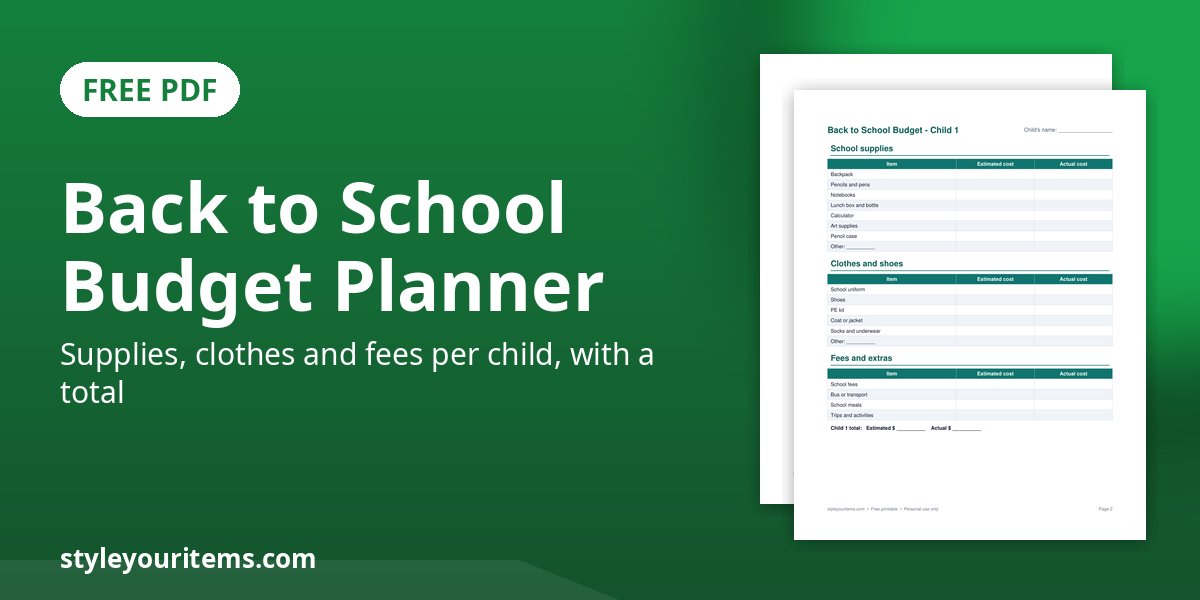
Back-to-school shopping has a way of growing. A backpack here, new shoes there, a school fee letter in the bag, and suddenly the total is far bigger than the number in your head. This free printable back-to-school budget planner keeps every cost in one place, child by child, so you can see the real total before you spend it.
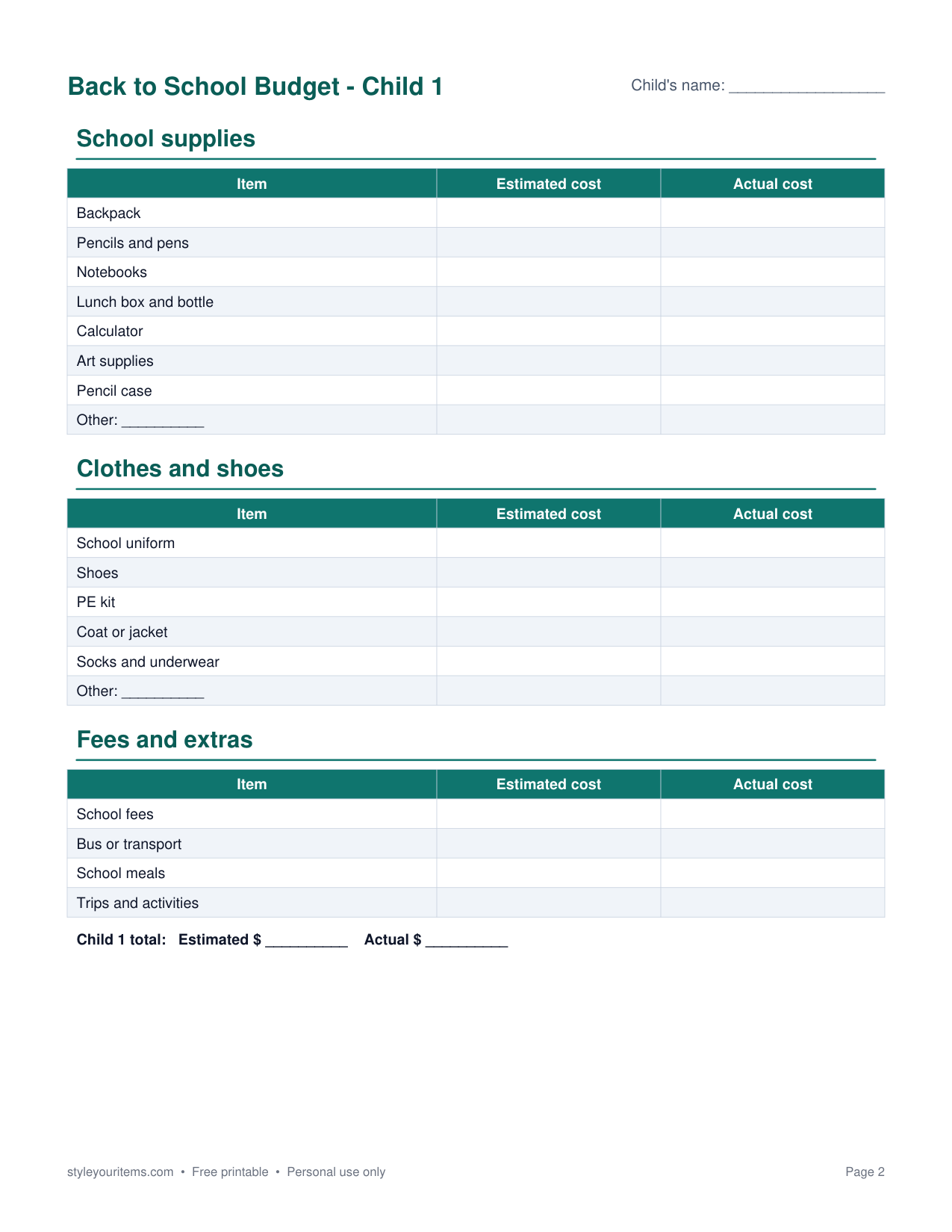
The planner works for one child or two. Each child gets their own page with three lists: school supplies, clothes and shoes, and fees and extras. Every list has an estimated cost column and an actual cost column, so you can plan first and record what you really paid. A grand total page at the end adds both children together, plus anything the whole family shares. If you already track the household money month by month, this planner sits neatly next to our free printable monthly budget planner, and you can browse the whole Money & Budget collection for more.
One page per child, three lists on each
Each child page is split into three lists. The table below shows what goes where, and how many lines each list gives you.
| List | What goes in it | Lines |
|---|---|---|
| School supplies | Backpack, pencils and pens, notebooks, lunch box and bottle, calculator, art supplies, pencil case | 8 |
| Clothes and shoes | School uniform, shoes, PE kit, coat or jacket, socks and underwear | 6 |
| Fees and extras | School fees, bus or transport, school meals, trips and activities | 4 |
Every list has the same two money columns, estimated and actual, and each child page ends with a total line for that child. The fourth page is the grand total page. Write each child total there, add shared items such as printer ink or a desk, and work out one grand total for the whole back-to-school shop. The free printable bill tracker is a good partner for the fees rows, since school fees and bus costs repeat every term.
A filled-in example: two children, one total
Here is how the planner looks when it is filled in. Ayesha is in Grade 5 and Omar is in Grade 2, and their parents set a limit of $250 per child before they started shopping.
| Child | Supplies | Clothes | Fees | Child total |
|---|---|---|---|---|
| Ayesha, Grade 5 | $86 | $120 | $45 | $251 |
| Omar, Grade 2 | $64 | $95 | $45 | $204 |
| Shared items | Printer ink and a desk lamp | $38 | ||
| Grand total | $493 | |||
Ayesha went one dollar over her limit because her backpack cost more than expected, while Omar came in $46 under his. Seeing both children side by side makes that kind of trade-off easy: the money saved on Omar covers the extra dollar on Ayesha, and the family still lands under the $500 they had in mind. That is the whole point of the estimated column. Guess first, then compare with the real receipts.
How to fill it in before you go shopping
- Check what still fits from last year. Lay out last year’s uniform, shoes, backpack and lunch box. Anything that still fits and still works stays off the list.
- Ask the school for the exact supplies list. Most schools send one home in June. Copy it onto the supplies list so you buy what the teacher asked for, not what the shop display suggests.
- Write the estimated cost for every line. Check one shop or website for prices. Add the lines up and compare the child total with your limit before you leave the house.
- Set one spending limit per child. Write it at the top of the page. If a child wants something over the limit, they choose what to drop in exchange.
- Take the sheet with you and write the actual cost as you buy. Fill the actual column at the till, not from memory later. The difference column tells you straight away whether you are over or under.
Five ways to keep the total down
- Buy the backpack first. It is usually the most expensive single item. Once it is bought, the rest of the list is small things, and the budget feels easier.
- Reuse the lunch box and bottle. A wash and a new name label cost nothing. Save the new ones for the year the old ones actually break.
- Shop the uniform in two rounds. Buy two sets now and the rest after the first month, when you know which pieces your child actually wears. The free printable monthly budget worksheet helps spread that second round across the next month.
- Pack lunches for the first two weeks. It shows you what your child really eats at school before you pay for a term of school meals. Our free printable weekly meal planner plans those lunches and the shopping list on one page.
- Keep every receipt in the folder. At the end of the shop, the actual column and the receipts should match. If they do not, you will spot the missing receipt while the shop is still fresh in your mind.
Questions parents ask
Does it work for one child?
Yes. Use the Child 1 page and the grand total page, and leave Child 2 blank. The grand total page still works: one child total plus any shared items.
What if I have three children?
Print the PDF twice and use the Child 1 page from the second copy for the third child. Add all three child totals on the grand total page, with shared items underneath.
Can I use it every year?
Yes, the planner is undated. The lists stay the same year after year, so print a fresh copy each August and start from the check-what-fits step again.