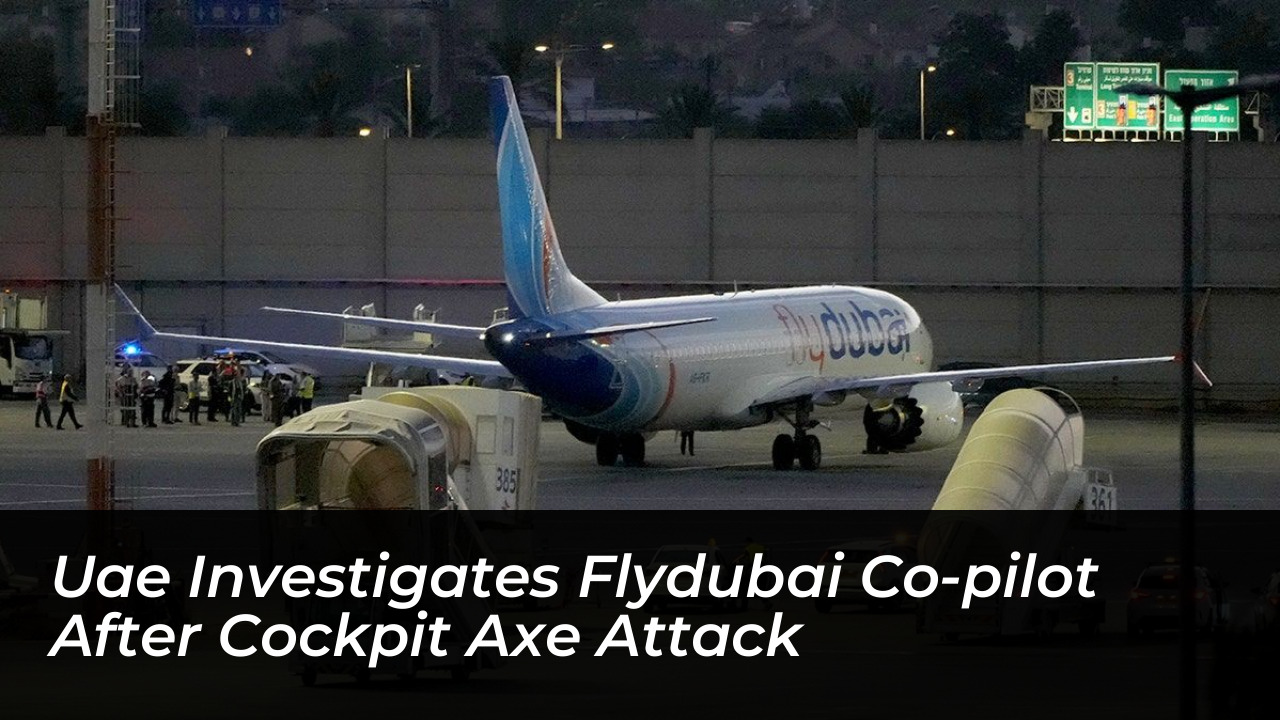
Emirates authorities are actively investigating an attempted attack on a Flydubai flight bound for Tel Aviv after co-pilot Hamam al-Hammami allegedly assaulted the captain with a cockpit crash axe. The incident aboard flight FZ1073 on Wednesday has triggered intense multi-nation security probes into airline vetting, radicalization, and cockpit safety protocols.
Flight FZ1073 departed from Dubai International Airport carrying 174 mostly Israeli passengers and crew. According to official statements from the United Arab Emirates Prosecutor General Counselor Dr. Hamad Saif Al Shamsi, the 29-year-old Omani national co-pilot launched a sudden assault inside the flight deck mid-air, utilizing a crash axe typically kept for emergency procedures.
The violent altercation caused the aircraft to experience a drastic altitude drop, plummeting approximately 16,625 feet in just over 30 seconds while flying over Saudi airspace. Despite sustaining severe injuries, Indian national Captain Smit Machchhar managed to unlock the cockpit door during the struggle. This critical action allowed passengers and off-duty crew members traveling onboard to rush into the flight deck, subdue the attacker, and stabilize the aircraft.
Emergency Diversion and Investigation Details
Following the intervention, a reserve Flydubai pilot onboard took control of the aircraft, executing a safe emergency landing at Tabuk Airport in northwestern Saudi Arabia. Saudi authorities promptly detained the suspect.
UAE Prosecutor General Hamad Saif Al Shamsi confirmed that the ongoing investigation involves comprehensive technical examinations, digital and physical evidence analysis, and cooperation with regional and international security agencies. The UAE Ministry of Foreign Affairs emphasized that the case falls under Emirati jurisdiction based on the aircraft’s registration and national flag, aligning with domestic laws governing crimes committed onboard UAE-registered aircraft outside territorial borders.
Background Checks and International Repercussions
Sources familiar with the matter revealed that the suspect, al-Hammami, had previously been barred from flying by Oman’s national airline over concerns regarding extremist views, leading to his reassignment to an administrative role before he was subsequently hired by Flydubai. Questions regarding how he cleared employment vetting are central to the ongoing cross-border inquiries.
Israeli Prime Minister Benjamin Netanyahu stated that authorities are examining whether the co-pilot acted under external direction, pointing to potential Islamist radicalization. Security agencies from multiple regional countries, alongside Western governments, continue to dissect the suspect’s motives, digital footprint, and background as the investigation progresses.