The United Kingdom new car market experienced a significant surge in September 2026, driven by the traditional number plate changeover and the meteoric rise of Chinese automotive brands. Data released by the Society of Motor Manufacturers and Traders (SMMT) revealed that overall registrations climbed 12.1 percent year-on-year to reach 350,518 units. This marked the highest September volume since 2017. At the center of this market shift was the Jaecoo 7, which captured the crown as the UK’s favorite new vehicle.
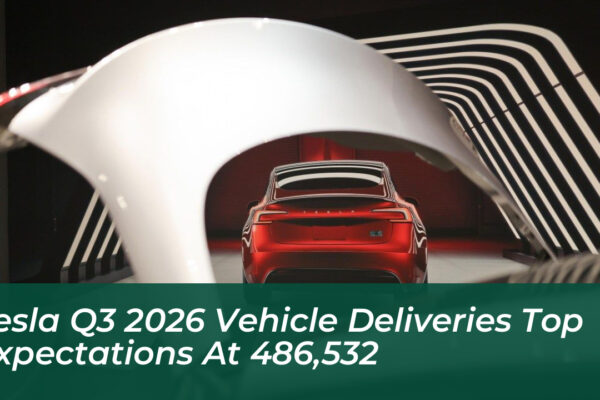
Manufactured in China by Chery Automobile, the Jaecoo 7 registered 10,813 units during the month. It comfortably outperformed the Tesla Model 3, which secured second place with 9,929 registrations, and the Ford Puma, which came in third with 6,958 units. Affectionately nicknamed the “Temu Range Rover” across social media due to its boxy styling and affordable starting price of roughly £30,000, the SUV has quickly transitioned from a newcomer to a dominant force since launching in the UK in January 2025.

Electrification and Changing Powertrain Demands
September’s performance underscored a broader consumer pivot toward electrified powertrains, though challenges regarding government mandates remain. Battery electric vehicle (BEV) registrations surged 36.3 percent to 99,199 units, capturing a 28.3 percent market share. Plug-in hybrid electric vehicles (PHEVs) saw even more dramatic growth, jumping 55.7 percent to 59,563 units. SMMT pointed to increased model availability-with BEV choices more than doubling since 2023 to 178 models-alongside government incentives like the Electric Car Grant, as vital growth catalysts.
Despite these gains, the industry continues to lag behind strict government targets. The 2026 Zero Emission Vehicle (ZEV) mandate requires full EVs to account for one-third of total manufacturer sales to avoid penalties. With year-to-date BEV registrations standing at 26.2 percent, the SMMT noted that an additional 265,000 electric vehicles must be registered in the final quarter to bridge the gap.
Traditional powertrain dynamics also shifted markedly during the plate-change month:
- Petrol Cars: Fell 6.7 percent to 131,861 units, accounting for a 37.6 percent market share.
- Diesel Cars: Defied expectations with an 11.5 percent increase to 14,057 registrations, retaining a 4 percent market share amid high fuel costs.
- Hybrid Electric Vehicles (HEVs): Dipped 4.2 percent to a 13.1 percent market share.
The Rapid Rise of Chinese Automakers in the UK
The success of the Jaecoo 7 highlights a broader structural transformation within the British automotive sector. Chinese manufacturers collectively secured a 23 percent share of the UK market in September. Brands like BYD also recorded phenomenal numbers, registering the second-highest manufacturer volume behind Volkswagen.
Victor Zhang, UK managing director of Jaecoo and Omoda, emphasized the long-term commitment of the brand. He stated that the companies are “here to stay” and looking to transition from fast-growing entrants to firmly established mainstays. Chery is actively localizing its operations, having recently established an R&D base at the UTAC Millbrook proving ground in Bedfordshire to tune driver assistance and chassis systems for British roads. Additionally, discussions are underway regarding a potential partnership with Nissan to assemble vehicles at the Sunderland factory.
Fleet Dominance and Economic Outlook
Corporate buyers continued to anchor market volumes in September 2026. Fleet registrations increased by 9.6 percent to account for 54.5 percent of total sales (190,988 units), while private retail purchases rose by 13.9 percent. Industry analysts attribute the sustained momentum to competitive manufacturer discounts and a growing appetite for diverse, value-driven alternatives as consumers navigate ongoing cost-of-living pressures.
While the record-breaking September offers optimism, stakeholders emphasize that regulatory frameworks must adapt to commercial realities. Aligning decarbonization targets with actual consumer demand remains crucial to ensuring long-term manufacturing investments, job security, and sustainable market competitiveness across the United Kingdom.