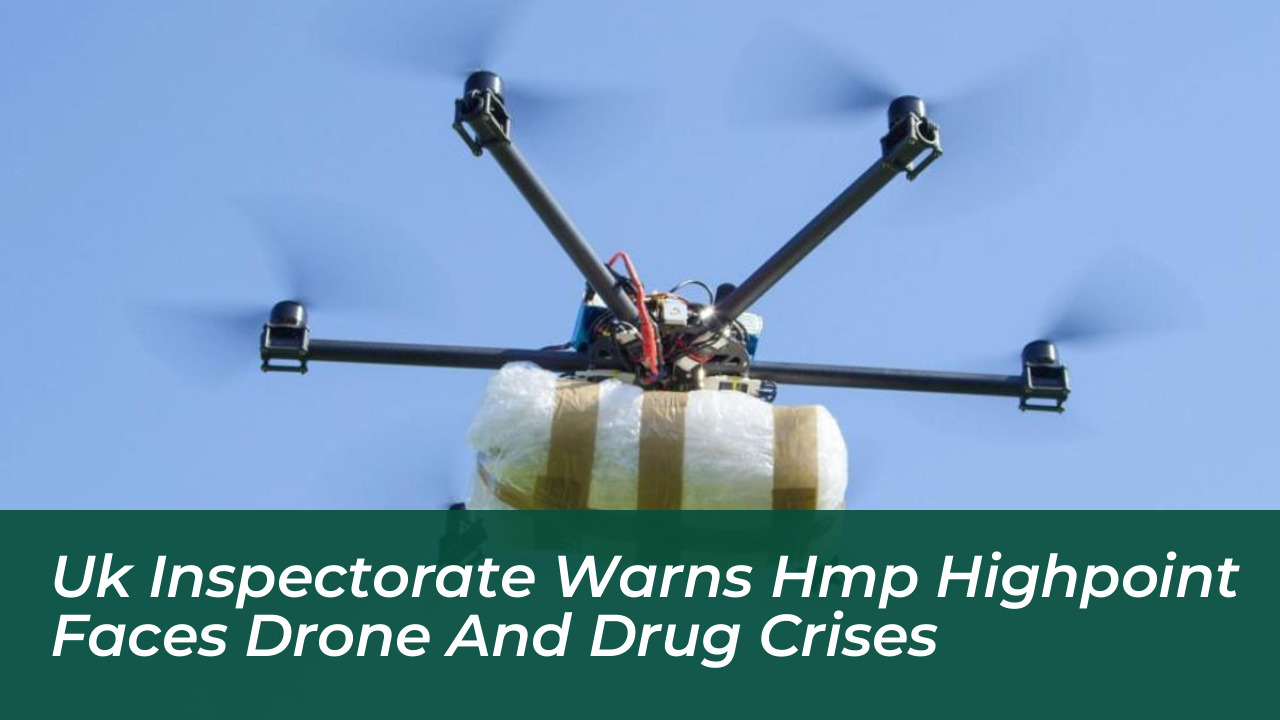



A comprehensive inspection report released by HM Inspectorate of Prisons reveals that HMP Highpoint in Suffolk faces severe operational challenges. These include widespread drug smuggling via unauthorized drones, a sharp rise in violence, and critical shortages in educational activities. Published on October 5, 2026, following a thorough evaluation in June, the findings shed light on the mounting pressures facing this category C men’s facility.
HMP Highpoint currently houses approximately 1,100 inmates. It is slated to become the largest public-sector prison in the United Kingdom once new residential accommodations open over the next two years. Despite praise for the facility’s overall cleanliness and the dedication of its leadership, inspectors uncovered deep-seated systemic vulnerabilities.
Thriving Drug Market and Drone Vulnerabilities
Among the most pressing concerns highlighted in the watchdog report is the facility’s acute vulnerability to contraband drops. Random drug testing conducted across the sprawling, open site revealed a staggering 28 percent positive rate among inmates.
Inspectors discovered that the prison service failed to protect the expansive grounds from aerial smuggling adequately. Inmates routinely exploited structural weaknesses by cutting holes in window grilles to fish for large, illicit packages dropped by drones hovering over the facility. The report noted that prison leadership lacked a cohesive, comprehensive strategy to reduce both the supply and demand for illegal substances within the prison walls.
Escalating Violence and Staffing Strain
The influx of illicit drugs has directly contributed to a volatile environment. According to the watchdog, serious assaults at HMP Highpoint surged by 43 percent following the previous inspection. This rise in tension follows a tragic incident in January involving the death of 28-year-old inmate Krishan Rawal after an assault.
Compounding security issues, the facility was rated “poor” for purposeful activity for the second consecutive inspection cycle. Persistent shortages of teachers and instructors frequently forced workshops and classrooms to close. Watchdogs warned that leaving a large population of prisoners with inadequate meaningful work or educational opportunities acts as a primary catalyst for widespread drug use and unrest.

Leadership Recognition Amid Operational Pressures
Despite these serious shortcomings, HM Chief Inspector of Prisons Charlie Taylor commended the establishment’s experienced governor for maintaining exceptionally clean cells and well-kept communal areas across the sprawling campus. Praise was also extended to the offender management unit, whose staff worked extended hours to complete critical sentence recalculations ahead of scheduled early releases.
The report also acknowledged the disruptive impact of an April block fire. The fire temporarily closed a residential unit and hindered inmate progression toward more open regimes. However, as HMP Highpoint prepares for significant capacity expansion, inspectors emphasized that the Ministry of Justice and prison leadership must urgently fortify physical defenses against drones and overhaul rehabilitative strategies.
Key Findings from the Inspectorate Report
- Drug Positive Rate: Random mandatory drug tests returned a 28 percent positive rate among the prison population.
- Surge in Violence: Serious assaults increased by 43 percent compared to previous metrics.
- Purposeful Activity: Rated as “poor” due to frequent classroom closures and instructor shortages.
- Infrastructure Threats: Inmates cut window grilles to retrieve drone-delivered contraband packages across the large, open site.
As the prison service works to address these findings, officials face mounting pressure to establish rigorous anti-drone measures and expand educational programming before the facility undergoes its massive population expansion.