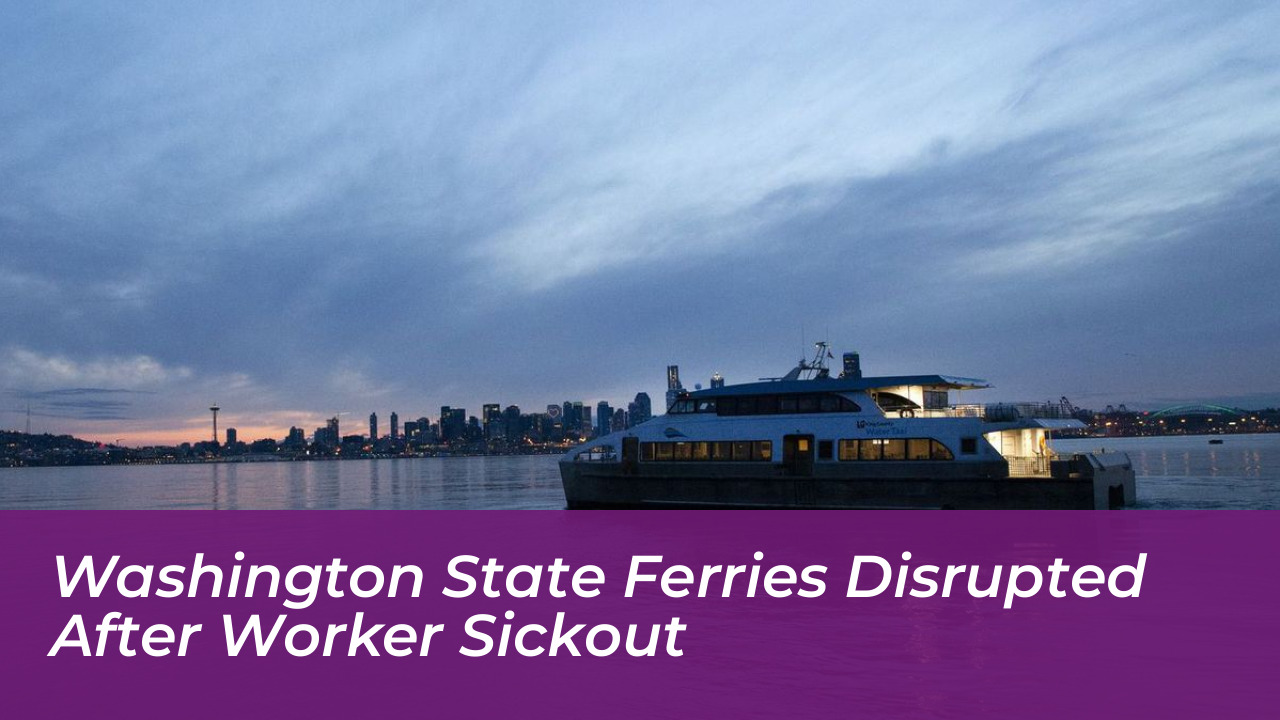



Massive staff shortages brought severe disruptions to Washington State Ferries on Monday, Oct. 5, 2026, forcing the agency to cancel multiple routes and reduce service across Puget Sound. This happened after 23 engine room employees called in sick. The unscheduled absences left 13 of the fleet’s 18 vessels out of service during Monday morning operations, triggering widespread travel chaos for daily commuters, students, and residents who rely on the nation’s largest ferry network.
According to a statement posted by the state ferry agency, off-duty qualified workers refused to cover the open shifts. This left officials unable to staff the ships safely. Under U.S. Coast Guard regulations, specific minimum staffing levels must be met before any vessel can legally leave the dock. Because replacements could not be secured, entire routes ground to a halt.
Impacted Routes and Commuter Chaos
The sudden cancellations heavily impacted critical transportation corridors throughout the region. Major routes, including Seattle-Bainbridge Island, Edmonds-Kingston, and the Fauntleroy-Vashon Island-Southworth triangle, were entirely suspended for large portions of the day. The Port Townsend-Coupeville run was sidelined in the morning before a single boat returned to service during the afternoon.
Other vital crossings experienced severe delays and restricted capacity. The Mukilteo-Clinton route was reduced to single-boat service, leaving drivers facing multi-hour wait times at terminals. In the San Juan Islands, multiple vessels were kept out of commission. This left only limited options for island-bound residents who depend on the ferries as an essential lifeline for groceries, medical appointments, and travel.
To help alleviate the crunch, Kitsap Transit stepped in by adding two additional fast ferry passenger-only sailings between Bremerton and Seattle. Meanwhile, Washington State Ferries temporarily blocked new vehicle reservations, altered reservation rules, and waived standard no-show fees for affected travelers.
Union Stance Versus State Response
All 23 employees who called in sick belong to the Marine Engineers’ Beneficial Association (MEBA), which represents engine room workers. Following an emergency meeting with state leadership and union representatives on Monday morning, Washington Gov. Bob Ferguson addressed the crisis. He made it clear that he expected normal operations to resume immediately.
“My expectation is that every vessel on every route is fully operational no later than the first vessel sailing tomorrow morning,” Gov. Ferguson said in a public statement. While acknowledging that he remains committed to improving underlying staffing levels across the transit system, Ferguson emphasized that causing widespread harm and inconvenience to the public is an unacceptable way to resolve labor disputes.

The union firmly denied orchestrating the mass absence. In an official statement, MEBA described the sickout as a “frantic cry for help from an abused and frustrated group of highly-skilled and committed workers.” The union pointed to deep-seated systemic issues. They argued that ongoing shortages force remaining engineers to endure grueling schedules. According to MEBA, engineers are frequently scheduled to work 84 hours per seven-day workweek, driving extreme fatigue and burnout that makes reliance on an overtime-dependent stopgap system unsustainable.
Underlying Tensions Over Pay and Burnout
While work stoppages and strikes by public transit workers are strictly prohibited under state law, the friction between staff and management has been brewing for years. A survey conducted by the union in June revealed that more than 60 percent of surveyed members were likely to leave the ferry system or retire due to high stress and low morale.
State ferry management countered by highlighting robust compensation figures. They noted that chief engineers receive a base salary of $157,000, which can scale past $350,000 annually when factoring in overtime, paid time off, and retirement benefits. Despite these figures, workers have continuously pressed for better work-life balance and adjustments to address recruitment and retention hurdles within the engine rooms.
As transit officials monitor the dynamic situation heading into Tuesday, passengers are strongly advised to check real-time route alerts and plan for potential residual delays across the Puget Sound network.