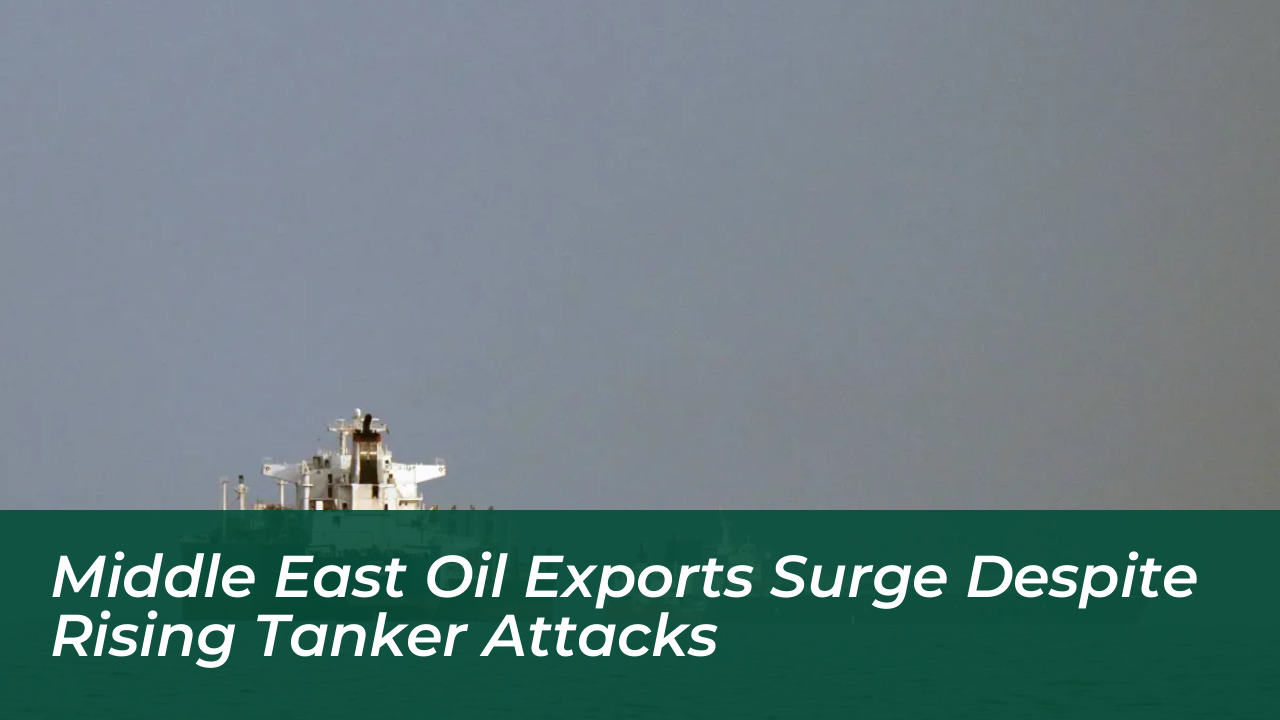



Crude oil exports from the Middle East surpassed pre-conflict levels during the final week of September 2026. This increase occurred even as commercial shipping faced heightened kinetic threats near the Strait of Hormuz, according to shipping intelligence firm Marisks and tracking data.
Data from Kpler showed that the seven-day moving average for crude exports reached 18.3 million barrels per day on September 30. Regional shipments surpassed pre-war averages on 14 separate days throughout September. This growth was supported by increased loadings from Saudi Arabia following a September 10 attack on its East-West pipeline.
Data provider Vortexa also confirmed a steady recovery in regional flows. They noted that the 14-day moving average for Middle East crude and condensate exports hit 18.6 million barrels per day, comfortably topping the 10-year seasonal average. Liquefied natural gas (LNG) cargoes leaving the Strait of Hormuz similarly climbed in September to their highest monthly level since February.
Drivers Behind the Regional Export Surge
The upward trajectory in export volume has been driven largely by key regional producers looking to recapture global market share. According to senior market analyst Xavier Tang, Saudi Arabia aggressively ramped up shipments through alternative networks following disruptions earlier in the month.
, the export surge was reinforced by cooperative regional transit arrangements. Iraq secured operational permissions to safely transit the Strait of Hormuz with its oil tankers, helping sustain vital regional output flows despite severe geopolitical friction.
Escalating Kinetic Threats in Regional Waters
These impressive export milestones coincide with a wave of attacks on commercial vessels in and around the Strait of Hormuz and the Gulf of Aden. Shipping intelligence service Marisks warned of a “heightened and increasingly unpredictable kinetic threat” driven by a recent surge in vessel traffic.
At least seven distinct maritime security incidents were reported during the final week of September alone. Notable strikes included attacks on the very large crude carrier (VLCC) Kazimah III-which suffered an onboard fire before its crew was safely evacuated-and the Aframax tanker Lipsi.
The UK Maritime Trade Operations (UKMTO) agency reported at least one active attack daily in the Strait of Hormuz or the Gulf of Aden since October 1. Analysts at Marisks suggest that regional forces may occasionally launch missiles into predetermined engagement zones rather than focusing exclusively on individual commercial targets, creating widespread navigational hazards.
Pre-Conflict Baseline Versus Current Flows
Before the U.S.-Israeli conflict with Iran began on February 28, the Strait of Hormuz reliably handled approximately 125 large commercial vessels daily. This accounted for roughly 20% of the world’s total crude oil and liquefied natural gas supplies.

While the ongoing security crisis has transformed the operational landscape, energy flows have demonstrated remarkable resilience. Global energy markets continue to closely monitor transit data as producers navigate both soaring export demands and unprecedented security constraints.
Frequently Asked Questions
What were the Middle East oil export volumes in late September 2026?
Kpler shipping data indicated that the seven-day moving average for crude exports reached 18.3 million barrels per day on September 30, 2026, surpassing pre-war averages on 14 separate days during the month.
Which country drove the primary increase in regional oil loadings?
Saudi Arabia drove much of the initial surge by ramping up shipments to regain market share following a September 10 attack on its East-West pipeline.
What security threats are commercial tankers facing in the region?
Vessels transiting the Strait of Hormuz and Gulf of Aden face daily kinetic threats, projectile strikes, and missile fire. Notable incidents included attacks on the VLCC Kazimah III and the Aframax tanker Lipsi.
How has the Strait of Hormuz traffic changed compared to pre-war baselines?
Before the conflict began on February 28, the Strait handled about 125 large commercial vessels per day. Despite recent tanker attacks and regional blockades, total crude and LNG flows have rebounded past pre-war seasonal averages.
What impact have these developments had on LNG shipments?
Liquefied natural gas cargoes exiting the Strait of Hormuz actually rose during September to reach their highest monthly volume since February.