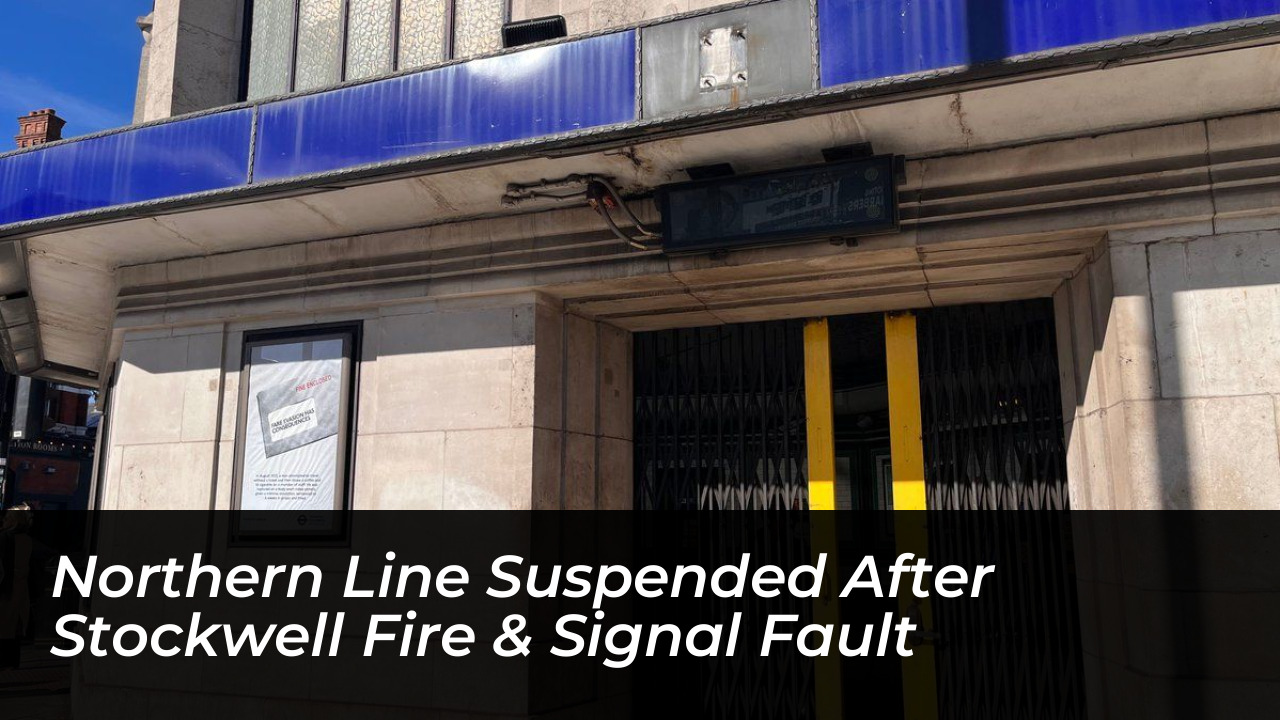


Transport for London (TfL) and emergency services responded to severe disruptions on the Northern line. A platform fire broke out at Stockwell Underground station, and it was compounded by a series of complex signaling faults.
The emergency incident began at 10:39 a.m. on Thursday, October 8, after smoke was reported on the platform at Stockwell. The situation prompted an immediate station evacuation and a swift deployment by the London Fire Brigade. Three fire engines and an ambulance arrived at the scene. Fire crews from Lambeth, Clapham, and Brixton conducted a systematic search to locate the source of the smoke.
Trackside Fire Followed by Critical Signal Failures
Emergency responders managed the initial fire alert, and the station briefly reopened with severe residual delays. However, the situation deteriorated further in the afternoon. TfL confirmed that a subsequent signal failure at Stockwell forced a partial suspension of the Northern line between Camden Town and Morden via Bank.
Commuters across southwest London experienced significant travel chaos as engineers scrambled to fix the loss of signaling control. The cascading disruptions added heavy pressure to alternative transport networks. Severe delays also impacted the Piccadilly line due to a signal failure at Arnos Grove, while the Bakerloo line experienced major disruptions from train cancellations.
Persistent Signaling Troubles and Manual Operations
The acute issues on Thursday formed part of a wider, multi-day crisis for the Northern line. Transport authorities previously admitted that signaling equipment failures near Stockwell station had severely degraded network capacity. During previous days of disruption, service controllers had to manually talk train drivers through the affected track sections using two-way radios because automated safety systems lost contact with static control infrastructure.
Richard Jones, TfL’s director of asset performance delivery, explained that the line’s ATL signaling system-active since 2012-encountered unprecedented interference. While fail-safe mechanisms successfully prevented any safety risks, they frequently triggered emergency brakes and created severe bottlenecks across the network.
Nick Dent, TfL’s director of customer operations, apologized to affected passengers and advised commuters to check live travel tools before starting their journeys. Transport officials confirmed that testing and repair work continued around the clock to restore a normal timetable. Meanwhile, London Travelwatch reminded passengers delayed by more than 15 minutes that they are eligible to claim a refund.