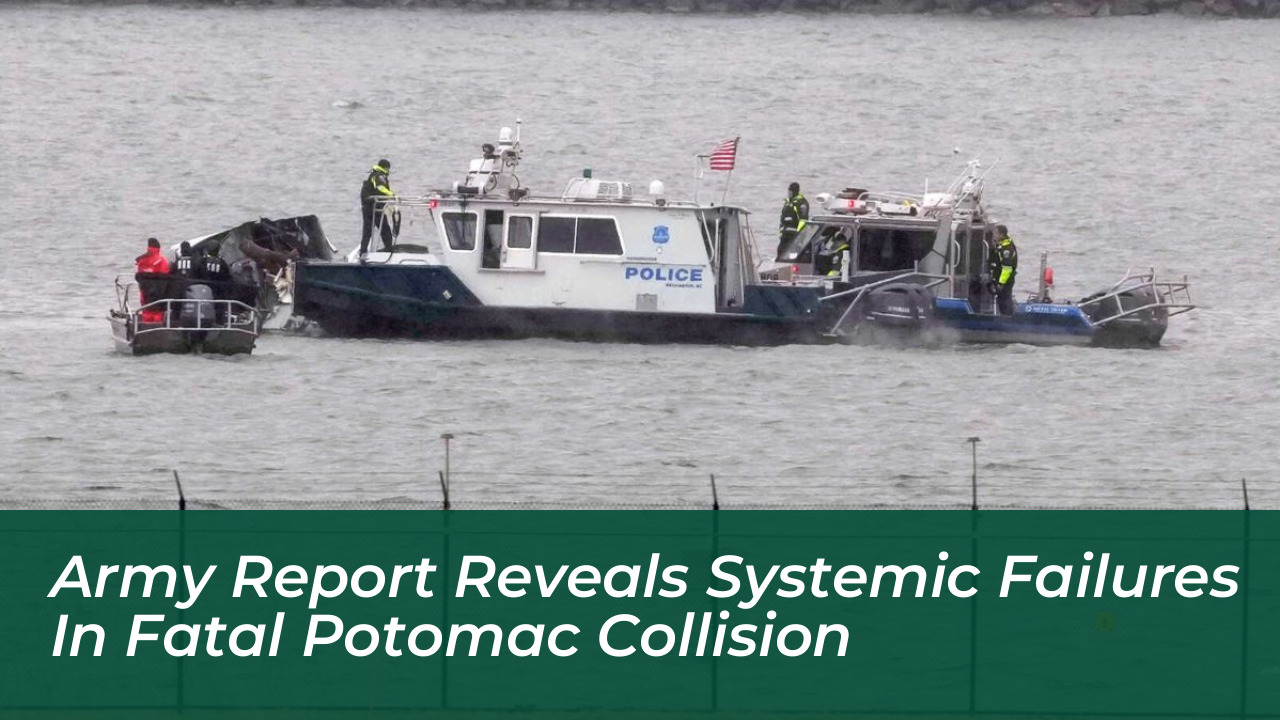


The U.S. Army has identified systemic failures that caused a catastrophic midair collision between an American Airlines jet and a Black Hawk helicopter over the Potomac River last year. The tragedy, which resulted in 67 fatalities, has prompted the military to recommend significant safety modifications to prevent future occurrences.
Report Findings and Contributing Factors
Although the Army completed its investigative report in May, the findings were released late last week following pressure from the victims’ families. The report, obtained by the Associated Press, corroborates many findings previously established by the National Transportation Safety Board (NTSB).
The lieutenant general who authored the report stated that “breakdowns across all layers of conflict management” caused the accident. Key factors include:
- Radio Communication Failures: Two broken radio transmissions prevented the helicopter crew from identifying American Airlines Flight 5342 as it maneuvered to land at Reagan National Airport.
- Visual Limitations: Military pilots using night-vision goggles had a restricted field of vision, making it difficult to detect the aircraft against city lights.
- Air Traffic Control Oversight: The report notes that the Reagan National Airport tower controller could have prevented the collision by providing more specific traffic information.
- Insufficient Separation: The established helicopter route provided only 75 feet of vertical separation, failing to account for the standard margin of error in Black Hawk altimeters.
Calls for Legislative Action
The Families of Flight 5342, a group representing those lost in the crash, have called on Congress to expedite aviation safety legislation. They are advocating for mandates requiring all aircraft to be equipped with advanced collision-avoidance technology.
“It’s a simple concept: aircraft should be able to see each other in the sky. The technology is proven. All that’s required is the political will to do the right thing,” the group stated.
While the House and Senate have passed individual aviation safety bills, lawmakers are currently working to reconcile them into a single piece of legislation. Families and advocates argue that the completed investigations justify immediate action.
Ongoing Safety Reviews
In response to the tragedy, the Army has initiated a review of helicopter flight practices in major metropolitan areas, including Los Angeles and Seattle-Tacoma, to ensure similar risks do not exist elsewhere.
The NTSB is satisfied with the progress of seven out of eight safety recommendations issued to the Army. However, the board continues to fault the Federal Aviation Administration (FAA) for lagging in the implementation of critical reforms, specifically regarding the reliance on pilots for visual separation in busy, controlled airspace.