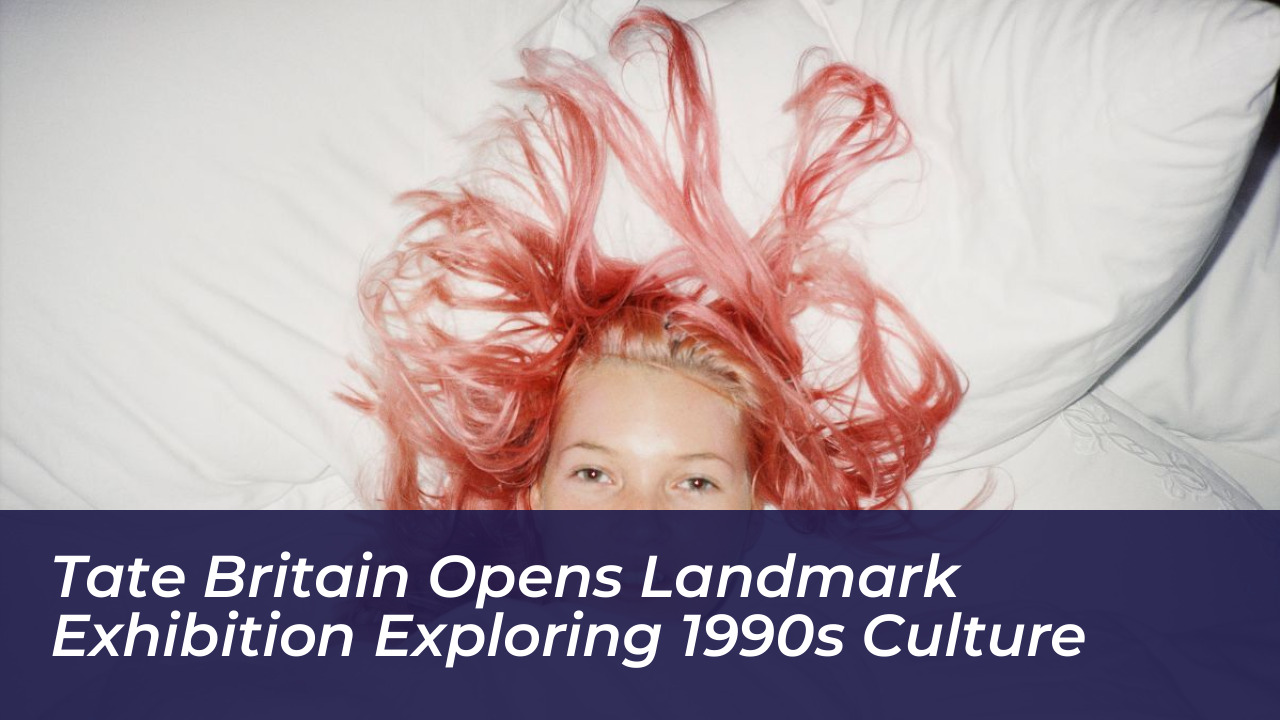


London’s Tate Britain has officially opened its doors to a transformative journey through the United Kingdom’s creative scene with its landmark exhibition, The 90s: Art and Fashion. Running from October 8, 2026, through February 14, 2027, the exhibition examines how photography, fashion, music, and nightlife collectively challenged cultural conventions during a defining decade.
Curated by prominent fashion industry leader Edward Enninful OBE alongside Tate’s contemporary art curators, the show brings together more than 100 images, paintings, sculptures, and garments from nearly 70 creators. The collection highlights a period marked by optimism, raw energy, and a defiant, DIY spirit that emerged following the gritty economic uncertainty of the late 1980s.
From Anti-Fashion Grunge to Subcultural Nightlife
The exhibition opens across seven distinct spaces, beginning with the gritty, raw aesthetic of early 1990s “anti-fashion” grunge. Visitors encounter iconic photography by Corinne Day, Nigel Shafran, and Juergen Teller captured for visionary independent style bibles like i-D and Dazed and Confused. These images are displayed alongside works from artists such as Tracey Emin, Sarah Lucas, and Sam Taylor-Johnson, who captured the nation’s attention with their frank approaches to class, identity, and personal agency.
A major focus of the exhibition is the decade’s youth-fueled subcultures, documenting the birth of house music, illegal raves, and free parties through the lenses of photographers like Dave Swindells, Seana Gavin, and Vinca Peterson. Sound systems, jungle, hip-hop, and drum and bass scenes are traced through the work of Normski, Eddie Otchere, and Ewen Spencer, capturing an era defined by payphones, flyers, and underground club nights.
High Concept, Body Horror, and Avant-Garde Design
Beyond the dance floor, the exhibition explores the era’s stark conceptual shifts. Works by Hamad Butt, Helen Chadwick, and Jake and Dinos Chapman reflect a gothic interest in decay and body horror prompted by the ongoing HIV/AIDS crisis. In contrast, Damien Hirst pushed conceptual boundaries with pristine, formaldehyde-filled sculptures that served as a clean counterweight to lo-fi aesthetics.
The exhibition heavily celebrates visionary fashion designers who blurred the lines between art and high fashion. Alexander McQueen is prominently featured through his provocative, dramatic runway presentations, alongside Hussein Chalayan’s design-led garments inspired by everyday household objects, and historic silhouettes reimagined by Vivienne Westwood and John Galliano.
Challenging the ‘Cool Britannia’ Narrative
While the late 1990s became synonymous with the cultural rise of “Cool Britannia,” the exhibition thoughtfully highlights creators who drew attention to marginalized voices. Visitors can experience Steve McQueen’s seminal early film Bear (1993) and Chris Ofili’s Turner Prize-winning painting No Woman, No Cry (1998), a poignant tribute to Doreen and Stephen Lawrence.
Tailoring by Ozwald Boateng and Joe Casely-Hayford, alongside street-style collaborations by Jason Evans and Simon Foxton, further spotlight the foundational contributions of Black British designers to the decade’s cultural fabric.
Visitor Information and Tickets
The 90s: Art and Fashion is open daily from 10:00 to 18:00 at Tate Britain on Millbank, London. Standard tickets are priced at £22, while entry is completely free for Tate Members. Visitors aged 16 to 25 can access the exhibition for £5 by joining Tate Collective. A smartphone audio guide featuring insights from Edward Enninful, curators, and exhibiting artists is available for an additional £5.