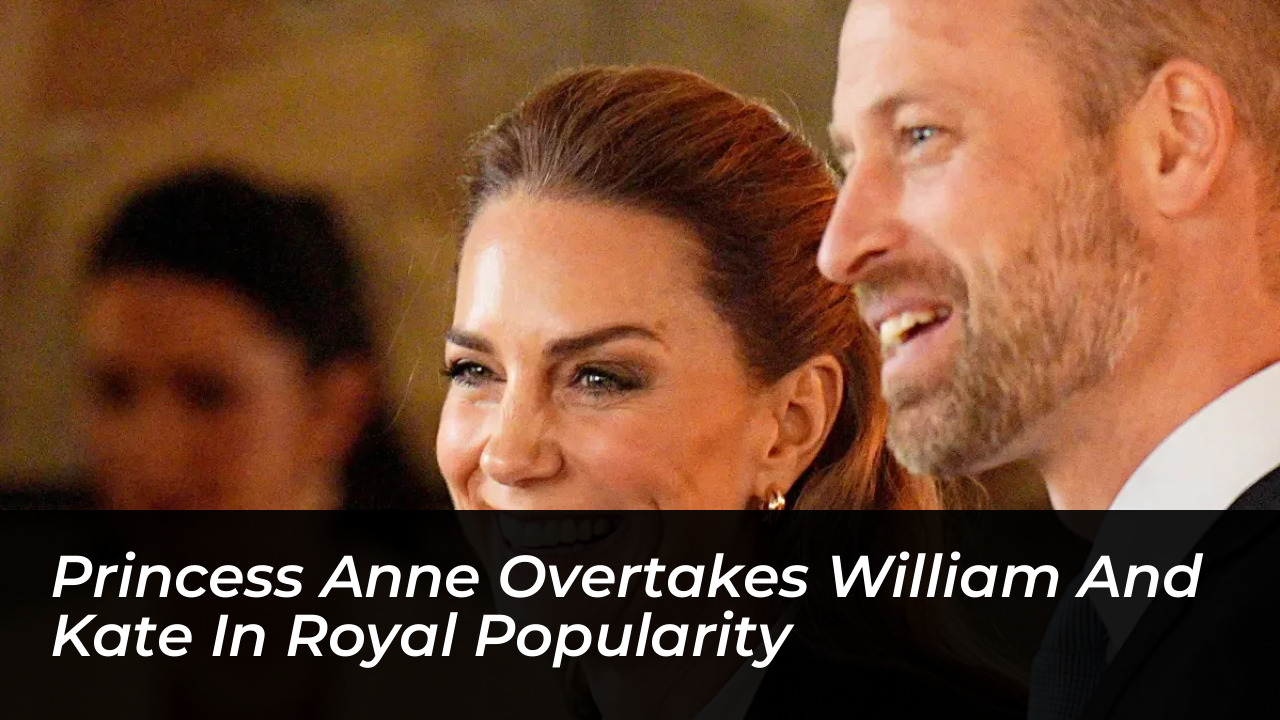

Princess Anne has officially overtaken Prince William and Princess Kate to become Britain’s most popular member of the royal family. This change is based on data released by YouGov Ratings for the third quarter of 2026. While the Prince and Princess of Wales have traditionally dominated public approval polls, a recent surge in public support for William’s aunt has shifted the standings within the monarchy.
The latest figures highlight a notable change in public attitudes toward senior working royals. Although members of the royal family do not face public elections, public approval remains a vital measure for the long-term stability and legacy of the institution. This is especially important as King Charles III continues to pursue a slimmed-down working royal family.
Breakdown of YouGov Ratings Data for 2026
The YouGov Ratings tracker aggregates continuous public opinion data and presents results on a quarterly basis. According to this data, Princess Anne saw steady growth in her favorability scores throughout the year. During the first quarter of 2026, Anne recorded a positive rating of 62 percent and a negative rating of 7 percent, resulting in a net favorability score of plus 55.
By the third quarter, covering July through September, Anne’s positive rating climbed to 67 percent. Her negative rating remained steady at 7 percent. This brought her net approval rating to plus 60, placing her four points ahead of Princess Kate and ten points ahead of Prince William.
Shifting Numbers for the Prince and Princess of Wales
Prince William and Princess Kate experienced noticeable declines in their favorability metrics over the same period, though both remain safely within highly positive territory:
- Princess Kate: Began the year with a 75 percent positive and 10 percent negative rating (+65 net). By the third quarter, her positive rating adjusted to 64 percent and negative to 8 percent (+56 net).
- Prince William: Started 2026 with a 74 percent positive and 9 percent negative score (+65 net). By the third quarter, positive responses stood at 62 percent and negative responses at 12 percent (+50 net).
Royal analysts note that polling figures frequently fluctuate in response to media coverage, public appearances, and seasonal events. Therefore, dips over a single reporting period do not necessarily indicate a permanent shift in public sentiment.
Context Within the Slimmed-Down Monarchy
Princess Anne, 76, is the only daughter of the late Queen Elizabeth II. She has consistently ranked as one of the hardest-working members of the royal family. Her steadfast dedication to traditional duties and heavy schedule of royal engagements have long earned her a reputation for reliability.
Her rising popularity underscores ongoing public affection for traditional working royals who operate outside the immediate spotlight of the direct heirs to the throne. In a 2020 interview with Vanity Fair, Anne discussed her approach to royal service, cautioning younger generations against unnecessary changes: “Please do not reinvent that particular wheel. We’ve been there, done that. Some of these things don’t work. You may need to go back to basics.”
Wider Royal Approval Trends
Alongside the shifts at the top of the rankings, other senior royals saw measurable changes in public perception. King Charles III experienced a boost in his ratings over the same six-month span. He moved from a net approval rating of plus 21 (47 percent positive, 26 percent negative) in the first quarter to plus 31 (53 percent positive, 22 percent negative) by the third quarter.
Meanwhile, Prince Harry and Meghan Markle saw marginal improvements in their U.K. polling figures following a visit to Britain in August. However, their net favorability ratings remain deep in negative territory. Harry’s net rating rose from minus 30 earlier in the year to minus 12 in the third quarter. Meghan’s rating recovered to minus 27 after dipping lower in the second quarter.
As the royal family navigates public opinion under King Charles III, the enduring popularity of Princess Anne demonstrates that traditional public service and longevity continue to resonate strongly with the British public.