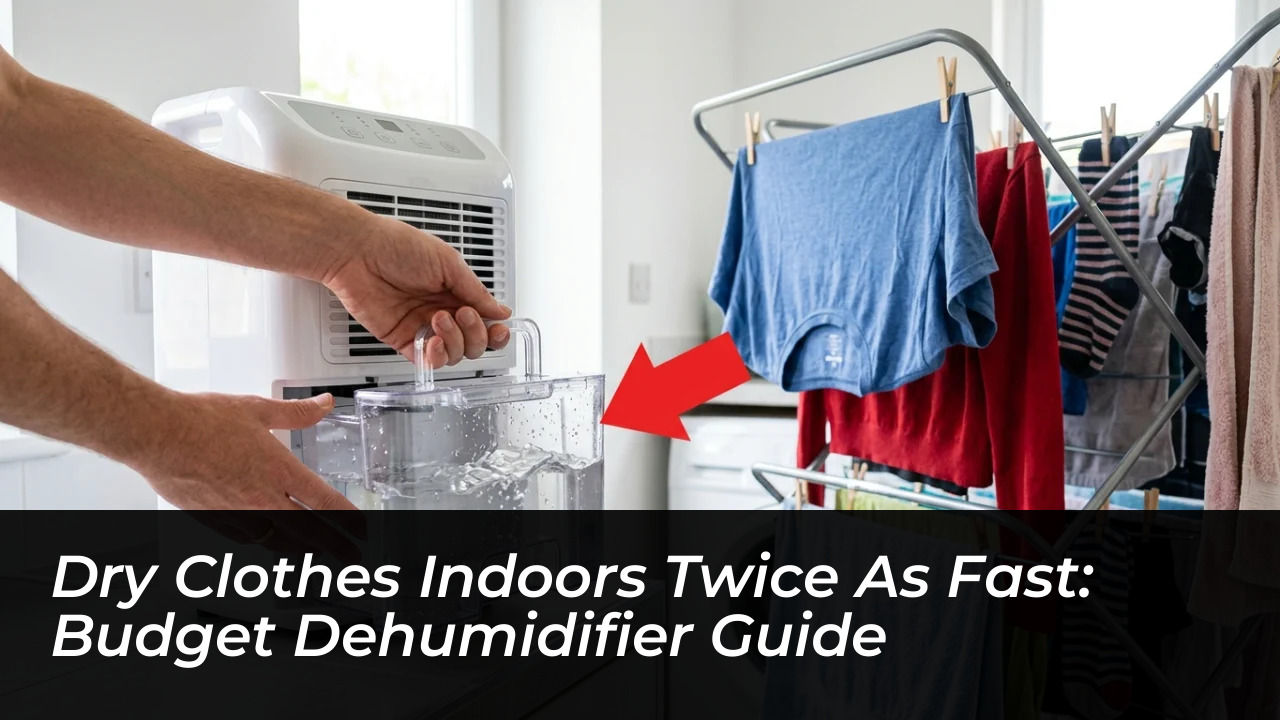

Drying laundry indoors during colder months presents a familiar challenge for households trying to balance convenience and rising utility expenses. Traditional heated tumble dryers add a heavy financial burden to monthly energy bills. However, air-drying garments on standard racks often leaves fabrics damp for days, driving indoor humidity to levels that encourage mold and structural damage. To resolve this issue without incurring massive heating costs, targeted moisture extraction offers a functional alternative. It accelerates natural evaporation rates while keeping living areas healthy.
The Science of Indoor Laundry Drying and Mold Prevention
When wet laundry air-dries inside an unventilated room, moisture evaporates directly into the ambient environment, dramatically raising relative humidity. High indoor humidity creates optimal breeding conditions for damp spots, structural deterioration, and hazardous spores. By actively drawing damp air across chilled coils, a compressor dehumidifier condenses water vapor into a collection tank before circulating dry air back into the room.
This steady removal of ambient moisture lowers vapor pressure, pulling moisture out of thick fabrics much faster than stationary air drying ever could. Beyond simply safeguarding your wardrobe, reducing excess moisture helps create a fresher, more comfortable living environment by protecting your home from condensation.
Compressor Systems and Technical Performance
Compressor-based models are designed for domestic living zones, delivering peak moisture extraction when rooms are kept at or above 59°F (15°C). Units such as the Ambiano 12L Midi Dehumidifier provide an extraction capacity of up to 12 liters of water daily. They rely on a two-liter internal reservoir or a continuous external drainage hose for extended operation.
Energy efficiency remains a major draw for consumers moving away from conventional drying methods. While a standard tumble dryer can cost anywhere from 65p to £1.60 per cycle, efficient compressor dehumidifiers operate at a fraction of that cost. They frequently run between 4p and 10p per hour depending on wattage and local utility tariffs.
Maximizing Indoor Drying Efficiency: A Practical Setup
Getting the best performance out of an indoor drying setup requires strategic placement rather than simply leaving clothes on an open rack:
- Enclose the Drying Space: Position the drying rack and the unit together in a small room with windows and doors shut to isolate moisture.
- Direct Airflow: Point the unit’s dry-air exhaust directly toward the heaviest garments to accelerate convection. Adding a small pedestal or desk fan oscillating nearby can slash drying times by over 50 percent.
- Maintain Room Temperature: Ensure the room remains heated above 59°F (15°C) so the refrigerant compressor works at peak efficiency.
- Deploy Supplemental Draft Protection: Seal gaps using door sweeps, window strips, or draft excluders to stop outside humidity and cold air from entering.
Common Indoor Drying Myths vs. Reality
A widespread misconception is that turning up standard central heating is the fastest, safest way to dry indoor clothes. While heat warms the air, it does not extract moisture. Instead, it simply increases the air’s moisture-holding capacity until surfaces cool down, causing condensation on external walls and windows.
Another common belief is that standard room fans are sufficient. A regular fan merely moves damp air across the room without condensing a single drop of liquid, leaving humidity levels high. In contrast, pairing a dedicated moisture-extraction unit with low, steady heating removes the root cause of dampness permanently.
Frequently Asked Questions
How long does it take to dry clothes with a dehumidifier?
With a dedicated compressor dehumidifier and a small fan to circulate air, a full load of laundry can dry in roughly two to four hours, compared to up to 20 hours of natural air drying.
Is it cheaper to use a dehumidifier instead of a tumble dryer?
Yes. While tumble dryers are among the most expensive household appliances to run, efficient dehumidifiers use significantly less electricity per hour, leading to major savings over the winter months.
What size dehumidifier do I need for laundry?
A 12-liter to 20-liter compressor dehumidifier is typically ideal for residential bedrooms, utility rooms, or small enclosed spaces used for drying clothes.
Can a dehumidifier completely stop mold growth?
By keeping indoor relative humidity consistently below recommended thresholds, typically between 50% and 60%, dehumidifiers remove the moisture required for mold spores and mildew to thrive.
Should I use laundry mode on my dehumidifier?
Yes, if your appliance features a dedicated laundry mode, activate it. This setting optimizes fan speed and target humidity to extract moisture from fabrics as rapidly as possible.