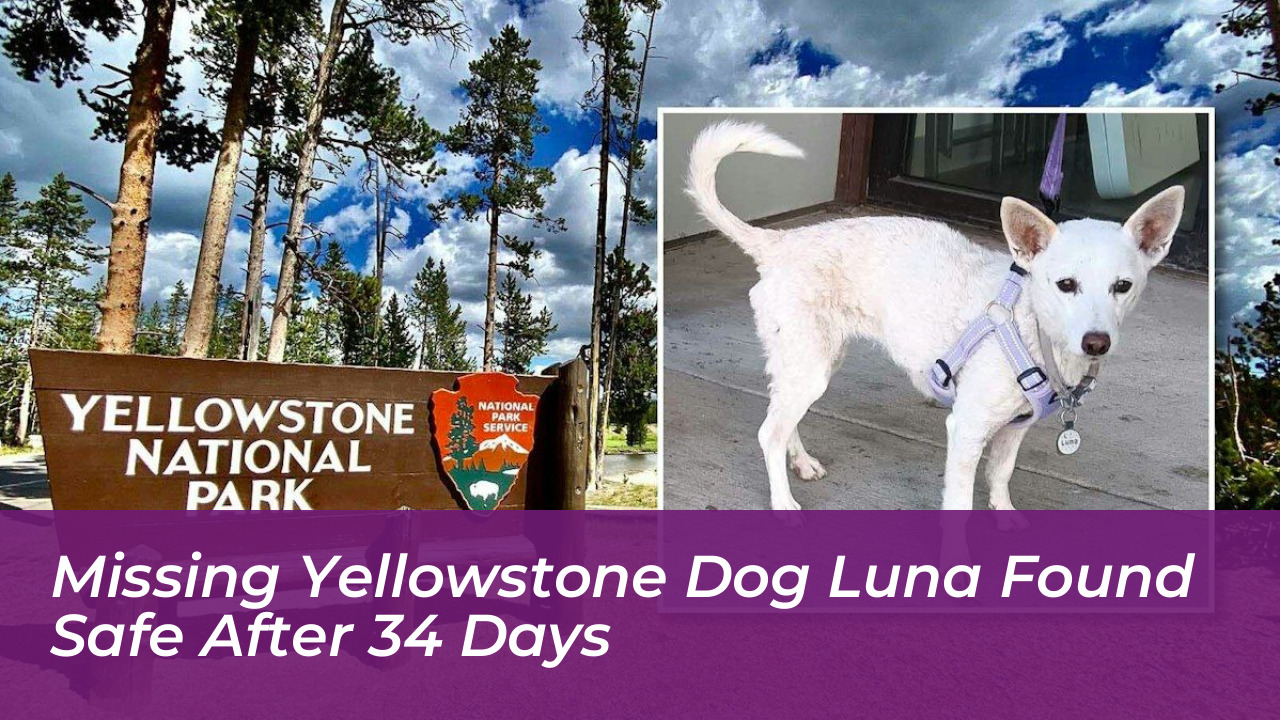

A month-long search in Yellowstone National Park ended with the recovery of Luna, a 10-year-old dog who survived 34 days outdoors after escaping from a rented cabin in the Canyon Village area. Rescuers found her on the morning of Wednesday, October 14, 2026, inside a humane trap set by Katie Boucher, president of the Norris Ark Training and Recovery Center, as approaching winter weather threatened to shut down search operations.
Luna, a Jack Russell Terrier and Chihuahua mix, weighed roughly 18 to 20 pounds when she disappeared on September 10, according to Boucher. By the time her owners and rescuers brought her to a veterinarian in Bozeman after the rescue, she had lost about 10 pounds-nearly half her body weight-and immediately received medical evaluation and treatment.
How Rescuers Finally Located Luna
The successful recovery came after weeks of tracking sightings across the park. Boucher’s team placed an enclosure known as a Missy Trap near the Canyon Village water treatment center. Before a storm hit the Yellowstone area on October 11 and 12, Boucher removed the remote-trigger equipment, leaving the apparatus open. She then placed a small doghouse filled with grass and straw inside, hoping Luna might use it for shelter while the severe weather passed.
On October 13, a volunteer spotted Luna circling the trap and lying down nearby. When Boucher returned on Wednesday morning, Luna was inside the doghouse. One of Luna’s owners, who had returned to Yellowstone from California following scent-tracking advice, approached the trap first. Boucher followed shortly after to witness the reunion.
“When I walked down there, she was just barely sticking her nose out of the doghouse and just thinking about coming out,” Boucher said. “They had their own private reunification and it’s been absolutely brilliant.”
An Accidental Escape and Hard-Fought Search
Luna’s ordeal began on September 10 when her family, visiting from California, left her inside a Canyon Village campground cabin with a “Do Not Disturb” sign on the door while they explored Norris Geyser Basin, where dogs are not permitted. According to rescue coordinators and park lodging officials, housekeeping staff opened the door by accident, and Luna bolted.
Staff members chased the frightened dog for more than two hours before the owners returned to find the cabin empty. Park officials and rangers initially told the family that the dog’s survival was unlikely due to cold nighttime temperatures and local predators such as coyotes and wolves. The family briefly returned home before connecting with Boucher and launching an organized recovery effort.
Boucher noted that the National Park Service granted Norris Ark a special trapping permit, while construction crews working inside the park allowed the rescue team access to restricted areas. Traditional food bait could not be used inside the trap because it risked attracting bears and other wildlife, so rescuers relied on familiar scents, including scraps from a family T-shirt and pillowcase.
Survival Instincts and the Race Against Winter
Rescuers believe Luna’s early life helped her endure more than a month in the wild. Before being adopted by her California family, Luna spent roughly the first year of her life surviving on the streets. Boucher stated that those foundational stray skills kicked in, helping the terrier hide, find water, and avoid dangers.
Alison Cook Cilliers, a longtime Jack Russell Terrier breeder in California, explained that the breed possesses high tenacity, strong hunting instincts, and an independent streak that allows them to work and survive without human direction.
The rescue operation ultimately became a race against the clock. Boucher’s search permits were scheduled to expire on Monday, October 19, and seasonal closures and winter weather threatened to shut down park access by the end of October. With Luna now safe and recovering with her family, the intensive month-long operation concluded with a healthy outcome.