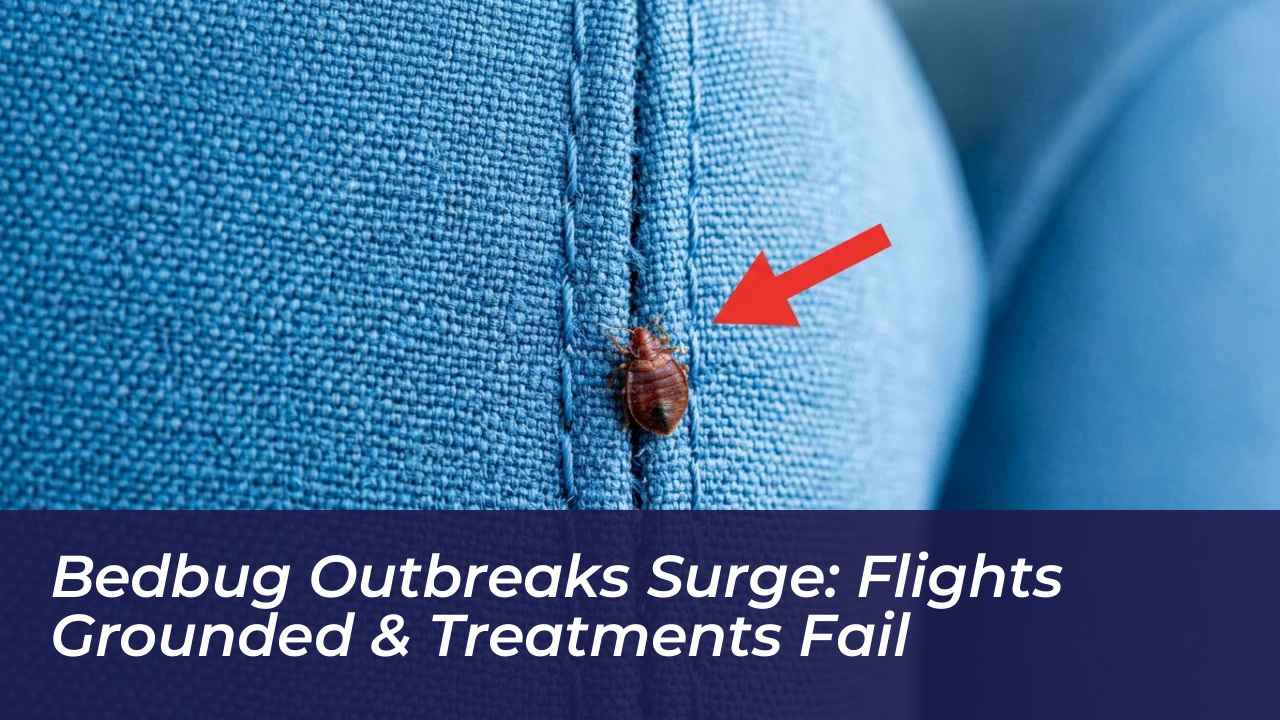

Recent high-profile airline groundings and mass transit discoveries have thrust a persistent urban menace back into the global spotlight. A sharp rise in bedbug infestations is currently testing the limits of transport operators and pest control networks alike. Driven by the resurgence of international travel and escalating insecticide resistance among bug populations, metropolitan areas are seeing a notable 20 percent annual jump in major cases. From commercial aviation cabins to municipal rail systems, these resilient parasites are hitchhiking across borders, sparking renewed urgency among travelers and public health officials.
The severity of the issue became glaringly apparent when a long-haul international flight was forced out of service. A Qantas Boeing 787 Dreamliner traveling from Perth, Australia, to Rome, Italy (flight QF5), encountered a severe infestation on October 9. Passengers in the economy section reported waking up to screams as the parasites crawled over clothing, blankets, and window panels. Upon landing in Rome, the aircraft was immediately grounded, canceling the return journey and forcing engineers to execute comprehensive deep-cleaning protocols. Meanwhile, rail operators such as Southeastern in the United Kingdom have faced parallel challenges, isolating driver compartments after uncovering bedbugs to protect public health while executing rigorous sanitation.
Recognizing the Physical Traits of Modern Pests
Identifying these parasites early is the most effective way to prevent extensive domestic contamination. Adult bedbugs are small, reddish-brown, wingless insects roughly matching the size and distinct teardrop shape of an apple seed-measuring about six millimeters in length. Because they are strictly nocturnal, they conceal themselves in dark crevices during daylight hours, emerging only after dark to feed on warm-blooded hosts.
Attracted primarily by human body heat and exhaled carbon dioxide, the pests hitchhike across continents by clinging to luggage fabrics, backpacks, outerwear, and second-hand furniture. Multi-unit housing complexes and hotels are especially vulnerable. Shared structural walls, tight crevices in bed frames, and constant human traffic allow infestations to migrate seamlessly between adjoining living spaces.
The Data Behind Expanding Urban Infestations
Surveillance figures indicate that commercial spaces are increasingly dealing with silent incursions. Monitoring data reveals that active pests were detected in one out of every 42 hotel rooms assessed by detection firm Valpas, which manufactures specialized trap systems. , municipal reports demonstrate dramatic local spikes, including a London borough managing a 40 percent jump in extermination actions compared to prior annual tallies.
High-density travel hubs amplify this transmission cycle. James Rhoades, owner of ThermoPest Bedbug Treatment London, notes that transit networks offer recurring opportunities for insects to jump hosts because thousands of individuals interact with identical upholstery and luggage racks daily. However, experts like Stephen Doggett, director of medical entomology at Westmead Hospital, emphasize that while high-profile incidents capture headlines, encountering pests directly on public transit seating remains an overall statistical anomaly compared to hotel and accommodation transfers.
Why Traditional Chemical Sprays Are Failing
The core factor driving widespread infestation survival is biological adaptation. Decades of over-the-counter pesticide usage have produced bug populations with documented insecticide resistance, rendering standard retail aerosol sprays virtually ineffective against entrenched populations.
Exterminators caution that do-it-yourself chemical measures regularly fail because bugs can survive without feeding for several months while hidden deep inside floorboards or mattress seams. Abhi Nav, a licensed exterminator and owner of AstraHive Pest Control, confirms that surface spray treatments rarely penetrate deep structural nesting zones, necessitating multi-phase professional inspections and alternative eradication methods.
Comparing Eradication Approaches
To combat pesticide-immune strains, the pest control industry has largely shifted away from surface liquids in favor of advanced physical remediation.
- Over-the-Counter Sprays: High failure rates due to widespread genetic insecticide resistance and months-long pest starvation tolerance.
- Sustained Thermal Remediation: Target areas maintained above 50°C (122°F) for several hours; heat completely bypasses chemical immunity.
- Professional Vacuums and Steam: Effective for targeted extraction in transit environments, though high costs limit routine deployment.
Thermal eradication has emerged as the definitive solution for pesticide-immune strains. Professionals raise ambient interior room temperatures above 50°C (122°F) and sustain that threshold across several hours, guaranteeing complete eradication because no insect life stage can tolerate extreme heat exposure.
How to Prevent Infestations While Traveling
Travelers can significantly lower the risk of transporting pests back to their primary residence by practicing strict luggage hygiene during transit and hotel stays:
- Inspect mattress piping, headboards, and luggage racks immediately upon entering any guest room.
- Keep travel bags elevated off carpeted surfaces, utilizing metal luggage racks or hard bathroom tiles.
- Wash and dry clothing on the highest recommended heat setting immediately following return travel.
- Take photographic evidence if bugs are encountered during transit to support potential claims or litigation against operators.
Regular visual inspections remain your strongest defense against hidden travel pests. Identifying subtle mattress seams early eliminates the risk of complex domestic spreads as global travel volumes continue to climb.