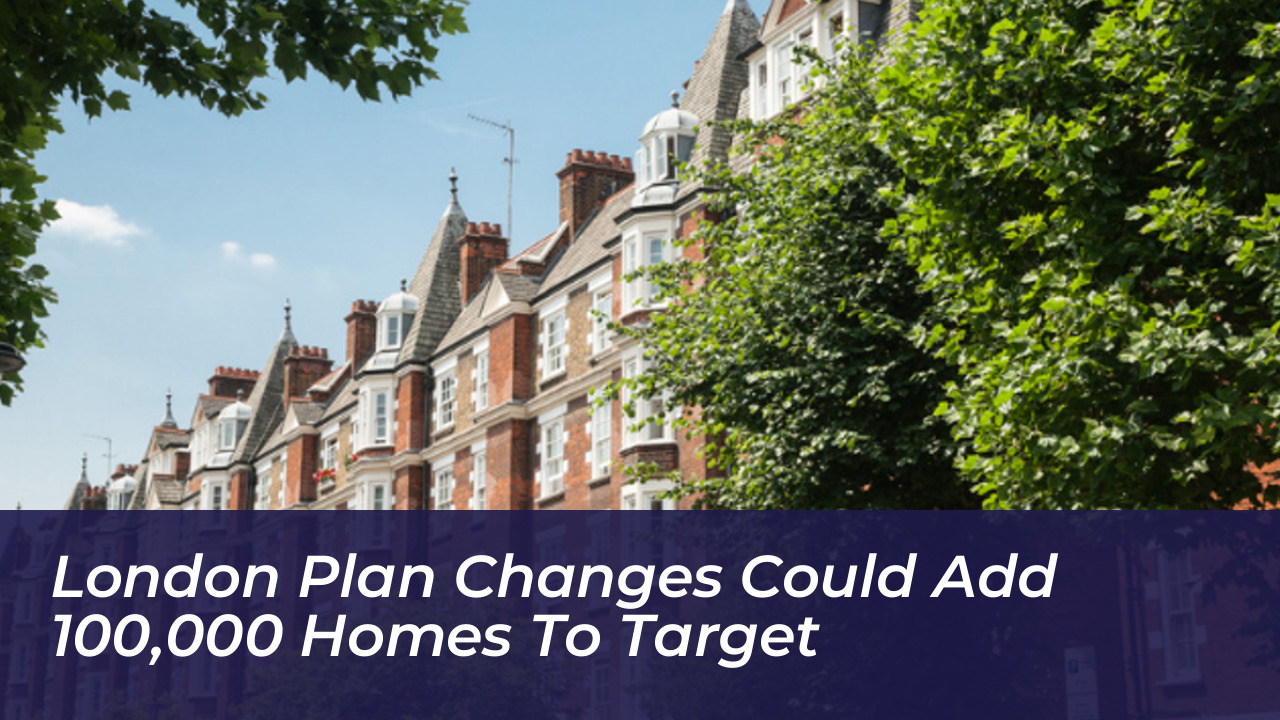

London could significantly increase its housing capacity by at least 100,000 homes if the city revises its proposed building-height guidelines and expands the amount of eligible green belt land available for development. According to a Centre for Cities analysis published on October 14, 2026, these strategic policy adjustments would directly address a growing gap between national housing requirements and the lower delivery ambitions outlined in the draft London Plan.
The Mayor of London has previously stated that the capital cannot meet the national government’s ambitious target of 850,000 new homes over a 10-year period. Instead, the current draft plan establishes a target of 558,000 homes for the same timeframe, leaving a substantial shortfall of 292,000 units. Independent analysts argue that targeted interventions in planning assumptions can help bridge this divide without compromising the city’s infrastructure or environmental standards.
Addressing the Shortfall Through Planning Adjustments
The Centre for Cities assessment indicates that modifying two core planning assumptions can unlock tens of thousands of residential properties. The first proposal centers on residential density and building-height guidelines. Under the current draft London Plan, the newly introduced Optimisation Framework links development intensity to public transport connectivity and surrounding neighborhood traits. However, analysts point out that certain guidelines unnecessarily restrict building capacities on otherwise suitable plots of land.
By allowing greater optimization in well-connected transport hubs and refining parameters for tall buildings-distinguished as structures over 30 meters or metropolitan clusters over 100 meters-developers can maximize brownfield and urban space efficiency. Additionally, expanding structured, sustainable releases of green belt and grey belt land around high-frequency transit nodes would provide the necessary spatial footprint to absorb the additional housing volume.
Borough-Level Impacts and Policy Frameworks
The debate over housing targets arrives alongside a broader recalibration of London’s borough-level expectations. Outer London authorities such as Hillingdon, Enfield, Waltham Forest, and Havering face rising housing targets under the draft plan. Conversely, urban centers like Barking & Dagenham, Tower Hamlets, and Kingston-upon-Thames see reductions compared to previous planning cycles.
The draft plan also introduces a tiered approach to affordable housing, replacing the uniform city-wide rules with location-based bandings. Central London boroughs face a 35% affordable housing requirement, dropping to 25% for intermediate zones and 20% in outer boroughs. While these adjustments aim to enhance financial viability for developers, industry groups emphasize that closing the 100,000-home gap will ultimately depend on streamlining regulatory approval processes and unlocking viable land parcels across the capital.
Frequently Asked Questions
Why is there a gap in London’s housing targets?
The national government’s target aims for 850,000 new homes over 10 years, whereas the draft London Plan sets a target of 558,000 homes due to perceived land and environmental constraints, creating a 292,000-unit shortfall.
How can an extra 100,000 homes be added to the London Plan?
According to the Centre for Cities, revising restrictive building-height guidelines, increasing residential density around public transport nodes, and judiciously expanding eligible green belt land can unlock at least 100,000 additional homes.
What is the Optimisation Framework in the draft London Plan?
The Optimisation Framework replaces older density matrices, establishing minimum density and height ranges based on Sustainable Access Measure levels, which measure travel times to jobs and services via public transport and walking.
How does the draft plan change affordable housing requirements?
It replaces the standard city-wide 50% strategic affordable housing target with a location-based tiered system, ranging from 35% in Central London down to 20% in Outer London boroughs.
What role does the Green Belt play in the new proposals?
The draft plan adopts a structured approach to green belt and grey belt release, identifying Broad Locations for Growth in sustainable locations within walking distance of well-connected train stations and high-frequency bus routes.