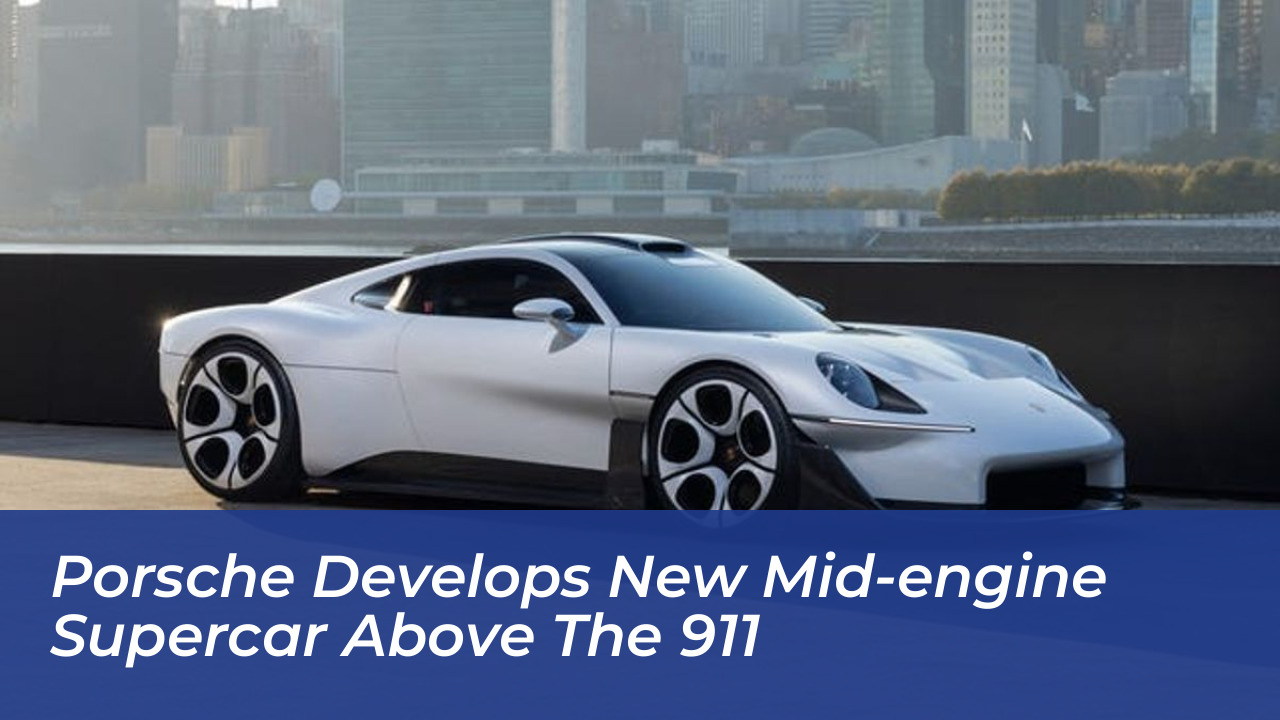

Porsche is developing a brand-new mid-engine supercar, internally previewed by the Mission S concept, that will establish a permanent position above the iconic 911 in the automaker’s lineup. Unlike previous flagship models such as the 959, Carrera GT, and 918 Spyder, which occupied top-tier positions only temporarily, this upcoming production line is intended to create a lasting tier above Porsche’s traditional sports car offerings.
According to reports from automotive publications like Car and Driver, Porsche has not yet announced the official production name, exact pricing details, or a firm arrival date for the vehicle. However, the German manufacturer has confirmed key structural and powertrain strategies for the new model line, signaling a clear direction for its high-performance engineering.
Powertrain Strategy: Embracing Hybrids, Skipping Pure EV
In a notable shift regarding future high-performance drivetrains, Porsche has confirmed that the new supercar model line will explicitly support conventional gasoline engines, traditional hybrids, and plug-in hybrid (PHEV) systems. Crucially, the automaker has ruled out offering a fully electric version for this specific flagship vehicle.
This decision ensures that the forthcoming mid-engine platform will retain the acoustic presence and thermal dynamics favored by traditional sports car enthusiasts, integrating electrification to boost output rather than replacing internal combustion entirely.
Design Inspiration Rooted in Porsche History
The design philosophy of the Mission S concept heavily references Porsche’s rich motorsport and heritage vehicle archive. The exterior styling blends classic cues with aggressive aerodynamic elements:
- Headlights: Distinctive round headlights that pay direct homage to the classic 911 aesthetic.
- Front End & Roof Scoop: Styling lines and roof intake elements heavily influenced by the legendary 911 GT1 racing car.
- Rear Section: A rear layout mirroring the aerodynamic profile of the 911 GT1.
- Rear Wing: A prominent rear wing paying tribute to the trailblazing Porsche 959.
Inside the cabin, the concept adopts a driver-focused layout that minimizes digital screens, focusing instead on analog engagement and core driving ergonomics.
Shifting Dynamics Within Porsche
The development of a permanent mid-engine flagship sits against a backdrop of broader corporate adjustments at Porsche AG. Headquartered in Stuttgart-Zuffenhausen, the company has recently implemented significant restructuring programs, including strategic cost-reduction initiatives and capacity adjustments at development hubs like Weissach, to safeguard its long-term financial stability while focusing intensely on its core sports car business.
As development of the new supercar continues, automotive enthusiasts eagerly await further announcements regarding production specifications, final design validation, and the official naming strategy for Porsche’s newest crown jewel.
Frequently Asked Questions
What is the position of the new Porsche supercar in the lineup?
The new supercar will sit permanently above the 911 in Porsche’s lineup, unlike previous flagships like the Carrera GT or 918, which were produced only in limited, temporary runs.
What engine options will the new Porsche supercar feature?
Porsche has confirmed that the vehicle will support conventional gasoline engines, traditional hybrids, and plug-in hybrids. A fully electric version will not be offered.
Has Porsche announced the name or release date?
No, Porsche has not yet announced the production car’s official name, pricing details, or market arrival date.
What historic models inspired the design of the concept?
The concept draws design inspiration from several historic vehicles, including the classic 911 (round headlights), the 911 GT1 (front end, roof scoop, and rear section), and the 959 (rear wing).
Will the interior feature heavy digital screen integration?
No, the interior preview concept is designed to minimize screens, focusing on a cleaner, driver-centric c**kpit layout.