
Concerns over artificial intelligence financing, rising borrowing costs, and higher oil prices drove a sharp technology sell-off on October 16, 2026, as U.S. stocks extended their weekly losses. The market downturn reflects growing investor anxiety regarding the heavy financial leverage required to construct advanced data centers and procure specialized hardware.
Tech Indexes Face Worst Weekly Performance Since June
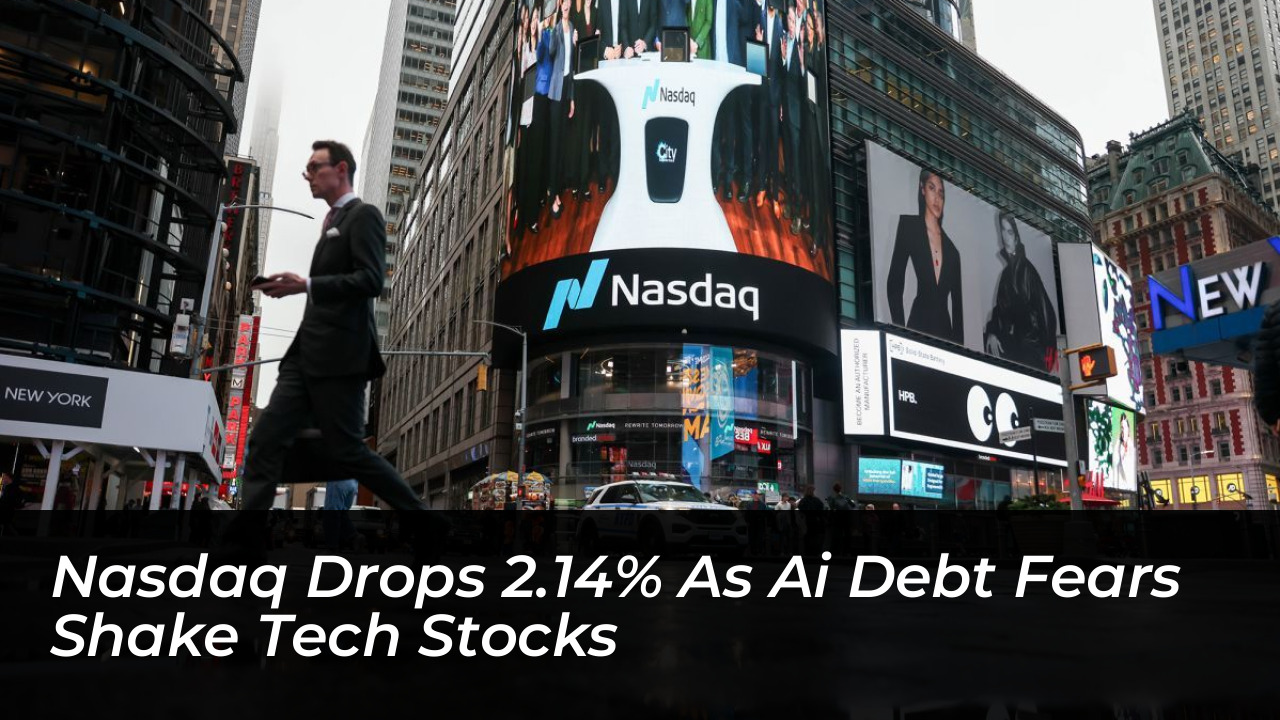
The tech-heavy Nasdaq Composite fell 573 points, or 2.14%, to close at 26,140, while the broader S&P 500 dropped 1.09%. Both indexes suffered their worst weekly performances since June. Over the course of the week, the Nasdaq lost approximately 4.5%, and the S&P 500 declined nearly 2%. These losses followed record highs achieved just 10 days prior.
Market sentiment shifted rapidly as participants began questioning the sustainability of debt-funded AI expansion. Adam Crisafulli, head of Vital Knowledge, noted that investors are increasingly worried about whether massive capital expenditures will yield sufficient returns.
CoreWeave and Neocloud Debt Concerns
At the center of the market turbulence are neocloud providers that rent out computing power to artificial intelligence developers. CoreWeave, an AI computing provider backed by Nvidia, emerged as a primary focal point for the sell-off due to the tens of billions of dollars in debt carried on its balance sheet.
- CoreWeave shares slid nearly 12% in a single session and dropped roughly 24% over the week.
- Nvidia CEO Jensen Huang attempted to reassure markets, expressing optimism regarding CoreWeave’s trajectory.
- Despite endorsements, analysts compared heavily leveraged neoclouds to the subprime tier of the current tech cycle.
Other semiconductor and hardware companies also experienced sharp declines. Micron Technology fell 5.6%, Advanced Micro Devices dropped 6%, Broadcom decreased by 4.5%, and Intel lost 5.8%. Meanwhile, the broader semiconductor index dropped 3.9%, marking its eighth consecutive day of losses.
Inflation Data and Federal Reserve Policy Pressures
Compounding the tech sector’s struggles were fresh economic reports indicating that U.S. inflation is moving further away from the Federal Reserve’s 2% annual target. The Consumer Price Index rose 3.7% year-over-year, heightening expectations that the central bank may maintain high interest rates or implement further rate hikes.
Yields on 10-year U.S. Treasury bonds held steady at 5.1%, keeping borrowing costs elevated. Higher yields directly increase the cost of servicing debt for capital-intensive industries, putting intense pressure on companies relying on external financing to fund data center construction.
Traders tracking CME FedWatch data adjusted their expectations, with the implied probability of a rate hike at the December Federal Reserve meeting rising significantly compared to previous months. As market volatility spiked-evidenced by a 30% surge in Wall Street’s fear gauge, the VIX-investors continue to weigh the real-world demand for artificial intelligence against the steep financial liabilities required to sustain its infrastructure.