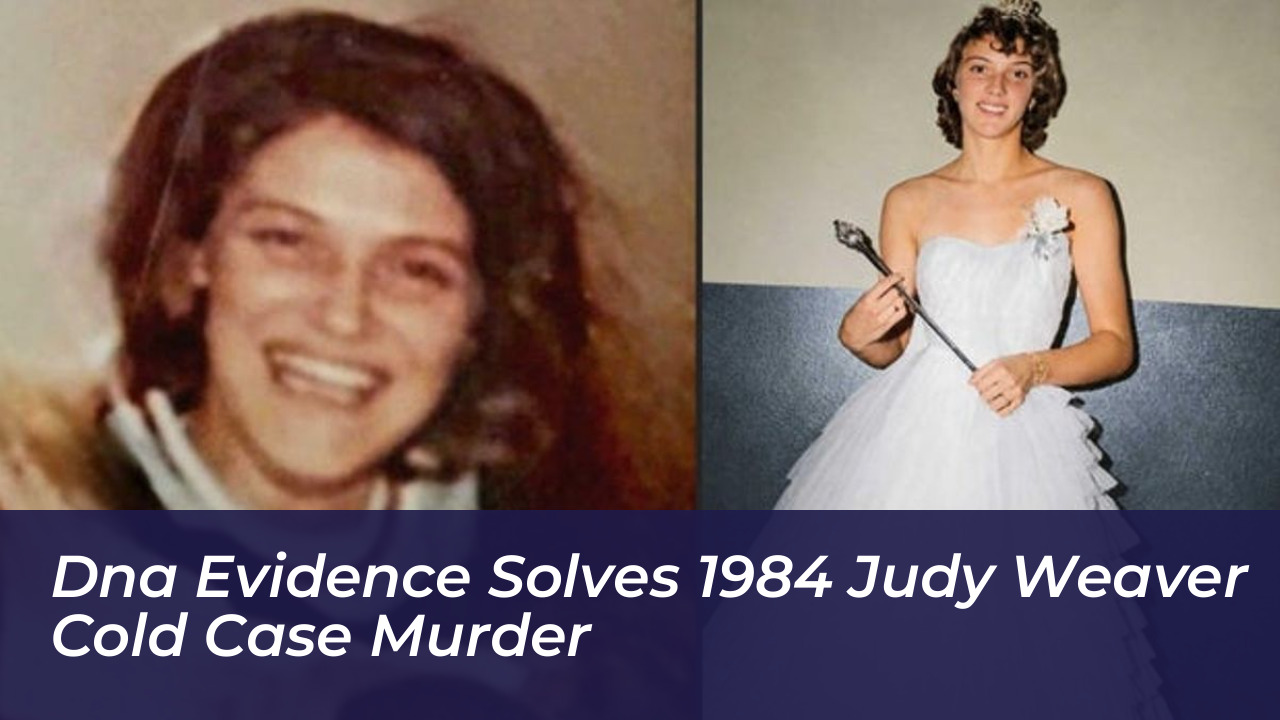

Nearly four decades after Judy Weaver was brutally murdered in Everett, Washington, a breakthrough in advanced DNA technology has fundamentally redirected the investigation. The case languished for nearly 40 years with a former fiancé considered the prime suspect. It saw a dramatic shift when modern forensic analysis pointed detectives away from old theories and toward a violent s*xual predator with a history of attacks.
Detective Susan Logothetti of the Everett Police Department spearheaded the reinvestigation, reopening the file in January 2023. The objective was to finally identify the perpetrator responsible for the 1984 death of the 42-year-old mother of two. Weaver, a divorced mother who managed the Bel-Nes Cafe-a rough bar located on Hewitt Avenue-was known among locals for her resilience and dedication to her family.
The 1984 Murder of Judy Weaver
On the evening of June 1, 1984, Judy Weaver and her fiancé, Bill Richards, celebrated the sale of the Bel-Nes Cafe with champagne and friends. Becoming too tipsy to drive and exhausted, Weaver decided to walk the half-mile home alone, leaving Richards behind at the establishment. Investigators believe she arrived at her apartment and likely left the back door unlocked.
Shortly afterward, an intruder entered the residence. Approximately an hour later, a neighbor noticed thick black smoke billowing from Weaver’s apartment. When firefighters forced entry into the smoldering bedroom, they discovered Weaver bound, s*xually assaulted, strangled, and deceased. A fire had been deliberately set inside the bedroom to destroy evidence and cover up the crime scene.
For decades, Bill Richards remained the primary focus of sus**cion. Although local investigators heavily scrutinized him, insufficient physical evidence existed to either charge or clear him. Richards maintained his innocence until his death in 1994, taking any potential answers with him to the grave.
Advanced DNA Testing Shifts the Investigation
In January 2023, leadership at the Everett Police Department authorized fresh forensic testing on preserved physical evidence from the crime scene, hoping that decades of advancements in DNA profiling might finally yield answers. Months later, the results arrived on Detective Logothetti’s desk, delivering an unexpected outcome: the DNA profile did not match Bill Richards.
Instead, the genetic evidence produced a definitive match to a name previously unassociated with the Weaver case file: Mitchell Allen Gaff. A routine background check revealed that Gaff was a Level 3 registered offender and a classified s*xually violent predator with a documented history of violent assaults against women in the Everett area during the exact timeframe of Weaver’s murder.
Establishing the Suspect’s Violent History
Police files revealed that Mitchell Gaff was actively on probation for a 1979 assault when Judy Weaver was killed in June 1984. Just months after Weaver’s murder, in August 1984, Gaff committed another horrific crime, breaking into a home and brutalizing two teenage sisters, Angela and Myra, before one managed to escape and alert neighbors. Gaff was subsequently convicted and imprisoned.
Following decades behind bars and mandatory civil confinement for therapeutic treatment, Gaff was released in 2018. Over subsequent years, he reportedly changed his name to Sam Wise Price, married, and lived a seemingly quiet life. However, cold-case investigators realized that despite his new lifestyle, a definitive legal connection was required to tie him directly to the 1984 homicide.
The Undercover Chewing Gum Sting
With a DNA match pointing to Gaff but lacking a fresh, legally obtained reference sample to secure an arrest warrant, Detective Logothetti and her team devised an undercover operation. Knowing that Gaff rarely left his residence, detectives approached his home posing as representatives of a health-focused energy gum company launching a new product line at local grocery stores.
In January 2024, undercover officers knocked on Gaff’s door and engaged him in conversation regarding various prototype flavors, including watermelon and tropical fruit. Gaff willingly sampled the gum, evaluating its flavor notes before discarding the chewed pieces. Detectives successfully recovered the discarded gum, providing the crucial biological sample needed to confirm his DNA profile against the historical evidence.
The integration of forensic genealogy, persistent detective work, and creative police strategies continues to dismantle decades-old cold cases, bringing long-awaited accountability to victims and their families across the Pacific Northwest.
Frequently Asked Questions
Who was Judy Weaver?
Judy Weaver was a 42-year-old divorced mother of two daughters, Cathy and Colleen, and the manager of the Bel-Nes Cafe on Hewitt Avenue in Everett, Washington. She was tragically murdered in her apartment in June 1984.
Who was originally suspected of the murder?
For nearly 40 years, Weaver’s former fiancé, Bill Richards, was considered the prime suspect by investigators and family members. However, no charges were ever filed against him, and he died in 1994 maintaining his innocence.
How did investigators identify the new suspect?
In 2023, the Everett Police Department submitted preserved physical evidence for advanced DNA testing. The resulting profile matched Mitchell Allen Gaff, a registered Level 3 offender with a violent criminal history.
How did police collect fresh DNA from Mitchell Gaff?
Detectives executed an undercover sting operation by posing as representatives of an energy gum company. They offered Gaff free samples to test, allowing them to recover the chewed gum from which fresh DNA was extracted.
What historical connection linked Gaff to the 1984 timeframe?
Police records showed that Gaff was living in the area and serving probation for a previous violent assault when Judy Weaver was murdered in June 1984. He committed another brutal attack on two teenage sisters later that same year.