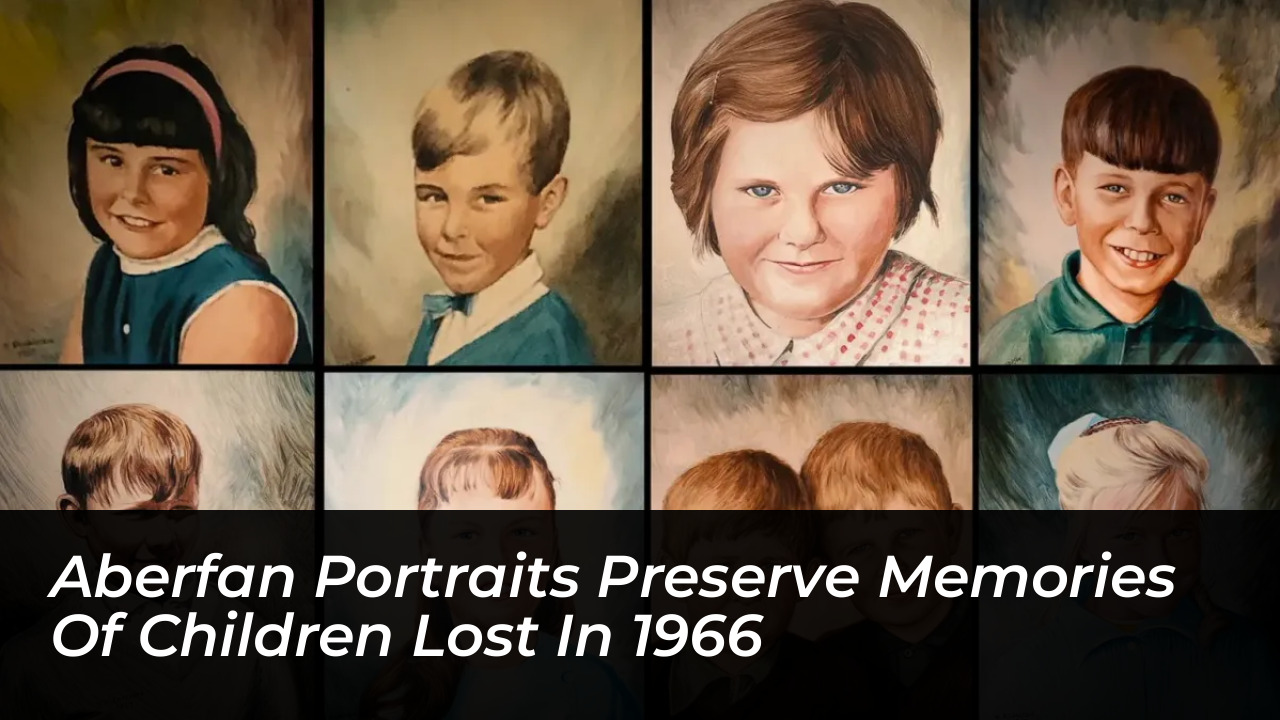

For nearly six decades, hand-painted portraits of children lost in the Aberfan disaster have remained treasured possessions in Welsh homes. They serve as profound symbols of remembrance for grieving families. Artist William Richardson meticulously crafted approximately 100 portraits after a catastrophic coal waste tip collapsed above the Welsh village on October 21, 1966.
The disaster occurred when a mountain of slurry slid down and buried Pantglas Junior School alongside nearby homes. It claimed the lives of 144 people. Among the victims were 116 children who never had the chance to grow up, leaving an indelible scar on the community and the nation.
Creating Likenesses from Memory and Photographs
In the wake of the tragedy, artist William Richardson undertook the harrowing task of painting likenesses of the young victims. Working closely with heartbroken parents, Richardson relied on standard school photographs and detailed verbal descriptions provided by grieving family members.
The resulting artworks captured far more than physical features. They immortalized each child’s unique hairstyle, favorite clothing, and distinct personality traits. For parents navigating unimaginable grief, these canvases provided a tangible presence in homes that had suddenly fallen devastatingly quiet.
Family Reflections Featured in BBC Documentary
The enduring emotional impact of these artworks is explored in the BBC program, Unseen: The Aberfan Portraits. In the documentary, surviving family members share how receiving the paintings decades ago helped them cope with their loss and maintain an unbroken connection with their siblings and children.
Denise Morgan lost her younger sister Annette in the disaster. She spoke openly about the profound emotional weight of seeing Richardson’s finished work, recalling the striking resemblance the portrait bore to her sister. It provided a comforting window into a childhood cut tragically short.
Preserving History for Future Generations
As decades pass, the Aberfan portraits have transitioned from private expressions of grief into vital historical artifacts. They remind society of individual lives, vibrant personalities, and futures stolen away, rather than just the statistical magnitude of the tragedy.
Families continue to guard these paintings fiercely, ensuring that the children of Aberfan are never forgotten. Through art and shared storytelling, their memories remain vibrant and protected within the community they were taken from too soon.
Frequently Asked Questions
What was the Aberfan disaster?
The Aberfan disaster occurred on October 21, 1966. A colliery spoil tip collapsed and slid down a mountain into the Welsh village of Aberfan, destroying Pantglas Junior School and several homes. It resulted in 144 deaths, including 116 children.
Who painted the Aberfan portraits?
Artist William Richardson created approximately 100 portraits of the children who died in the disaster. He worked from school photographs and descriptions provided by the grieving parents.
How have the portraits helped the families?
The portraits provided bereaved families with a comforting, tangible representation of their lost children, helping them preserve memories and maintain a lifelong emotional connection.
What documentary features these artworks?
The BBC program Unseen: The Aberfan Portraits highlights the history of these paintings and features interviews with family members, such as Denise Morgan, discussing their impact.
Where are the Aberfan portraits kept today?
Most of the portraits are treasured, private possessions kept inside the homes of the victims’ surviving family members across Wales.