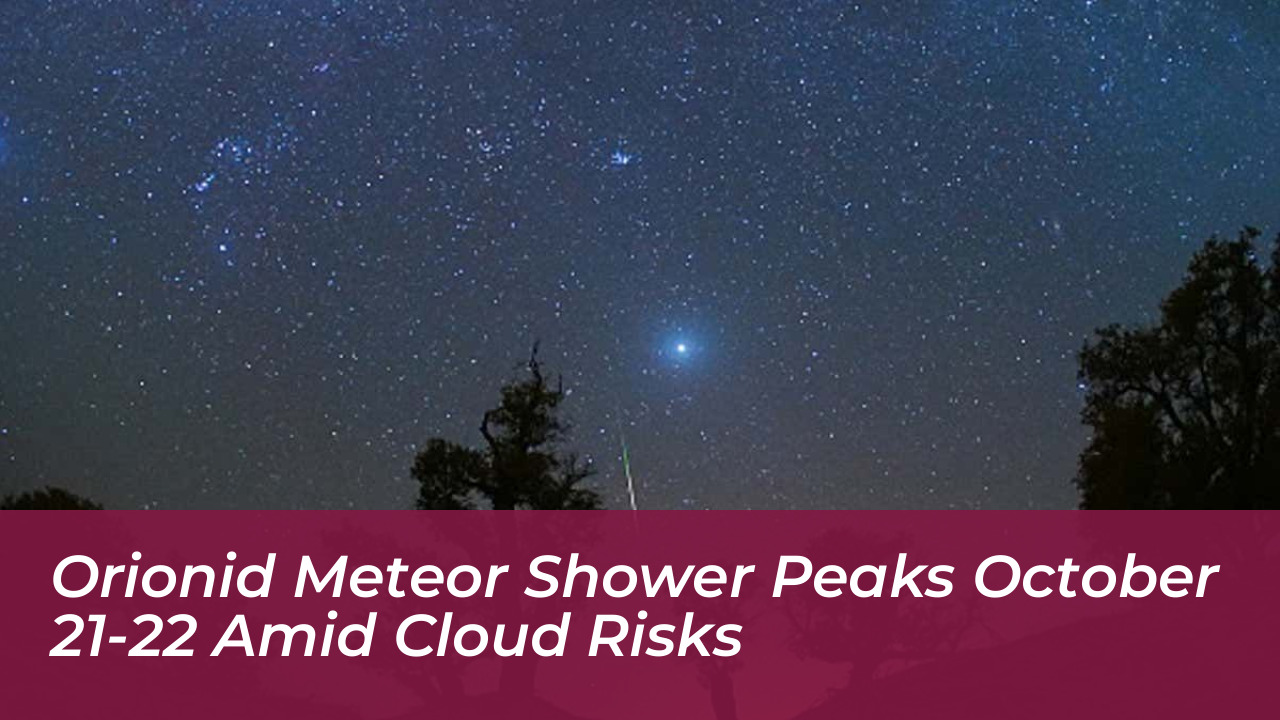

Skywatchers across the Northern Hemisphere are preparing for the annual display of the Orionid meteor shower, which is set to peak overnight on October 21 and 22, 2026. As Earth passes through the trail of debris left behind by Halley’s Comet, stargazers under optimal conditions could witness between 10 and 20 meteors every hour. However, forecasters note that regional cloud cover, incoming storms, and a bright moon may pose significant hurdles for observers hoping to catch a glimpse of the celestial event.
The Orionid Meteor Shower
The Orionids are celebrated by astronomy enthusiasts because of their legendary cosmic origin. The debris creating these shooting stars originates from 1P/Halley, commonly known as Halley’s Comet. According to data from NASA, the Orionid meteor shower remains active over an extended period, running this year from October 2 through November 7.
As Earth intersects the comet’s historical orbital path, tiny particles shed by Halley’s Comet slam into our upper atmosphere. These particles travel at a high speed of approximately 41 miles per second, which equals roughly 66 kilometers per second. Upon entry, they heat the surrounding air, resulting in the swift streaks of light visible from the ground.
Best Viewing Times and Visibility Challenges
For those hoping to catch the peak on the night of October 21-22, timing is essential. Astronomers recommend heading outside during the late-night hours, specifically after midnight and before dawn. During this window, the constellation Orion-the radiant point from which the meteors appear to stream-climbs higher into the night sky, maximizing the potential count.
Despite the favorable timing, this year’s observation comes with notable challenges. According to astronomy coverage from The Guardian, a bright waxing gibbous Moon will light up the night sky during the peak. This lunar illumination will wash out fainter meteors, reducing the overall number of shooting stars visible to the eye.
Additionally, weather models indicate that regional cloud cover and potential autumn storms threaten to obscure the view entirely for large portions of the Northern Hemisphere. Stargazers in areas with clear skies will have the advantage, while those facing overcast conditions may need to rely on live streams or wait for subsequent nights while the shower remains active.
Tips for Catching the Orionids
- Find a Dark Location: Travel away from bright city lights and urban light pollution to a dark-sky site if possible.
- Give Your Eyes Time to Adjust: Spend at least 20 to 30 minutes in the dark without looking at cell phone screens to let your night vision fully adapt.
- Dress Warmly: October nights can bring chilly temperatures, especially during the predawn hours when you are sitting or lying still.
- Look Broadly: You do not need to stare directly at the constellation Orion; looking toward any dark part of the sky will allow you to spot meteors streaking across a wider area.
Frequently Asked Questions
When is the peak of the Orionid meteor shower in 2026?
The Orionid meteor shower peaks overnight on October 21 and 22, 2026, though the meteors remain active from October 2 through November 7.
What causes the Orionid meteors?
The meteors are tiny dust and ice particles left behind in space by Halley’s Comet. When Earth passes through this debris stream, the particles burn up in our atmosphere.
How fast do Orionid meteors travel?
Orionid meteors enter Earth’s atmosphere at a speed of approximately 41 miles per second (66 kilometers per second).
Will the Moon interfere with viewing this year?
Yes, a bright waxing gibbous Moon is present during the peak, which will wash out fainter meteors and reduce overall visibility.
What is the best time of night to watch?
The ideal viewing window is after midnight and before dawn, when the constellation Orion is positioned highest in the night sky.