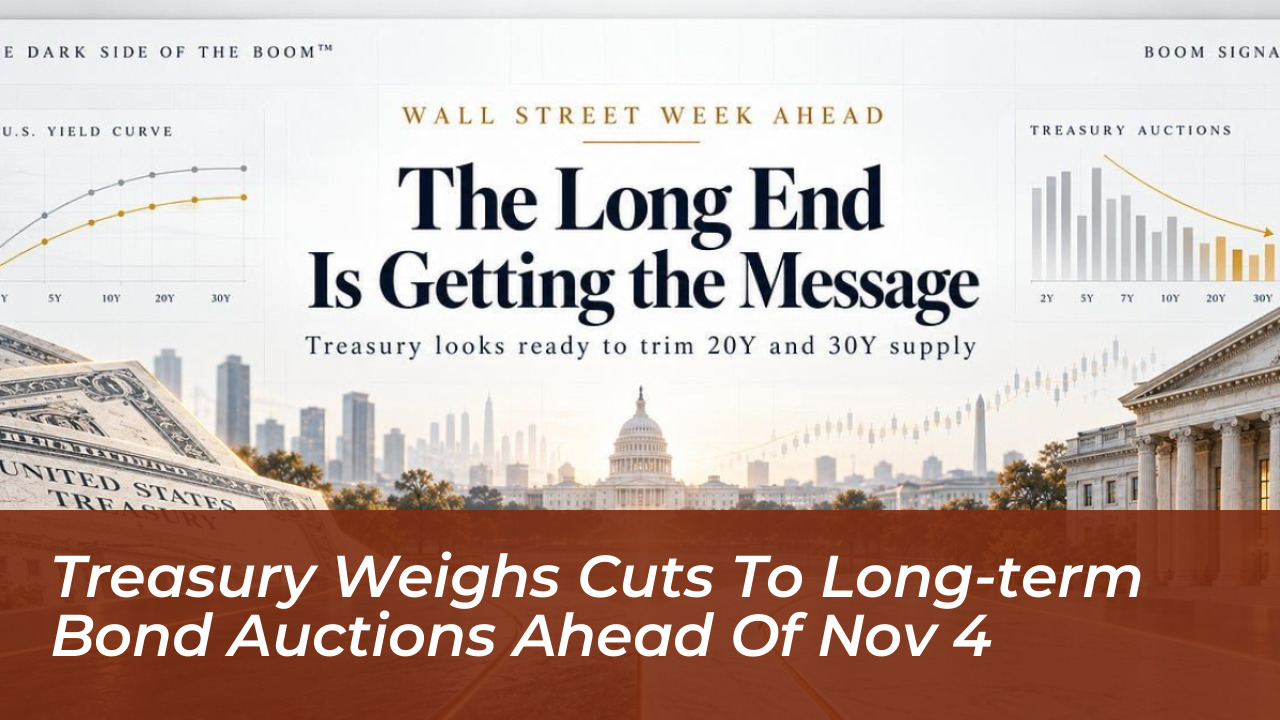

The US Treasury is signaling a possible shift in its long-term borrowing strategy as elevated bond yields and weak investor demand complicate government debt financing. A recent dealer questionnaire has raised market expectations that the department could reduce auction sizes for 20-year and 30-year Treasury bonds at its upcoming November 4 quarterly refunding announcement.
The potential adjustments follow earlier interventions by Treasury Secretary Scott Bessent to address climbing US yields. While Bessent’s initial approach temporarily impacted the market, it also departed from the Treasury’s longstanding practice of maintaining predictable debt issuance designed to minimize borrowing costs over time.
Citigroup Weighs In on Long-End Supply Reductions
Jason Williams and Citigroup’s US rates strategy team interpret the latest Treasury questionnaire as a clear indicator of forthcoming supply changes for long-term government debt. Although the survey questions officially focus on liquidity, market functioning, and investor demand, financial analysts suggest the department is actively laying the groundwork to lower the volume of bonds offered at future auctions.
According to Citi’s base case, the Treasury is likely to trim auction sizes by $3 billion for both 20-year and 30-year bonds. To offset this reduced long-end issuance, the government would likely lean more heavily on increased Treasury bill issuance.
Analysts note that the 20-year bond could face even steeper adjustments or outright cancellation. Jason Williams told clients in a late Friday note that given the possibility of a reduction or cancellation of the 20-year bond, these securities could potentially outperform 10-year notes in the near term.
Market Signals and Portfolio Impacts
Debt issuance decisions directly influence yields across the entire economic curve. Long-dated US borrowing costs have climbed significantly, with the 20-year security currently maintaining the highest-yielding tenor. This challenging market backdrop explains why Wall Street is closely scrutinizing Secretary Bessent’s next moves to rein in yields hovering near multi-decade highs.
However, skepticism remains regarding how effective these measures might be. Strategists at BNP Paribas have expressed doubts that reducing long-bond issuance will automatically bring down broader government borrowing costs.
Key Takeaways for Investors
- Refunding Date: Official policy changes and auction updates are expected to be unveiled during the November 4 quarterly refunding announcement.
- Yield Ripple Effects: Decisions made regarding long-end debt directly influence consumer mortgage rates, fixed-income bond funds, and cash yields.
- Dealer Survey Hints: Market participants are tracking dealer questionnaires closely for signs of shifting institutional demand and high-quality corporate supply pressures.
As the November 4 refunding approaches, investors and portfolio managers are advised to monitor ongoing Treasury announcements and market liquidity indicators to gauge how shifting government borrowing strategies will impact broader fixed-income assets.