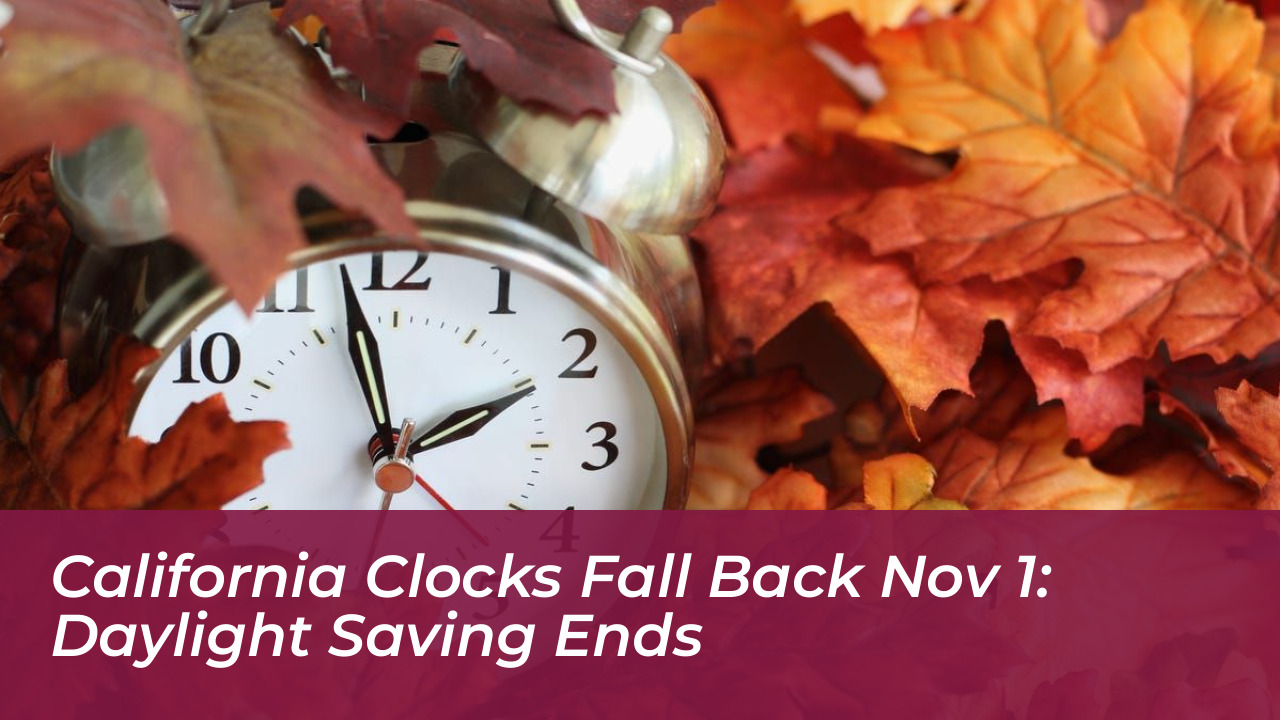

California residents will officially turn their clocks back one hour on Sunday, November 1, 2026, as daylight saving time concludes across the vast majority of the United States. While the shift provides an extra hour of sleep overnight, it also ushers in earlier sunsets as the state transitions fully into the winter months.
The biannual routine remains in place because federal legislation aimed at making daylight saving time permanent has not cleared the U.S. Senate. According to reports from USA TODAY, the Sunshine Protection Act, which is backed by President Donald Trump, successfully passed the House in July by a bipartisan vote of 301-117. However, the Senate adjourned without taking a vote on the measure, leaving the bill short of the final legislative approval required to reach the president’s desk.
When Do Clocks Change and How Does It Work?
Under the established federal schedule governed by the Energy Policy Act of 2005, daylight saving time begins on the second Sunday in March and ends on the first Sunday in November. When the clock strikes 2:00 a.m. on November 1, 2026, time will officially shift backward to 1:00 a.m.
Most modern smartphones, computers, and internet-connected devices handle this transition automatically. Residents will still need to manually adjust analog clocks, microwave displays, oven timers, and vehicle dashboards. Scheduled events, flights, and meetings occurring after the shift generally maintain their local time slots, provided they are correctly aligned with the proper time zone.
The Ongoing Debate Over Permanent Daylight Saving Time
President Trump has consistently advocated for ending the twice-yearly clock changes. He called the traditional practice foolish, inconvenient, and costly in a recent statement on Truth Social. Proponents of permanent daylight saving time point to potential benefits, such as decreased traffic accidents, reduced crime rates, and extended daylight for outdoor activities and family time.
Public frustration with the current system remains high. A January 2025 Gallup poll showed that 54% of Americans favor ending clock changes, yet lawmakers remain divided. Sleep researchers and neuroscience experts caution that moving clocks forward and backward disrupts human circadian rhythms. , many health specialists argue that permanent standard time, rather than permanent daylight saving time, aligns much better with the human body’s natural biological clock.
Exceptions Across the United States
Not all regions in the U.S. participate in this biannual adjustment. Several areas remain on standard time year-round, meaning they do not alter their clocks in November or March:
- Most of Arizona (with the exception of the Navajo Nation)
- Hawaii
- The Northern Mariana Islands
- Puerto Rico and the U.S. Virgin Islands
- American Samoa and Guam
Unless Congress manages to pass new legislation addressing the issue before future deadlines, California and the rest of the nation will continue following the established twice-yearly clock adjustments.