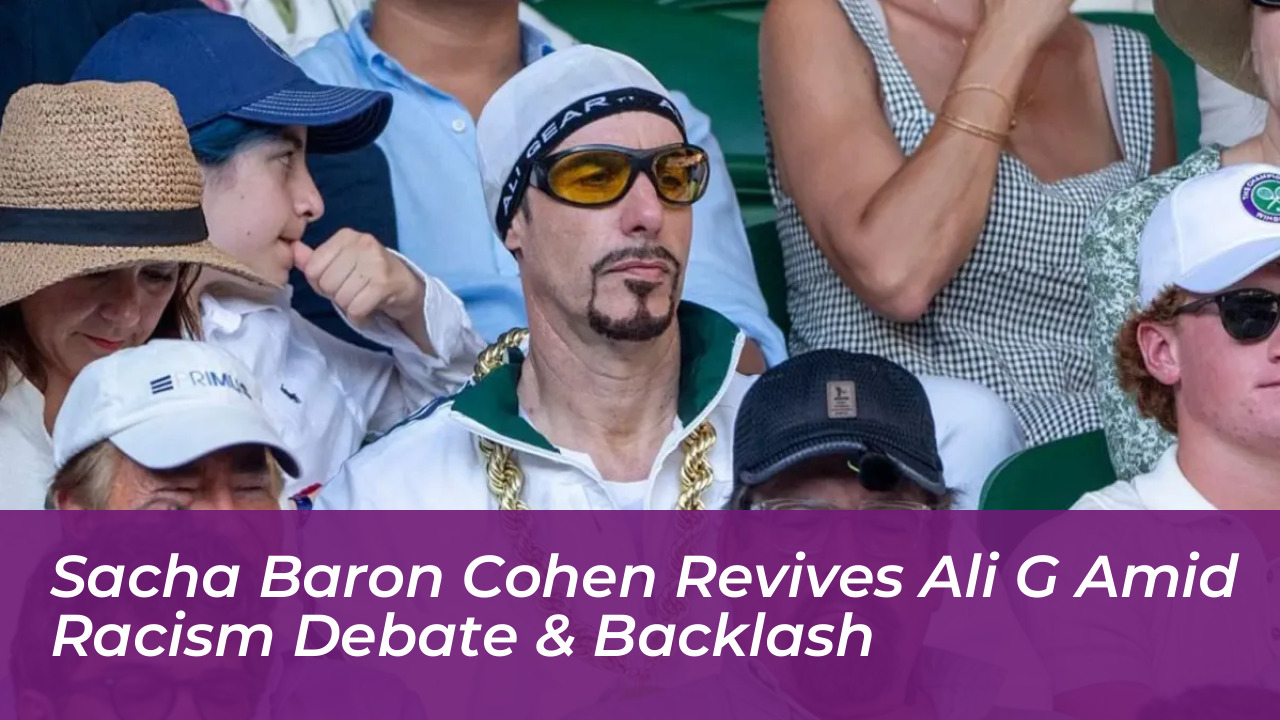

British comedian Sacha Baron Cohen is bringing back his controversial comedy creation, Ali G, with a brand-new feature film titled Ali G: Who Iz I?. Set for a theatrical release on October 23, 2026, ahead of a streaming rollout on Prime Video, the project has ignited a fierce cultural debate regarding racial representation, satire, and the boundaries of comedy in the modern era.
The film marks Baron Cohen’s feature directorial debut and follows the character’s return after more than two decades. The mockumentary plot follows Ali G navigating life alongside his pregnant girlfriend, played by actress Morgana Robinson, as they head to America. However, the revival has met immediate resistance from critics and activist groups who argue that the character relies heavily on outdated and harmful racial stereotypes.
The Backlash and Boycott Campaign Against Ali G
The announcement of Ali G: Who Iz I? quickly triggered organized opposition. British media monitoring platform NewsCord launched a global campaign urging movie theaters to refuse screenings of the film, accusing Baron Cohen of using satire as a shield for bigotry. Campaign organizers reported that tens of thousands of emails were sent to major theater chains within days of the trailer’s release.
Critics claim that the tracksuit-clad character, originally introduced on Channel 4 in the late 1990s, promotes exaggerated and offensive caricatures of Jamaican and Black British culture. Activists and historical critics have pointed out that concerns over the character are not new, echoing sentiments from Black comedians who labeled Ali G an “alibi for racism” more than twenty years ago.
Despite the calls for a boycott, the UK Cinema Association emphasized that movie theaters operate to entertain broad audiences rather than act as content censors. Meanwhile, reports that the Picturehouse cinema chain had agreed to a ban were clarified as automated customer service responses for unbooked titles.
Sacha Baron Cohen Defends the Satire
Addressing the controversy head-on, Sacha Baron Cohen defended the character in a cover essay for Time magazine, arguing that the return of Ali G is a deliberate response to a worsening political and cultural climate.
“The fact that Ali G is outdated and problematic is the very reason I resurrected him,” Baron Cohen wrote. “The world he’s returned to is, in many ways, worse than the one he left 20 years ago. All the prejudices my characters are designed to expose haven’t just lingered-they’ve metastasized.”
The comedian stressed that Ali G is intended as a satirical reflection of ignorance-a white imbecile appropriating elements of hip-hop culture. Baron Cohen maintained that the joke targets the privileged establishment that takes the character seriously rather than the cultures from which he borrows.
Publicity efforts for the film have included high-profile promotional events, such as an Ali G lookalike competition in London that drew hundreds of fans touring landmarks like Big Ben and Leicester Square. While the project faces significant scrutiny and organized pushback, Amazon MGM Studios maintains its scheduled release date, leaving audiences to decide whether the satirical approach still resonates today.