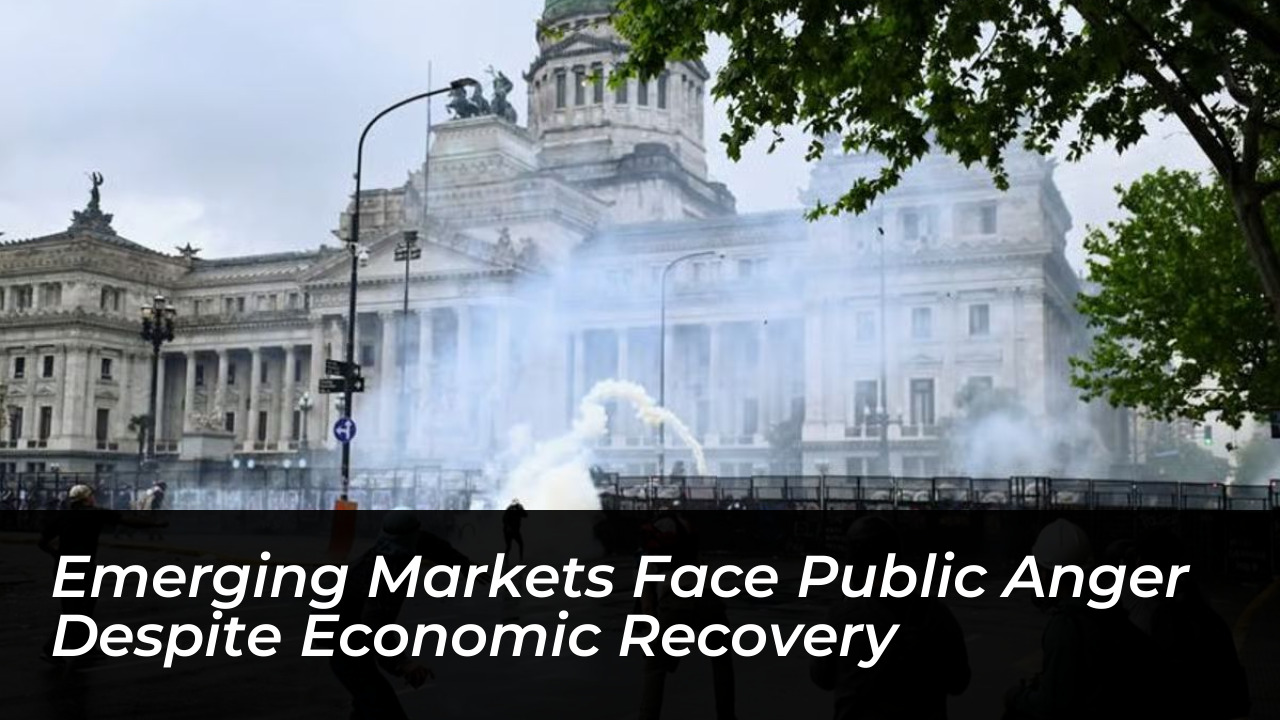

Across emerging economies, a sharp disconnect has emerged between rebounding macroeconomic indicators and the difficult reality on the ground for ordinary households. While aggressive economic reforms, spending cuts, and market liberalizations have successfully restored investor confidence and stabilized public finances in nations such as Argentina, Morocco, and Sri Lanka, everyday citizens continue to grapple with high inflation, limited purchasing power, and persistent poverty.
The Divergence Between Macroeconomic Success and Local Pain
In Argentina, aggressive policy changes under President Javier Milei-who assumed office in 2023-have drawn immense praise from international financial institutions. Inflation has dropped dramatically from nearly 300% to roughly 33%, and foreign imports have expanded. However, small-business owners paint a starkly different picture of the country’s economic standing.
Gustavo Raul Perez, a hardware store operator on the outskirts of Buenos Aires, voted for Milei’s administration but now struggles to make ends meet. “This economic plan is for a few,” Perez noted, explaining that his restocking costs have tripled while local customers have significantly less disposable income. “There was a middle class three years ago. It doesn’t exist anymore.”
This sentiment echoes across multiple developing nations where structural reforms have been implemented to weather global economic shocks. In Morocco, gleaming office towers and rising foreign direct investment contrast sharply with high youth unemployment and frustration in peripheral neighborhoods. Meanwhile, in Sri Lanka, the immediate danger of debt default has receded, but poverty rates remain elevated well above pre-crisis levels.
Drivers of Reform and the Threat of Social Unrest
International lenders, including the International Monetary Fund (IMF), have long urged emerging market governments to eliminate costly subsidies, liberalize exchange rates, and tighten monetary policy. The economic disruptions of the COVID-19 pandemic and the subsequent global food and fuel spikes following Russia’s invasion of Ukraine forced many developing nations to take immediate corrective action.
According to macro experts, leaders often had no viable alternative to these painful overhauls if they wished to avoid a total collapse of foreign investment. Emerging market economies are currently growing at an average of roughly 4%, outpacing advanced economies twofold. Yet, these structural adjustments frequently trigger immediate spikes in the prices of basic goods, squeezing household incomes severely.
Torbjorn Soltvedt, an analyst at Verisk Maplecroft, warned that the inability to curb mounting inequality carries heavy risks. “When people in emerging markets are faced with rising food, fuel and energy costs…that is what they feel immediately,” Soltvedt said, noting that global civil unrest risk has reached multi-year highs.
Inflation hits developing countries harder because food constitutes a much larger portion of consumer spending-accounting for 30% to 50% of typical baskets, compared to just 13% to 14% in the United States.
In Colombo, Sri Lanka, food vendor Sirimodara Wadaramge Sriyakanthi starts her workday before dawn to prepare affordable meals. Despite national economic recovery figures pointing upward, she absorbs rising ingredient expenses to keep lunch packets priced near $2 out of concern for her community. “We have so many expenses,” Sriyakanthi said, highlighting how macro-level stabilization has failed to ease her daily financial burdens.
Balancing Fiscal Discipline with Inclusive Growth
As governments attempt to balance budgets through privatization and subsidy rollbacks, economists warn that ignoring public grievances could ultimately derail reform efforts altogether. Public backsliding threatens to disrupt the exact investment and job creation required to narrow the wealth gap between developing and wealthy nations.
With the World Bank estimating that roughly 1.2 billion people in developing countries will reach working age over the next decade, the pressure on emerging market leaders to deliver inclusive growth has never been higher. IMF Managing Director Kristalina Georgieva has repeatedly emphasized that declining development assistance alongside elevated food and fuel expenses continue to impose immense pressure on vulnerable populations, reinforcing the urgent need for targeted domestic and international support.