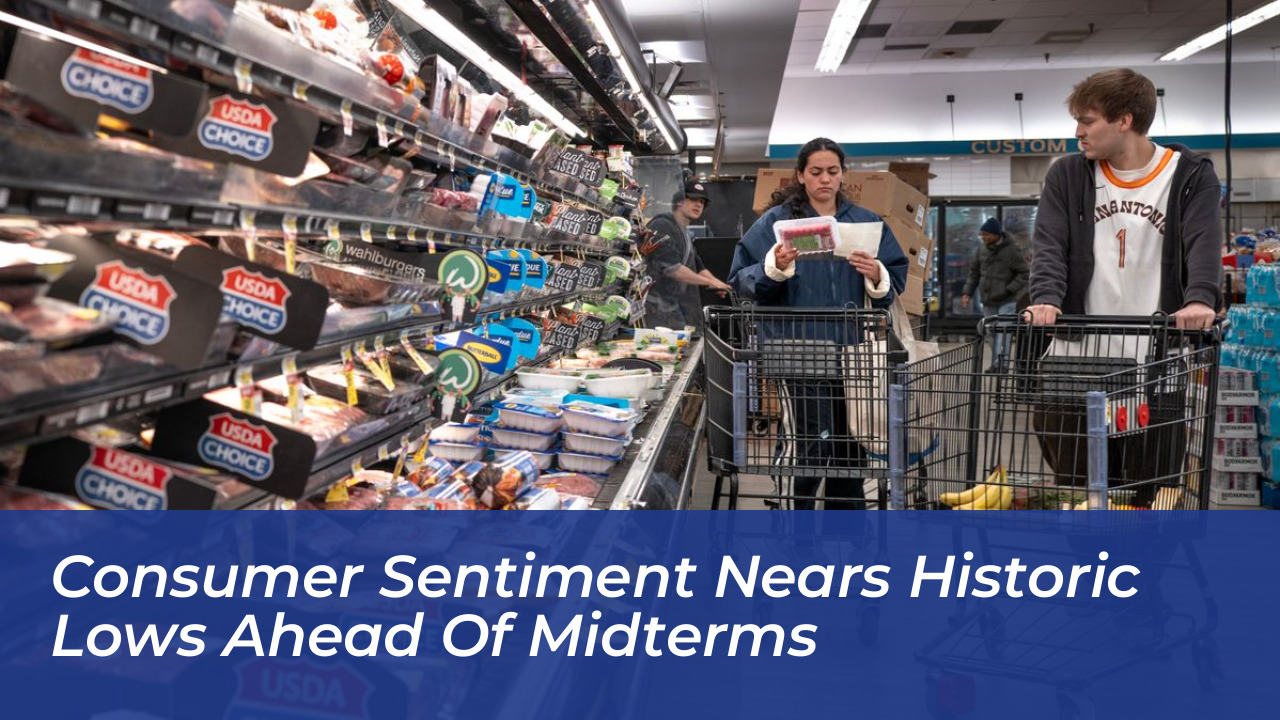

Persistent inflation and elevated gasoline prices have pushed American consumer sentiment close to its lowest level in 74 years, according to the University of Michigan’s final October survey released Friday, October 23, 2026. Household confidence remains deeply depressed ahead of November’s midterm elections, with economic affordability emerging as a major concern for voters across the country.
The survey’s final consumer sentiment index registered at 48.0 for October. This represents a minor decline from 48.1 in September, though it sits slightly above the preliminary October reading of 46.3. October’s final figure stands as the second-lowest numerical reading in the survey’s entire 74-year history, following a record low of 44.8 set in May.
Energy Costs and Inflation Expectations
Energy expenses continue to exert substantial pressure on household budgets. U.S. crude oil prices exceeded $116 per barrel, reaching a six-month high. AAA data reported that the average national gasoline price stood at $4.29 per gallon, marking an approximate 43% surge since the Iran war began in late February.
Shoppers participating in the survey also reported expectations that inflation will climb further over the coming year. Year-ahead inflation expectations ticked up to 4.7% from 4.6% in September, while five-year inflation expectations edged upward to 3.5%. Federal government data previously showed prices rising at an annual rate of 3.7% in September, remaining more than a percentage point higher than the Federal Reserve’s target rate of 2%.
Political Divides and Independent Voter Anxiety
Surveys of Consumers director Joanne Hsu noted in a statement that while both Democrats and Republicans registered slight improvements in consumer sentiment in October compared to the previous month, these gains were entirely outweighed by a sharp decline in sentiment among independent voters.
"Purchasing power continues to dominate consumer views of the economy," Hsu said. This pocketbook anxiety has transformed the upcoming midterm elections into an effective referendum on the cost of living. Voters are weighing daily financial strains-ranging from grocery bills and housing expenses to rising credit card balances and higher loan rates caused by climbing Treasury yields-against broader government economic data.
Economic Resilience Versus Lived Experience
The dismal consumer mood contrasts sharply with select macroeconomic indicators. Gross domestic product grew during the three-month period ending in June, defying predictions of a downturn triggered by the conflict in the Middle East. Consumer spending, which accounts for roughly two-thirds of U.S. economic activity, surged 0.9% in August, according to government reports.
However, other areas of the economy have displayed noticeable weakness. Hiring slowed dramatically in September, with employers adding only 29,000 jobs-a steep drop from the 162,000 jobs added in August and well below economists’ expectations. This sluggish job growth, paired with escalating living costs, has widened the gap between official economic reports and the financial reality experienced by everyday households.
With early November’s midterm elections fast approaching, political analysts note that near-record-low consumer sentiment serves as a powerful indicator of voter frustration. Whether this widespread pessimism ultimately translates into altered consumer behavior or drives significant shifts at the ballot box will depend heavily on whether households begin to see tangible relief in prices and wages.