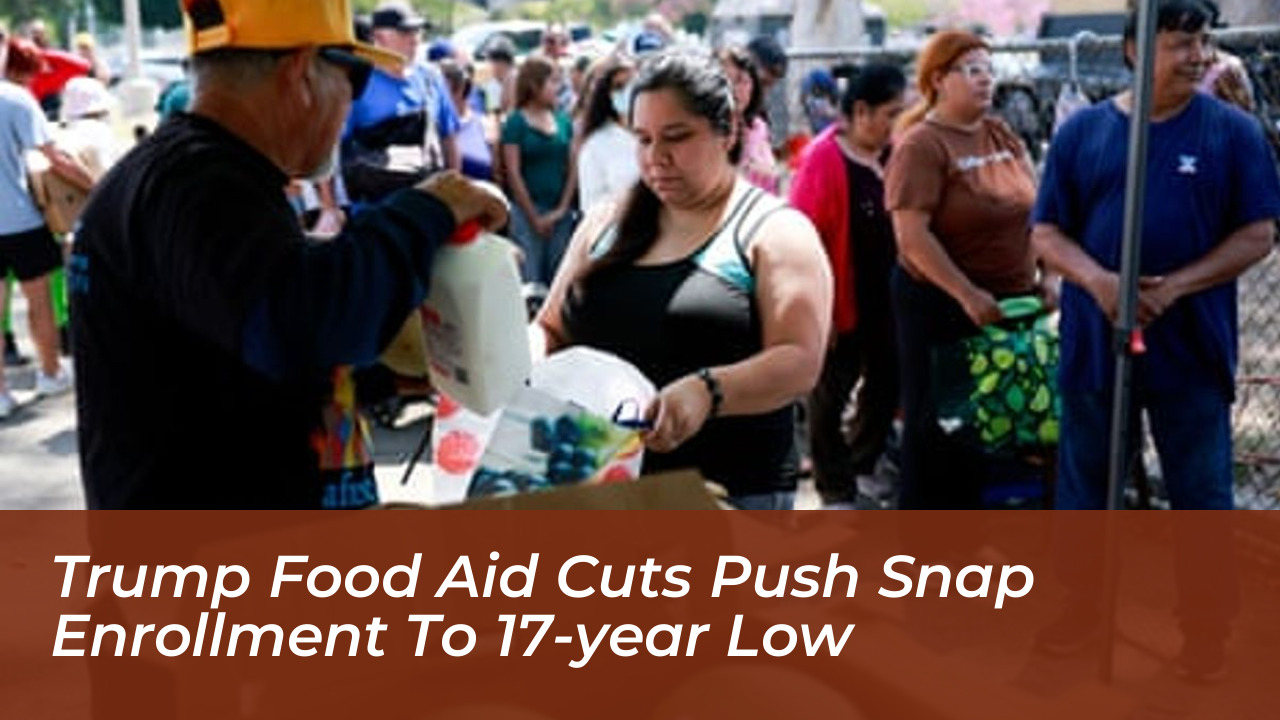

Millions of Americans have lost access to federal food assistance since President Donald Trump signed the One Big Beautiful Bill Act into law in July 2025. Stricter eligibility requirements, administrative delays, and a significant shift in funding responsibilities to state governments have contributed to a sharp decline in enrollment nationwide.
Data compiled by the US Department of Agriculture (USDA) and state agencies show that the Supplemental Nutrition Assistance Program (SNAP) has lost approximately 5.5 million recipients, including about 2 million children. National SNAP enrollment fell from 41.6 million people in July 2025 down to 36.5 million in June 2026, marking a national drop of approximately 13% and driving participation to its lowest level in 17 years.
Impact Across States and Severe Declines
The legislative changes have affected states unevenly, with some experiencing catastrophic drops in participation. The Center on Budget and Policy Priorities (CBPP) reported that participation dropped particularly sharply in several states, while advocates warn that fewer active recipients do not mean lower community need.
Texas recorded 2.8 million SNAP recipients in September 2026, representing its lowest enrollment since August 2009, according to the Texas Health and Human Services Commission (HHSC). Enrollment in Texas declined 20.8% from September 2025, marking the steepest year-over-year decrease in two decades. The CBPP reported that Texas lost 709,435 recipients, the largest numerical decline of any state in the nation.
Other states have faced even starker reductions. Arizona saw SNAP participation plummet by as much as 45% to 50% following the implementation of the new law. Across the country, eight states have seen participation drop by 20% or higher over the past year.
Stricter Work Requirements and Cost Shifts
Under previous federal guidelines, only able-bodied adults between the ages of 18 and 54 without dependents under 18 were required to work a minimum of 20 hours per week or face benefit limits after three months. The One Big Beautiful Bill Act expanded these rules to mandate that individuals aged 18 to 64 without dependents under 14 perform paid or volunteer work for at least 20 hours weekly.
Additionally, the legislation altered the financial burden of administering the program. Starting in October 2025, states were required to cover 75% of SNAP administrative costs, up from the previous 50% split. Additional policy shifts set to take full effect by 2027 will require states to absorb between 5% and 15% of actual benefit costs if their payment error rates exceed 6%.
Proponents of the legislation, including Agriculture Secretary Brooke Rollins, defended the measures as a triumph for workforce participation. Rollins remarked during an August farming festival in Minnesota that moving millions off food stamps is a “pretty big win” for those who “love work and celebrate work.”
Ripple Effects on School Meals and Local Food Banks
Anti-hunger advocates, non-profit directors, and educators argue that the cuts have severely damaged the broader social safety net. Because school districts rely on SNAP participation rolls to automatically certify children for free breakfast and lunch through the Community Eligibility Provision (CEP), declining SNAP numbers have directly jeopardized student access to nutrition.
In Houston, Texas, for example, 26 schools that previously provided free meals to all students under the CEP program lost eligibility due to drops in direct certification numbers. Food banks and community pantries have simultaneously reported a massive surge in demand. The Food Bank Council of Michigan experienced a threefold increase in daily helpline calls after the SNAP changes took effect, forcing temporary service suspensions due to overwhelming volume.
As state agencies prepare for upcoming administrative and cost-sharing obligations tied to payment error rates, policy experts warn that processing delays could worsen. Without congressional intervention to roll back the legislative changes, anti-hunger coalitions caution that food insecurity will continue to escalate nationwide.