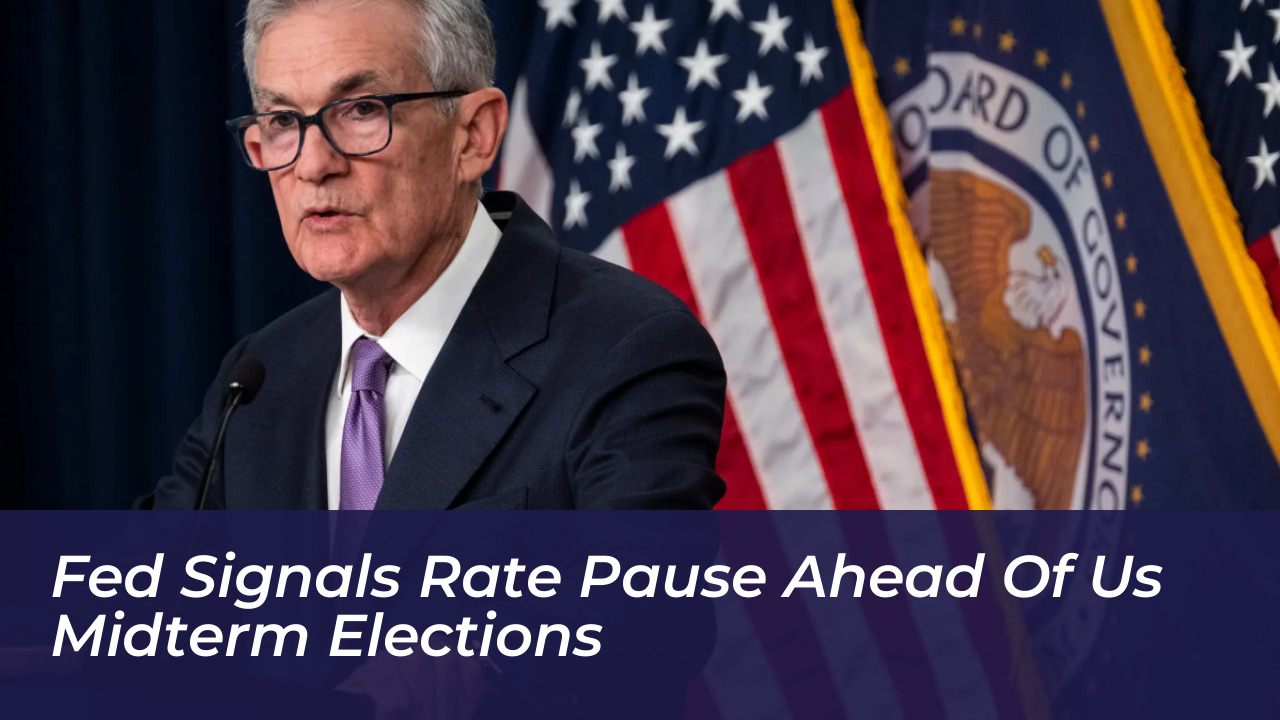

The US Federal Reserve is expected to keep interest rates unchanged at its upcoming policy meeting, analysts say. Persistent inflation and rising energy costs complicate the economic outlook ahead of the November 3 midterm elections. The Federal Open Market Committee (FOMC) will meet over two days and announce its decision at 2:00 p.m. local time (18:00 GMT) on Wednesday.
The expected pause comes after the Fed raised its benchmark federal funds rate for the first time in three years at its September meeting under Fed Chair Kevin Warsh. That move brought the target range to 3.75% to 4.0%. Financial markets are pricing in at least one additional rate increase before the end of the year, despite expectations that policymakers will leave rates unchanged at the immediate upcoming meeting.
The central bank has struggled to return inflation to its long-term 2% target for more than five years. Its preferred inflation measure, the Personal Consumption Expenditures (PCE) price index, peaked at 7.2% in 2022 before successive rate increases helped bring it down to around 2.2% by late 2024. However, recent Consumer Price Index (CPI) data showed inflation heating up again in September, rising 3.7% annually and posting a 0.6% month-over-month surge, keeping policymakers on high alert.
A Politically Fraught Decision Near Election Day
Federal Reserve interest rate changes on the eve of elections are historically tricky propositions. With the next FOMC interest rate decision scheduled for October 28-just six days before Election Day-the central bank faces intense scrutiny regarding its political neutrality.
“There is a political implication for going in October,” Wolfe Research chief economist Stephanie Roth told analysts. She noted that committee members would prefer to avoid action, though incoming economic data makes further moves a distinct possibility. Historically, the Fed has maintained a reputation for avoiding monetary policy adjustments close to election dates.
A recent analysis from Mark Shore of the CME Group indicates that prior to 2022, 1978 was the last time the central bank raised rates in October or November ahead of a midterm election. Historical data shows that the Fed has taken no action 67% of the time in meetings beginning in October of election years. When the central bank has acted during this window, it has historically been more likely to cut interest rates than to raise them.
Historical Context: Midterm Versus Presidential Years
Examining 27 US federal election cycles from 1972 to 2024 reveals distinct patterns in how the central bank navigates monetary policy near election dates:
- General Tendency: Across the September-to-election window, the Fed took no policy action 52% of the time.
- Midterm Elections: Between 1972 and 2024, midterm elections occurred 13 times. The Fed stood pat 54% of the time. When removing the 1982 outlier-when Paul Volcker’s FOMC both hiked and cut rates while switching targets from the M1 money supply back to the Fed Funds rate-the inaction rate rises to 62%.
- Inflation Triggers: Every instance where the Fed increased rates near a midterm election-specifically in 1978, 1982, 2018, and 2022-was directly tied to rising inflationary pressures.
- Presidential Years: In presidential election cycles, the Fed split evenly between pausing and acting, leaning heavily toward rate cuts (71% of active moves) when monetary easing was triggered by economic slowdowns or financial crises.
Market Outlook and Future Rate Trajectory
Following September’s surprise hike, the first increase since July 2023, market participants quickly reassessed the likelihood of further monetary tightening. Odds in the CME FedWatch Tool briefly jumped following hot inflation reports, indicating that traders are weighing the possibility of an additional quarter-point hike before the year concludes.
While economic fundamentals and sticky inflation continue to push the central bank toward aggressive policy responses, the political calendar remains an unavoidable backdrop. Analysts widely expect policymakers to hold rates steady during the late-October meeting, saving any subsequent tightening measures for the December policy session.
Frequently Asked Questions
How likely is another Fed rate move before the midterm elections?
While hot inflation data has kept the possibility of an October rate hike alive, historical precedent and proximity to the November 3 midterms suggest the Fed is more likely to pause in October and consider further policy adjustments in December.
What conditions have historically prompted Fed action near elections?
The central bank typically avoids changing rates close to election dates unless forced by significant economic pressures. Rate hikes near midterms (such as in 1978, 1982, 2018, and 2022) were driven by rising inflation, while rate cuts were prompted by economic downturns or financial crises.
How does the timing of Fed moves differ between midterm and presidential election years?
During midterm election cycles, the Fed is less likely to act, and past rate adjustments were often split between increases and cuts. In presidential election years, active policy moves lean heavily toward rate cuts (71% of active interventions) to address economic cooling.
What was the target range for the federal funds rate following the September meeting?
The FOMC raised the federal funds rate in September to a target range of 3.75% to 4.0%, marking the first rate hike in three years.
Why is the October 28 meeting considered politically sensitive?
The meeting falls just six days before the November 3 midterm elections. Historically, the central bank has avoided making monetary policy changes so late in the campaign cycle to protect its reputation for political independence.