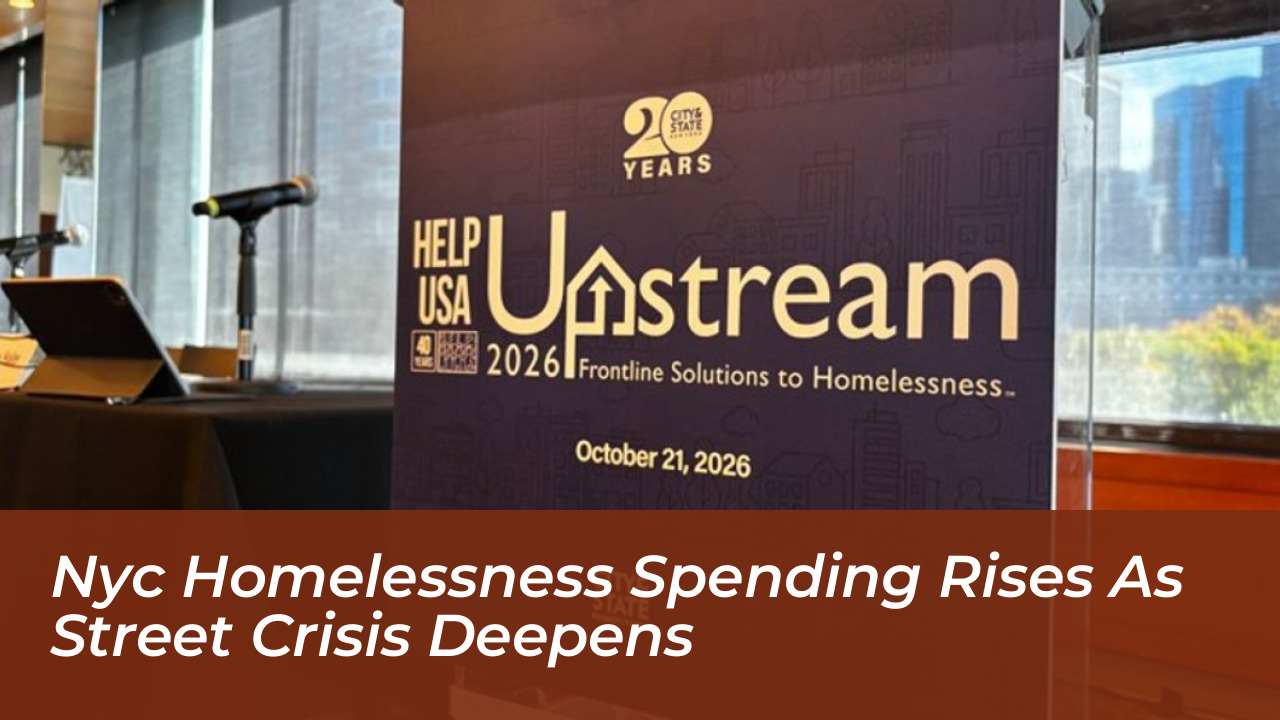

New York City is struggling to reduce homelessness despite sharply increased spending on street outreach and shelter services. Reports highlight overlapping outreach programs, administrative delays, and a severe shortage of affordable homes as major obstacles to addressing the deepening street crisis.
According to the New York State comptroller, calls to 311 concerning homelessness tripled between 2019 and 2024, while spending on street homelessness tripled over the same period. Nearly 5,000 people slept on the city’s streets or in subway stations in 2026, underscoring the persistent challenges facing municipal services under Mayor Zohran Mamdani’s administration.
Separately, New York City Human Resources Administration Executive Deputy Commissioner Andrea Reid reported that 84,037 people were living in the city’s shelter system as of October 14, 2026. This comprehensive total included 28,157 children, 19,400 single men, and 7,583 single women, reflecting an emergency system operating under immense strain.
Soaring Expenses and Growing Numbers
Financial disclosures and state audits show that New York City has more than tripled its spending on unsheltered homelessness since 2019, allocating nearly $368 million to programs targeting individuals living outdoors. At the same time, the city’s official count of unsheltered individuals rose from 3,588 in fiscal year 2019 to 4,504, marking a 26% increase from pre-pandemic levels.
State Comptroller Thomas DiNapoli noted that while the city has successfully sheltered roughly 97% of its overall homeless population-which approaches 140,000 people-the growth in street homelessness merits intense scrutiny regarding resource allocation and program efficacy. Projecting future budgets, the comptroller’s office noted that spending on unsheltered homelessness is expected to peak before plateauing, driven by shifts in federal grants and local tax adjustments.
Coordination Challenges and Outreach Overlaps
Advocates, business leaders, and caseworkers point to a fragmented operational structure as a primary reason higher funding has not yielded a shrinking street population. Dozens of outreach teams deployed by different city, state, and private entities frequently duplicate efforts without centralized communication.
- Multiple agencies contract separate providers, leading to repeated interviews for the same homeless individuals.
- Disparate technological systems prevent real-time data sharing across distinct outreach organizations.
- A lack of a single coordinating authority leaves accountability diffuse across municipal departments.
Critics argue that outreach workers are bogged down by administrative burdens and rising caseloads rather than focusing on long-term case management and permanent housing placement.
The Role of Low-Barrier Shelters and Safe Havens
City officials have emphasized the expansion of specialized low-barrier facilities, such as Safe Havens. These sites offer private or semi-private rooms, fewer rules, and no strict curfews to entice individuals hesitant to enter traditional shelters. The city currently maintains approximately 4,400 Safe Haven beds.
However, community advocates and homeless individuals report that finding an open, suitable bed remains difficult. Many people living on the streets cite safety concerns, previous negative shelter experiences, or strict logistical hurdles as reasons for remaining outdoors. Experts maintain that without a direct pipeline from street outreach to permanent, affordable housing, temporary solutions will continue to face severe bottlenecks.