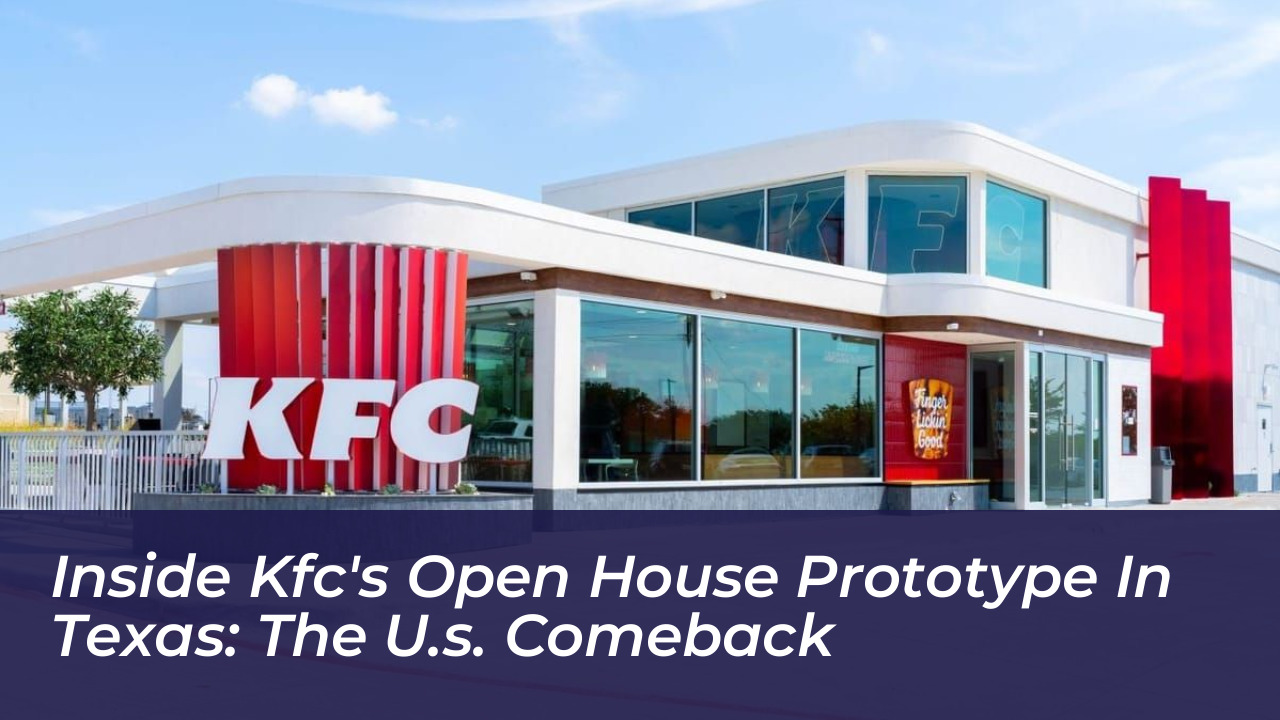

Kentucky Fried Chicken is rewriting its operational playbook. The legacy brand has officially unveiled its brand-new Open House restaurant prototype in McKinney, Texas. Situated just outside Dallas and near parent company headquarters in Plano, this 3,400-square-foot location functions as a high-tech learning laboratory. Under the leadership of U.S. System President Catherine Tan-Gillespie, the brand aims to jolt its system forward, transitioning from a beloved memory into a daily dining destination for modern American consumers. Following a challenging period that involved seven consecutive quarters of declining same-store sales, the brand has rebounded with three successive quarters of growth. The Open House prototype anchors a comprehensive turnaround strategy based on the four fundamental pillars of product, promotion, place, and price. By testing futuristic architectural layouts alongside simplified back-of-house operations, KFC is shaping the blueprint for future nationwide unit growth and remodels.
Introduction to KFC’s Strategic Comeback in Texas
The strategic deployment of the McKinney Open House marks a deliberate pivot in how the fast-food giant approaches consumer engagement. After experiencing consecutive quarters of sluggish performance, leadership realized that cosmetic updates would no longer suffice in a hyper-competitive quick-service restaurant market. The 3,400-square-foot facility serves as an active testing ground where real-time consumer feedback dictates architectural adjustments and service model refinements.
Transitioning from a nostalgic weekend treat into a regular weekday habit requires a fundamental rethinking of convenience, speed, and environment. Parent company Yum Brands backed this initiative with substantial capital, tasking the executive team with modernizing every touchpoint of the guest experience. This physical transformation represents a calculated bet on experiential retail within the fast-food sector.
Catherine Tan-Gillespie and her leadership team designed this ecosystem to address the friction points that plague traditional fast-food outlets. By studying customer behavior in real-time, the McKinney store provides quantifiable data on how physical space influences order frequency and ticket sizes. Every design choice supports the overarching goal of reclaiming market share in the competitive domestic landscape.
Mid-Century Modern Architecture and Exterior Experience
Stepping Away from Legacy Fast-Food Aesthetics
Stepping away from traditional legacy restaurant designs, the McKinney Open House embraces a striking mid-century modern aesthetic. Architects incorporated oversized glass windows to maximize natural light and offer exterior passersby total transparency into the dining room. This open-air aesthetic aims to build immediate consumer trust and invite hesitant guests back through the doors.
The exterior features a welcoming patio, a covered breezeway, dual drive-thru lanes, and a dedicated mobile pickup zone designed to eliminate friction for digital-first guests. Outdoor speakers pump ambient music through the drive-thru queues, transforming a standard transactional wait into an immersive brand experience. Warm timber accents harmonize with natural rock and succulent displays that reflect the local Texas landscape inside the 52-seat dining room.
Digital-First Convenience Zones
Efficiency starts before a customer even steps inside the building. Dual drive-thru lanes separate traditional order placers from app-based mobile pickup customers, drastically cutting down transaction times during peak afternoon and evening rushes. This separation prevents bottlenecks that typically frustrate time-conscious commuters.
A dedicated mobile pickup zone further streamlines off-premise dining. Delivery drivers and digital app users can retrieve their orders without waiting in standard lobby lines. These thoughtful architectural inclusions reflect an intimate understanding of modern consumer habits, where friction-free digital integration dictates brand loyalty.
Immersive Interior Design and Guest Touchpoints
The Celebration Booth and Customizable Spaces
The interior layout includes experiential touchpoints designed to encourage patrons to linger rather than treat the restaurant as a transactional pit stop. A standout architectural feature is the Celebration Booth. This glass-enclosed nook features digital wrap-around screens that project immersive, customizable themes. Guests can celebrate birthdays, milestones, or simply enjoy their fried chicken surrounded by digital animations without paying a reservation fee.
When unoccupied by private parties, the booth functions seamlessly as standard premium dining space. This flexible architecture ensures that square footage generates revenue during peak hours while offering high-value community utility during off-peak times. It redefines how quick-service spaces can accommodate local social gatherings.
The On-Site Swag Bar
Adjacent to the dining area sits a dedicated Swag Bar. This merchandising hub offers exclusive KFC apparel, souvenirs, and lifestyle items. By showcasing brand merchandise physically within the restaurant, operators provide consumers with tangible touchpoints that boost emotional connection and increase average ticket sizes.
Retail merchandise transforms routine meal stops into lifestyle experiences. Customers can purchase branded hoodies, bucket hats, and socks while waiting for their orders. This strategy diversifies revenue streams while deepening cultural engagement with younger demographic cohorts who value brand-adjacent fashion.
Balancing Automation With Human Hospitality
Digital Where It Helps: Kiosks and Lockers
Operational efficiency drives every square foot of the Open House layout. Self-order kiosks, digital menu boards, and mobile pickup lockers streamline the digital ordering process. Customers can customize meals, browse high-definition menu items, and complete transactions within seconds.
An automated sauce pod dispensing machine further reduces operational friction. Instead of employees handing out individual dipping cups, customers access automated dispensers for on-demand portions of specialty sauces. This automation eliminates packaging bottlenecks and ensures absolute consistency in condiment delivery.
Human Where It Matters: The Lobby Host
To combat the sterile environment often found in automated quick-service restaurants, KFC introduced a brand-new frontline position: the lobby host. Tasked with greeting incoming guests, assisting with kiosks, delivering food directly to tables, and clearing dining spaces, the lobby host injects genuine fast-casual hospitality into the fast-food ecosystem.
Technology handles repetitive tasks, freeing human staff to focus on guest relations. The lobby host ensures that cleanliness remains immaculate while providing personal warmth that digital screens cannot replicate. This dual approach bridges the gap between high-tech efficiency and traditional customer service.
Behind the Counter: Redesigning Kitchen Ergonomics
The Operations Playground
Behind the counter, Chief Operating Officer Luke Jackson and his team engineered an ergonomic workflow dubbed an operations playground. Traditional kitchen layouts often require cooks to carry raw chicken across wide gaps between separate hoods. At Open House, open-air fryers and pressure fryers sit unified under a single exhaust hood directly adjacent to holding warmers.
Breading tables now utilize a single flour flavor profile rather than juggling multiple variants, reducing employee confusion during peak rushes. This consolidation minimizes physical movement for kitchen staff, reducing fatigue and accelerating preparation times for core menu items.
Three-Station Assembly Line
The assembly pack line is divided into three streamlined stations: sandwiches, drizzles and hot sides, and a dedicated chicken packer who conducts quality assurance checks before sealing each bag. This division of labor prevents cross-contamination and lowers error rates during high-volume periods.
Each station operates with specialized equipment tailored to its specific task. By removing redundant motions and clarifying staff responsibilities, the kitchen maintains consistent product standards across every order while keeping labor overhead manageable.
Expanding the Menu and Daypart Capabilities
Sauce Innovation and the Kwench Beverage Platform
KFC is leveraging insights from its Florida-based culinary spinoff, Saucy, to overhaul its flavor offerings. The McKinney prototype features an extensive pantry of custom dipping sauces and drizzles, including jalapeño ranch, sweet heat ranch, garlic parmesan, and hot honey habanero.
The beverage lineup introduces Kwench, an upgraded global drinks platform featuring Krunch shakes, sparkling lemonades, and boba refreshers. Additionally, the brand brought its popular international Go Bucket snack format to the U.S. market for the first time, giving afternoon snackers smaller portions of popcorn chicken and fries.
Domestic Breakfast Rollout and Snackable Formats
For the first time in its domestic history, KFC is testing an operational breakfast menu at the McKinney location. Available starting at 6 a.m., the streamlined morning menu features breakfast sandwiches constructed with crispy Original Recipe tenders, hash brown sticks, mini cronuts, hot coffee, and iced lattes. Tenders serve as the sole morning protein source, keeping kitchen preparation simple and minimizing food waste.
By opening earlier for breakfast and extending operating hours late into the evening, the restaurant successfully flattens operational demand curves. Peak lunch and dinner rushes become less frantic, while non-peak dayparts generate steady baseline revenue.
Franchise Scalability and Future Outlook
Evaluating Four-Wall Economics
The McKinney prototype is funded by corporate capital, but franchise partners are watching closely. Well-capitalized operators have expressed eagerness to evaluate the prototype’s financial performance. Stewart Restaurant Group in Minneapolis has already committed to building its own version of the prototype.
Corporate leadership emphasizes that Open House is a learning laboratory rather than a rigid blueprint ready for immediate replication. Every new fixture, digital screen, and kitchen workflow undergoes rigorous performance tracking to ensure long-term viability.
The Blueprint for Nationwide Remodels
Components that successfully maximize average unit volume and improve four-wall economics without alienating kitchen staff will be stage-gated for broader national rollout. This methodical evaluation ensures that future investments yield predictable returns for franchise owners.
As the brand continues to refine its operational model in Texas, the lessons learned in McKinney will dictate nationwide architectural and digital standards over the coming decade. The Open House prototype stands as a clear indicator of how heritage brands can successfully reinvent themselves for modern consumers.
Frequently Asked Questions
Where is the new KFC Open House prototype located?
The Open House prototype is located in McKinney, Texas, situated just outside Dallas and close to Yum Brands headquarters in Plano.
What is the primary architectural feature of the new prototype?
The design features a mid-century modern aesthetic with oversized glass windows, outdoor seating patios, dual drive-thru lanes, and a dedicated mobile pickup zone.
Does the McKinney location serve breakfast?
Yes, the location tests a morning menu starting at 6 a.m. featuring breakfast sandwiches with Original Recipe tenders, hash brown sticks, and mini cronuts.
What is a lobby host in this new restaurant design?
A lobby host is a frontline staff member who greets incoming guests, assists with digital self-ordering kiosks, delivers food to tables, and maintains dining room cleanliness.