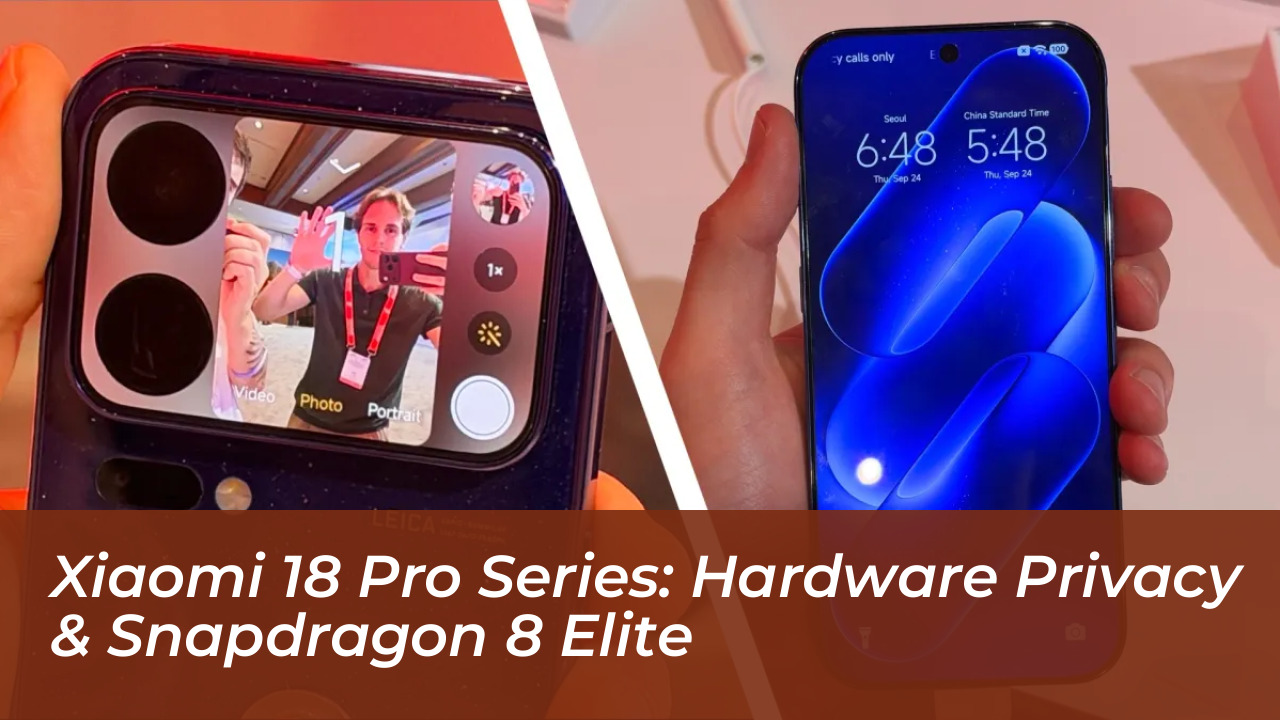
The mobile technology landscape shifts toward radical physical innovation with the debut of the Xiaomi 18 Pro series, featuring the revolutionary Xiaomi 18 Pro and Xiaomi 18 Pro Max. Launched in China on September 23, 2026, these flagship devices move far beyond iterative annual updates to introduce groundbreaking hardware improvements. At the forefront of this release is the deployment of integrated hardware-level smart privacy displays, massive silicon carbon batteries, and Qualcomm’s cutting-edge Snapdragon 8 Elite Gen 6 architecture. Targeting the global premium smartphone market with upcoming international rollouts, Xiaomi aims to redefine daily mobile interaction by solving long-standing user frustrations regarding data security, battery anxiety, and thermal management.
- Introduction to the Xiaomi 18 Pro Series
- Hardware-Level Smart Privacy Displays Explained
- Display Specifications and Secondary Rear Screens
- Front Display Engineering
- Secondary Rear Display Utility
- Performance Benchmarks: Snapdragon 8 Elite Gen 6 Architecture
- Massive Battery Capacities and Rapid Charging Capabilities
- Leica Triple Cameras and Dual 200MP Sensors
- Software Ecosystem: HyperOS 4 and Super XiaoAI 2.0
- Durability Ratings and Build Quality
- Pricing, Color Options, and Global Availability
- Comparative Analysis: Xiaomi 18 Pro vs. Xiaomi 18 Pro Max
- Environmental Impact and Repairability Considerations
- Frequently Asked Questions
- How does the hardware-level privacy display work on the Xiaomi 18 Pro?
- What is the difference between the Snapdragon 8 Elite Gen 6 and the Extreme variant?
- Can the secondary rear screen run full applications or only widgets?
- What are the water resistance ratings for the Xiaomi 18 Pro series?
- When will the Xiaomi 18 Pro series launch globally outside of China?
Introduction to the Xiaomi 18 Pro Series
The unveiling of the Xiaomi 18 Pro and Xiaomi 18 Pro Max in China on September 23, 2026, marks a pivotal moment for flagship mobile engineering. Instead of relying solely on software tweaks and minor camera upgrades, Xiaomi focuses heavily on physical hardware innovations. This strategy directly addresses real-world consumer demands for better battery life, enhanced privacy, and superior raw computing performance.
The standard model houses the Qualcomm Snapdragon 8 Elite Gen 6, while the Pro Max version integrates the higher tier Snapdragon 8 Elite Extreme Gen 6. By bringing these advanced processors to market first, Xiaomi positions itself at the cutting edge of mobile silicon adoption. Both models aim squarely at the global premium smartphone market, with international rollouts scheduled to follow the domestic launch.
Hardware-Level Smart Privacy Displays Explained
Public data theft and shoulder surfing remain persistent issues for smartphone users in crowded public transport, cafes, and open plan workplaces. Traditionally, users rely on aftermarket plastic privacy filters that degrade overall display brightness, scratch easily, and interfere with under display fingerprint sensors. Xiaomi solves this by embedding hardware level privacy display panels directly into the Xiaomi 18 Pro and Xiaomi 18 Pro Max.
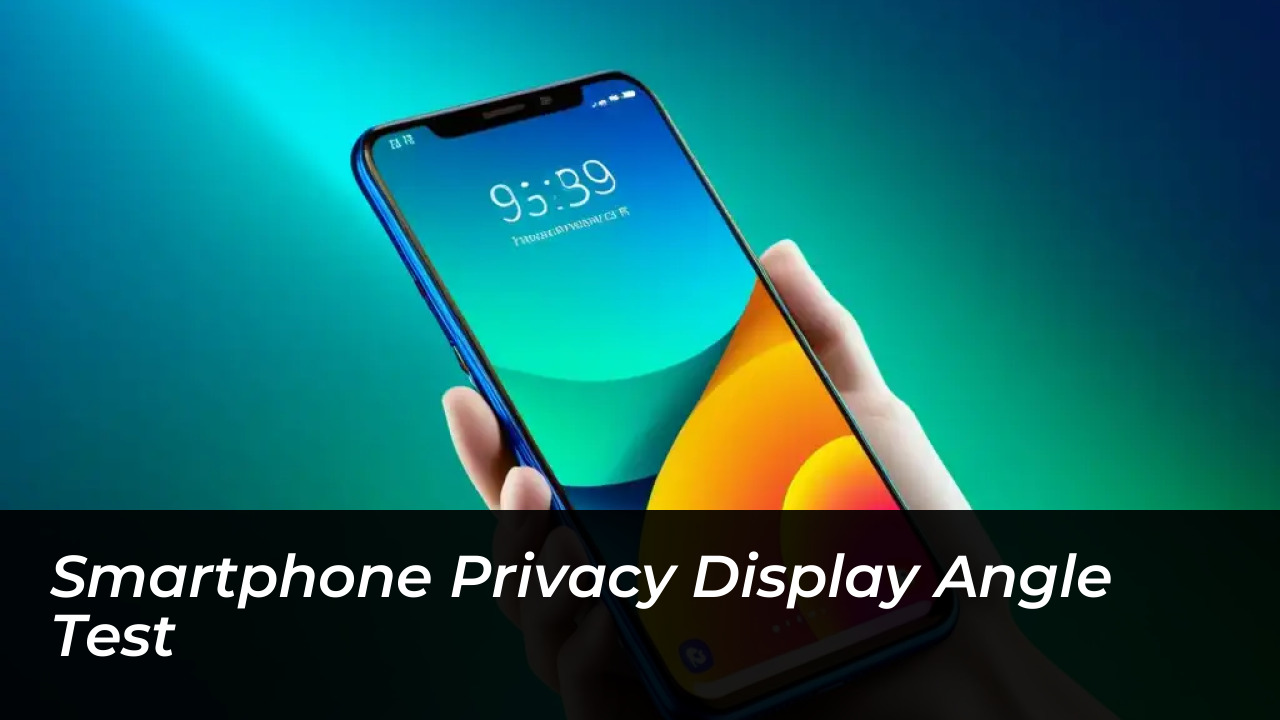
These specialized display panels utilize internal microlouver technology that restricts side angle viewing. When activated, anyone looking at the screen from an adjacent angle sees only a darkened or obscured display, while the person directly in front enjoys full clarity and vibrant color reproduction. The privacy mechanism operates through intelligent triggers rather than a manual switch alone. Users can configure the privacy filter to activate automatically based on geographic location, such as arriving at an office or walking into a financial institution.
Alternatively, the front facing camera can detect unauthorized viewers looking over the user shoulder in real time. Once detected, the system instantly narrows the viewing angles to safeguard sensitive on-screen text, emails, and financial applications. This seamless integration removes the compromises associated with stick-on plastic screen protectors.
Display Specifications and Secondary Rear Screens
Front Display Engineering
Front display configurations cater to different ergonomic preferences across the two models. The standard Xiaomi 18 Pro features a 6.4 inch 120Hz flat OLED panel, which balances pocketability with buttery smooth refresh rates and comfortable one-handed operation. Meanwhile, the larger Xiaomi 18 Pro Max stretches to a sprawling 6.9 inch curved OLED display surrounded by ultra thin 0.99mm bezels.
Both panels achieve an eye-searing peak brightness of 4,000 nits, ensuring exceptional outdoor legibility even under direct sunlight. Protection comes via Dragon Crystal Glass 3.0, offering significantly improved drop and scratch resistance compared to previous glass formulations.
Secondary Rear Display Utility
Flipping the phones over reveals a secondary rear OLED display neatly integrated into the prominent camera island. The standard Pro model houses a 2.7 inch rear screen, while the Pro Max features a slightly larger 2.9 inch panel. Protected by scratch resistant glass, these secondary screens add genuine everyday utility.
The interface supports over 100 app cards, allowing users to check quick notifications, control media playback, and run AI design widgets without waking the primary display. Creators can use the rear screen to frame high-resolution selfies utilizing the primary Leica camera sensors for superior portrait quality.
Performance Benchmarks: Snapdragon 8 Elite Gen 6 Architecture
Raw processing power stems from Qualcomm newest 2nm silicon architecture, built upon fourth-generation Oryon CPU cores. The standard Xiaomi 18 Pro runs the Snapdragon 8 Elite Gen 6, while the Pro Max steps up to the Snapdragon 8 Elite Extreme Gen 6 for maximum clock speeds and sustained multi-core output. Both chips pair with up to 16GB of lightning-fast LPDDR5X RAM and up to 1TB of ultra-responsive UFS 4.1 storage.
Sustained performance requires advanced thermal management to prevent throttling. Xiaomi equips both models with circular cold-pump thermal systems. This liquid cooling architecture circulates coolant continuously across the processor and battery compartments, keeping temperatures low during extended gaming sessions, intense multitasking, and prolonged 4K video recording.
Massive Battery Capacities and Rapid Charging Capabilities
Battery longevity remains a primary engineering focus for the 2026 flagship generation. The Xiaomi 18 Pro packs a massive 7,000mAh battery, while the larger Xiaomi 18 Pro Max houses an incredible 8,500mAh cell. These high-density silicon carbon batteries deliver up to three days of moderate use on a single charge, effectively eliminating battery anxiety.
Charging speeds match these massive capacities without making users wait hours tethered to a wall. Both devices support 100W wired HyperCharge, capable of restoring a depleted 7,000mAh or 8,500mAh cell from zero to full power in under 40 minutes. Additionally, the phones support 50W wireless charging and 27W reverse wired charging, allowing users to top up accessories or share power with friends.
Leica Triple Cameras and Dual 200MP Sensors
Co-engineered with Leica, the camera array on the Xiaomi 18 Pro and Xiaomi 18 Pro Max prioritizes high-resolution sensor architecture. Both models share an identical rear camera configuration:
- Main Camera: 200MP 1/1.28-inch Light Hunter 960 sensor with an f/1.67 aperture and optical image stabilization.
- Periscope Telephoto: 200MP 1/1.56-inch sensor offering 3.2x optical zoom, 12.8x lossless zoom, close-up macro focusing from 12cm, and an 83% boost in light capture on the Pro Max.
- Ultrawide Camera: 50MP sensor with a 102-degree field of view.
For self-portraits and video calls, both devices incorporate a high-resolution 50MP front-facing camera. Image processing runs through Xiaomi new Legendary Moment engine, tuned specifically to deliver natural skin tones, deep contrast, and balanced dynamic range in challenging lighting conditions.
Software Ecosystem: HyperOS 4 and Super XiaoAI 2.0
Software operations rely on HyperOS 4, which introduces deep cross-device integration through Super XiaoAI 2.0. This advanced AI assistant manages context-aware tasks, translates voice calls in real time, and automates smart home routines across the entire Xiaomi product ecosystem. The software is designed to learn user habits and streamline daily workflows efficiently.
Hardware integration extends to a customizable physical AI button located on the side of the chassis. Users can program this button to launch specific applications instantly, capture quick voice memos, or trigger the hardware privacy screen manually with a single press, ensuring effortless control over software features.
Durability Ratings and Build Quality
Flagship hardware demands robust physical protection against dust, water, and accidental drops. The Xiaomi 18 Pro series achieves comprehensive ingress protection ratings, holding IP66, IP68, and IP69 certifications simultaneously. An IP69 rating ensures the devices withstand high-pressure and high-temperature water jets, far exceeding standard consumer electronics durability norms.
Additional hardware features include Ultra-Wideband digital car key support for compatible smart electric vehicles, enhanced linear haptic motors for crisp tactile feedback, and stereo speakers tuned for immersive spatial audio playback. The combination of aerospace-grade materials and reinforced glass ensures exceptional longevity.
Pricing, Color Options, and Global Availability
In the Chinese domestic market, pricing structures reflect the tiered hardware configurations and premium materials used:
- Xiaomi 18 Pro: Starts at CNY 5,999 (approx. $895) for the 12GB/256GB base model, scaling up to CNY 9,999 (approx. $1,492) for the 16GB/1TB Transparent Edition.
- Xiaomi 18 Pro Max: Starts at CNY 6,999 (approx. $1,045) for the 12GB/256GB configuration, topping out at CNY 10,999 (approx. $1,641) for the Transparent Edition.
Colorways include Galaxy Blue, Ice Peach Pink, White, Black, and a clear transparent back panel. Xiaomi confirmed that global releases will follow later in the year, marking the first time the Pro series receives an official international rollout.
Comparative Analysis: Xiaomi 18 Pro vs. Xiaomi 18 Pro Max
| Feature | Xiaomi 18 Pro | Xiaomi 18 Pro Max |
|---|---|---|
| Front Display Size & Type | 6.4-inch Flat OLED (120Hz) | 6.9-inch Curved OLED (120Hz) |
| Secondary Rear Screen | 2.7-inch OLED Panel | 2.9-inch OLED Panel |
| Processor | Snapdragon 8 Elite Gen 6 | Snapdragon 8 Elite Extreme Gen 6 |
| Battery Capacity | 7,000mAh Silicon-Carbon | 8,500mAh Silicon-Carbon |
| Base Starting Price (China) | CNY 5,999 (approx. $895) | CNY 6,999 (approx. $1,045) |
Choosing between the two models depends largely on screen size preference and battery endurance requirements. While the standard Pro offers a pocket-friendly flat display and ample power, the Pro Max pushes boundaries with a massive curved panel, extreme processor tuning, and an industry-leading 8,500mAh battery.
Environmental Impact and Repairability Considerations
High-density silicon-carbon batteries and dual-screen configurations present unique manufacturing and recycling challenges. The chemical composition of advanced silicon-carbon cells requires specialized recovery procedures during early-stage recycling initiatives to ensure sustainable material sourcing.
Specific repair challenges are associated with dual OLED displays, tight adhesive bonding, and IP69 water-resistance seals. Because these phones utilize complex internal layouts and robust waterproof gaskets, professional technicians must follow precise disassembly guidelines. Users should rely on official extended warranty plans and authorized service centers for repairs to maintain structural integrity and water resistance.
Frequently Asked Questions
How does the hardware-level privacy display work on the Xiaomi 18 Pro?
The Xiaomi 18 Pro uses specialized display panels featuring built-in microlouver technology. This hardware restricts side-angle viewing, preventing onlookers from seeing sensitive content while allowing the person directly in front to view the screen clearly. It can be triggered manually via the physical AI button or automatically based on location and shoulder-surfing detection.
What is the difference between the Snapdragon 8 Elite Gen 6 and the Extreme variant?
The standard Snapdragon 8 Elite Gen 6 powers the Xiaomi 18 Pro, offering exceptional performance and efficiency. The Snapdragon 8 Elite Extreme Gen 6, housed in the Pro Max, features higher clock speeds on its fourth-generation Oryon CPU cores for sustained heavy workloads and maximum multi-core output.
Can the secondary rear screen run full applications or only widgets?
The secondary rear screen supports over 100 app cards, quick notifications, media playback controls, and AI design widgets. While it does not run full applications natively, it provides extensive utility for checking information and framing high-resolution selfies with the primary Leica sensors.
What are the water resistance ratings for the Xiaomi 18 Pro series?
The Xiaomi 18 Pro series holds comprehensive IP66, IP68, and IP69 certifications. The IP69 rating specifically ensures that the devices can withstand high-pressure and high-temperature water jets, offering exceptional protection against environmental elements.
When will the Xiaomi 18 Pro series launch globally outside of China?
Xiaomi has confirmed that an international rollout for the Pro series will follow its initial Chinese launch, marking the first time these advanced Pro models receive an official global release.