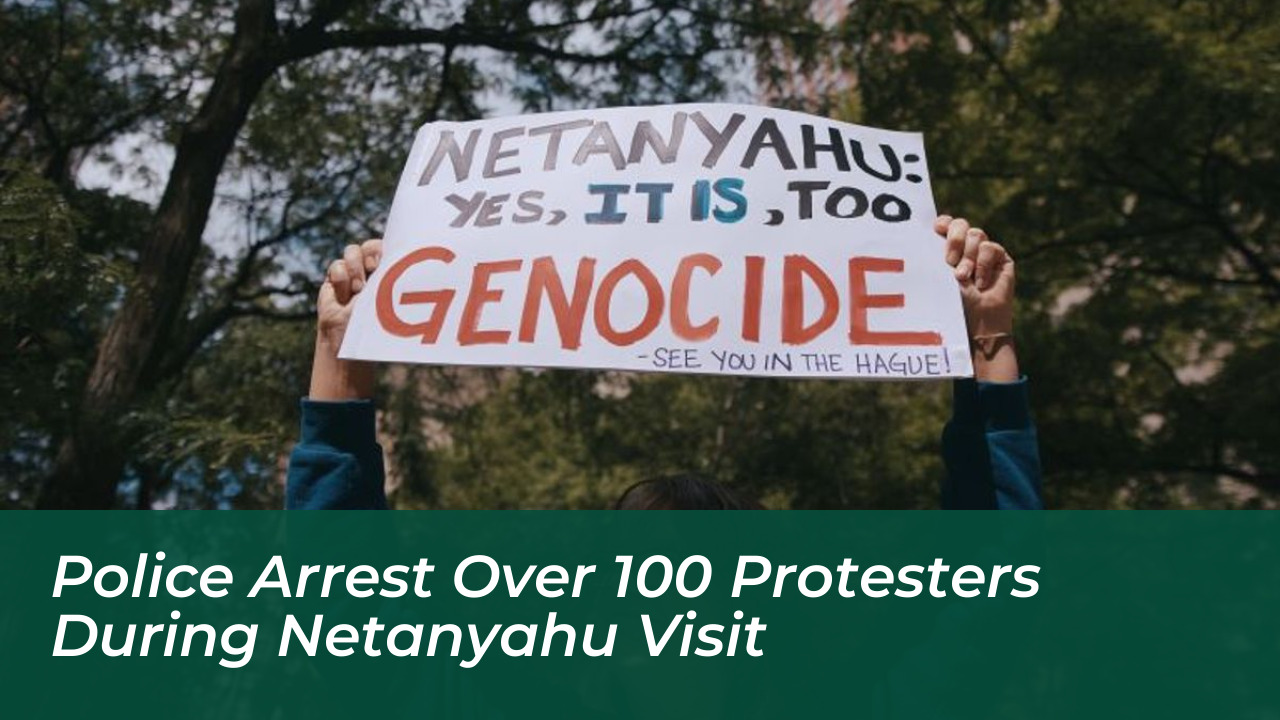
Law enforcement officers in New York City arrested more than 100 people on September 24, 2026, during intense demonstrations opposing Israeli Prime Minister Benjamin Netanyahu’s visit. This police action coincided directly with his address to the United Nations General Assembly. Multiple rallies across Manhattan targeted Israel’s military campaign in Gaza and demanded an immediate cessation of United States military assistance. A high-profile morning sit-in temporarily blocked traffic near UN headquarters on First Avenue, drawing widespread public attention and mobilizing various activist networks.
- Anatomy of the Manhattan Protests
- Morning Sit-In and Traffic Disruption on First Avenue
- High-Profile Detainees and Elected Officials
- The United Nations Address and Global Repercussions
- Netanyahu Defense at the General Assembly
- Walkouts and Diplomatic Isolation
- Local Political Fallout and Municipal Response
- Mayor Zohran Mamdani Counters Netanyahu
- Gridlock Alert Status and Economic Impact on Midtown East
- Comparative Analysis of UNGA Demonstrations
- Historical Context of New York Protests
- NYPD Crowd Control Evolution
- Frequently Asked Questions
- How many people were arrested during the Netanyahu protests in New York?
- Which organizations coordinated the main demonstrations?
- Were any notable public figures detained by police?
- What was Mayor Zohran Mamdani’s official response?
Anatomy of the Manhattan Protests
Morning Sit-In and Traffic Disruption on First Avenue
The coalition mobilization was led by prominent activist groups, including Jewish Voice for Peace, the NYC-Democratic Socialists of America, the Palestinian Youth Movement, and The People’s Forum. Activists blocked First Avenue near United Nations headquarters, wearing uniform white T-shirts bearing messaging such as Fund people not bombs and Free Palestine. This tactical escalation followed earlier demonstrations at John F. Kennedy International Airport targeting military cargo shipments and demanding an end to logistical support for foreign military operations.
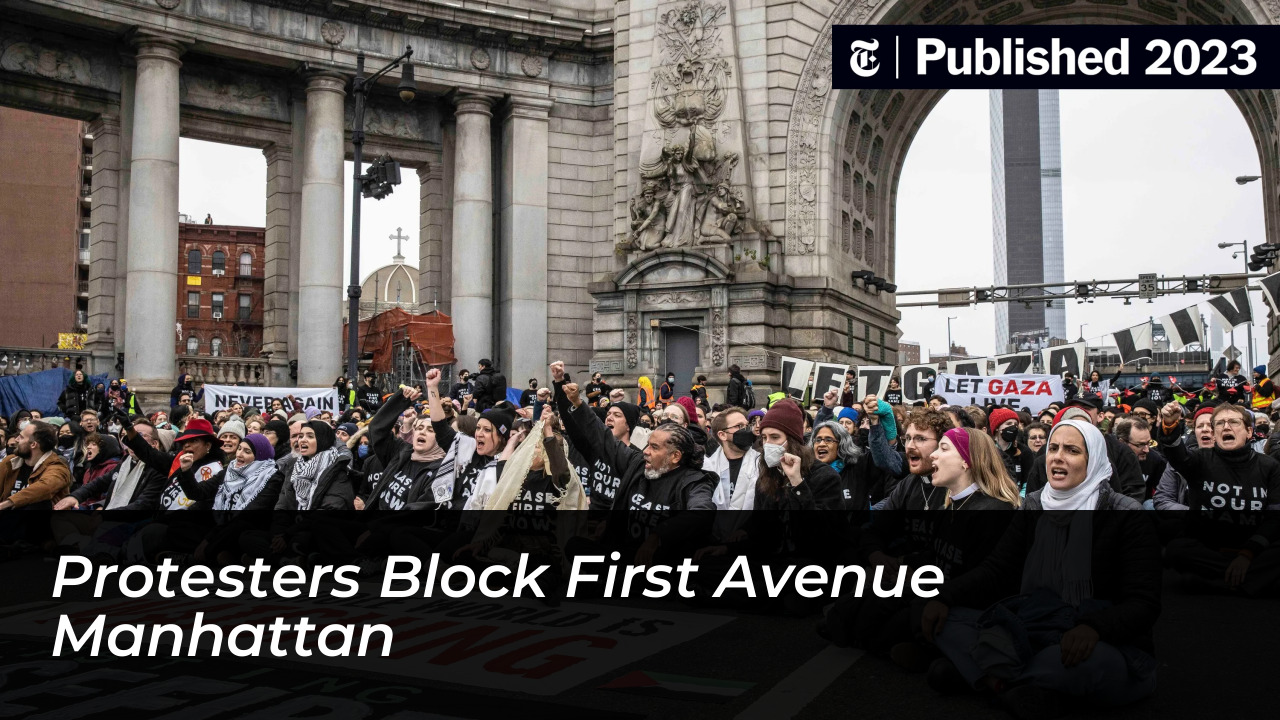
Participants chanted slogans calling for an end to military funding and accountability for civilian casualties in Gaza. Speakers at the rallies emphasized the diversion of local tax dollars toward foreign military operations. Protest coordinators stated that public funds should instead support domestic priorities such as public education and community infrastructure in New York City. Thousands of additional demonstrators marched toward UN headquarters later in the day in a separate mobilization organized by the Palestinian Youth Movement.
High-Profile Detainees and Elected Officials
Law enforcement processed 103 individuals for disorderly conduct under tiered NYPD crowd control guidelines. All detainees were subsequently released following standard processing. The demonstrations drew notable public figures, including award-winning cultural figures and local politicians. Oscar-winning actor Susan Sarandon and Emmy winner Hannah Einbinder joined the morning sit-in outside the UN headquarters, willingly taking seats on the asphalt to amplify the message of the coalition.
Organizers confirmed that nine of the detained individuals were elected officials or candidates for public office. Among those placed in handcuffs by the New York Police Department was New York City Council member Chi Osse, who was taken into custody near First Avenue and East 39th Street. Darializa Avila Chevalier, the Democratic nominee for New York’s 13th congressional district, was also among the group. Avila Chevalier issued a public statement asserting that Netanyahu belongs at The Hague rather than addressing the United Nations General Assembly.
The United Nations Address and Global Repercussions
Netanyahu Defense at the General Assembly
Inside the United Nations General Assembly hall, Prime Minister Benjamin Netanyahu defended his government’s military conduct. He rejected accusations of genocide in Gaza, labeling the allegations as fabrications while maintaining that Israel implemented extensive civilian protection measures. Dozens of international delegates walked out of the assembly hall as he took the podium. During his speech, Netanyahu launched verbal attacks against New York City Mayor Zohran Mamdani, accusing the mayor of spreading falsehoods and claiming local Jewish residents faced safety threats.
The prime minister also referenced active International Criminal Court arrest warrants. He denounced international legal proceedings, maintaining his innocence and criticizing the legitimacy of the tribunal. These remarks deepened diplomatic fractures and intensified tensions both inside the assembly hall and across the streets of Manhattan, where international delegates and local activists reacted strongly to his defense strategy.
Walkouts and Diplomatic Isolation
The mass departure of international delegates from the General Assembly hall marked a striking moment of diplomatic isolation during the address. Representatives from numerous nations stood up and left the room simultaneously as Netanyahu began speaking. This coordinated walkout reflected broadening diplomatic fractures concerning the Middle East conflict and the enforcement of international legal standards across global governing bodies.
Local Political Fallout and Municipal Response
Mayor Zohran Mamdani Counters Netanyahu
Mayor Zohran Mamdani fired back at Netanyahu’s UNGA statements by accusing the prime minister of repeating baseless falsehoods designed to sanitize military actions in Gaza. Mamdani emphasized that Netanyahu remained the subject of an active International Criminal Court arrest warrant. While Mamdani had previously pledged during his political campaign to have Netanyahu arrested if he entered New York City, the mayor acknowledged that municipal authorities lack the legal jurisdiction to carry out such an international arrest.
Despite the lack of jurisdictional power to execute the warrant, Mamdani encouraged New Yorkers to voice their dissent through peaceful demonstrations. He maintained a careful distance from active protest lines while supporting the constitutional right of citizens to assemble and express political grievances without state interference.
Gridlock Alert Status and Economic Impact on Midtown East
The New York City Department of Transportation designated September 21 through September 25, 2026, as official Gridlock Alert Days due to the convergence of the UN General Assembly and high-profile international delegations. The designation warned motorists of extensive street closures, diverted bus routes, and severe traffic delays across Manhattan. Security perimeters, street closures, and commercial delivery disruptions affected local retailers, restaurants, and hotels throughout Midtown East.
Retailers, restaurants, and hotels near the United Nations complex reported reduced foot traffic and canceled reservations during the multi-day diplomatic event. Delivery services experienced significant delays as commercial vehicles faced sweeping access restrictions across the East 40s and First Avenue corridors. Local business owners noted that while UN General Assembly traffic is an annual occurrence, the intensity of this year’s demonstrations amplified local economic disruptions.
Comparative Analysis of UNGA Demonstrations
Historical Context of New York Protests
Protests during Netanyahu’s visits to New York City represent a recurring flashpoint, though the scale and police response vary significantly from year to year. During the 2024 UN General Assembly, over 50 people were arrested in Midtown Manhattan during pro-Palestinian demonstrations, with dozens more taken into custody earlier that week. In contrast, demonstrations surrounding the 2025 UN meetings involved smaller groups protesting near Netanyahu’s Manhattan hotel, with the NYPD reporting zero arrests directly at the UN complex that year.
The September 2026 demonstrations marked a return to high-volume arrests outside the United Nations headquarters, mirroring the large-scale mobilizations seen in prior years. This evolution demonstrates how geopolitical friction translates into recurring street-level activism in major metropolitan centers like New York City.
NYPD Crowd Control Evolution
Police actions during the September 2026 protests unfolded under heightened scrutiny regarding First Amendment protections. A September 5, 2023, legal agreement resolving lawsuits over the NYPD’s response to 2020 racial justice protests established a tiered protest response system that emphasizes de-escalation and graduated warnings.
During the Thursday morning sit-in, officers issued multiple loudspeaker warnings instructing demonstrators blocking First Avenue to clear the roadway. After protesters remained seated on the pavement, police formed containment lines and escorted individuals refusing to disperse onto transport buses.
Frequently Asked Questions
How many people were arrested during the Netanyahu protests in New York?
The New York Police Department confirmed 103 arrests for disorderly conduct on September 24, 2026, with all detainees subsequently released after processing.
Which organizations coordinated the main demonstrations?
Primary mobilization was handled by Jewish Voice for Peace, the NYC-Democratic Socialists of America, the Palestinian Youth Movement, and The People’s Forum.
Were any notable public figures detained by police?
Yes, law enforcement took notable figures into custody, including actor Susan Sarandon, television award winner Hannah Einbinder, Council member Chi Osse, and congressional candidate Darializa Avila Chevalier.
What was Mayor Zohran Mamdani’s official response?
Mayor Mamdani condemned Netanyahu’s statements, referenced the International Criminal Court warrant, noted city jurisdictional boundaries regarding international law, and supported peaceful public assembly.