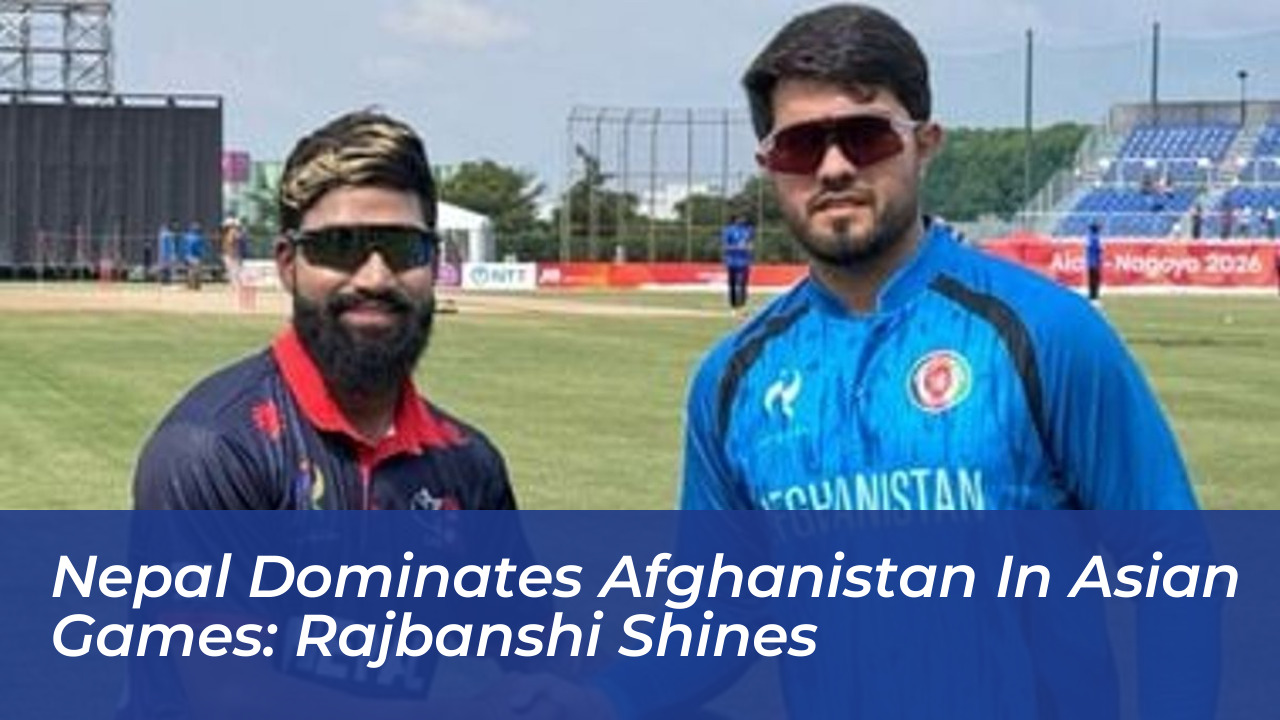

Left-arm orthodox spinner Lalit Rajbanshi produced a masterclass in powerplay bowling during the Asian Games cricket tournament in Nisshin. Facing a high-stakes Group A encounter against Afghanistan, Rajbanshi tore through the opposition top order with a devastating three-wicket burst. His disciplined spell left Afghanistan reeling and established Nepal as an early powerhouse in the regional multi-sport event.
Asian Games Group A Stage Context
The men’s cricket competition at the Asian Games features six competitive teams divided into two preliminary groups. Group A brings together Japan, Nepal, and Afghanistan, while Malaysia, Hong Kong, and Oman battle in Group B. Tournament rules dictate that the top two teams from each preliminary group advance to the knockout stages. Heavyweights India, Pakistan, Sri Lanka, and Bangladesh receive direct entries into the quarterfinals as seeded nations.
For teams like Nepal and Afghanistan, navigating the group stage requires absolute precision. Afghanistan entered this match riding momentum from a 48-run victory over hosts Japan. Meanwhile, this fixture marked Nepal’s grand debut in the tournament campaign, elevating the stakes for both squads to the absolute maximum.
Regional cricket boards invest heavily in youth programs to prepare athletes for these major continental competitions. Fans travel thousands of miles to support their national teams in packed international stadiums.
Afghanistan Innings and Toss Decision
Afghanistan captain Darwish Rasooli won the coin toss at the venue in Nisshin and elected to bat first. Batting first under overcast conditions often provides early movement for disciplined bowling attacks. Afghanistan hoped to post a commanding target to test Nepal’s deep batting lineup. Instead, the decision backfired spectacularly as Nepal’s bowling unit executed their plans with clinical precision.
Both teams fielded their strongest available playing combinations for this crucial Group A encounter. The Afghanistan Playing XI featured Darwish Rasooli, Mohammad Akram, Hassan Eisakhil, Karim Janat, Najibullah Zadran, Mohammad Ishaq, Faisal Shinozada, Abdullah Ahmadzai, Faridoon Dawoodzai, Nangeyalia Kharoti, and Arab Gul Momand. Nepal countered with a balanced lineup comprising Dipendra Singh Airee, Kushal Bhurtel, Aasif Sheikh, Rohit Paudel, Kushal Malla, Gulsan Jha, Sundeep Jora, Lokesh Bam, Sandeep Lamichhane, Karan KC, and Lalit Rajbanshi.
Coaches analyze opponent tendencies for weeks prior to designing these complex matchday batting orders. Weather forecasts play an instrumental role in guiding early morning coin toss decisions.
Lalit Rajbanshi Wreaks Havoc in the Powerplay
Lalit Rajbanshi claimed the new ball and immediately exploited the pitch conditions. His precise length and subtle variations made scoring extremely difficult for the Afghan opening partnership. Opening batter Hassan Eisakhil lasted just two deliveries before walking back to the pavilion. Rajbanshi induced a false stroke, trapping the young opener for a duck. The early breakthrough energized the Nepali fielders and placed instant pressure on the batting side.
Joining his partner under immense pressure, Mohammad Akram struggled to find any timing against Rajbanshi’s relentless accuracy. Akram managed only two runs from eight deliveries before offering an edge. Wicketkeeper-batter Lokesh Bam pouched the catch safely, handing Rajbanshi his second scalp of the morning. The defining moment of the powerplay arrived when experienced all-rounder Karim Janat walked to the crease. Rajbanshi outfoxed Janat with a deceptive, straight delivery that bypassed the batter’s defensive push. The ball crashed directly into the stumps, dismantling Afghanistan’s defense and completing a sensational three-wicket haul.
Spin bowling requires immense mental fortitude, especially when defending low totals in high-pressure tournaments. Analysts review video footage continuously to pinpoint batter weaknesses during fielding restrictions.
Scorecard Analysis After the Early Collapse
The scoreboard reflected a dismal state for Afghanistan as the total ticked to 17 runs for 3 wickets inside five overs. The top-order collapse exposed the middle order far earlier than team management anticipated. Faisal Shinozada and veteran Najibullah Zadran shouldered the massive responsibility of recovery under extreme duress.
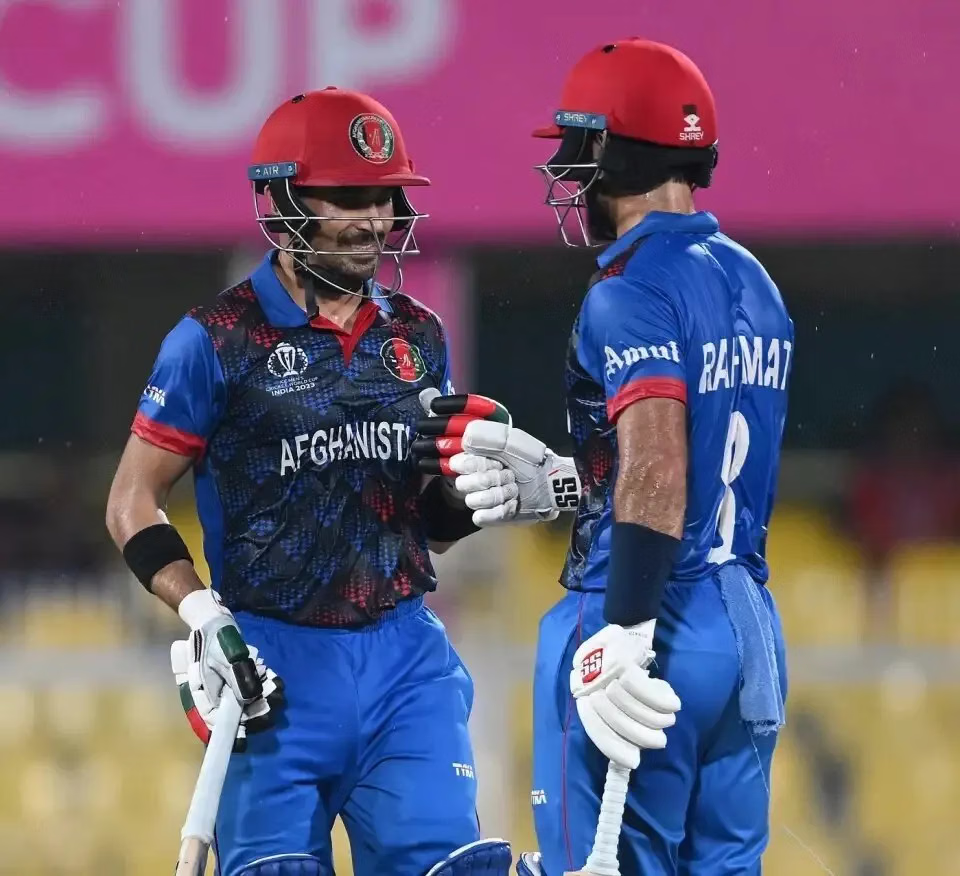
Shinozada showed glimpses of aggression, notably launching a maximum over wide long-on after dropping to one knee against Dipendra Singh Airee. Zadran played a more cautious anchor role, blocking out deliveries to survive the hostile bowling spell. Despite their gritty resistance, the scoring rate remained severely restricted. Afghanistan crawled to 44/3 after 10 overs, forced into a defensive shell by relentless bowling and sharp fielding formations.
Middle-order partnerships demand patience, defensive technique, and smart rotation of strike against quality spinners. Scoreboard pressure often forces mistakes from batters who attempt risky shots too early.
Tactical Brilliance of Nepal’s Bowling and Fielding
Nepal’s strategy extended far beyond Rajbanshi’s opening masterclass. Captain Dipendra Singh Airee rotated his bowling options effectively, introducing spin and pace in short, sharp bursts. Sandeep Lamichhane kept the pressure pinned from the other end, conceding minimal room for rotation.
The fielding unit backed up the bowlers with athletic ground-fielding and vocal encouragement. Every single boundary was saved through committed chases near the ropes, suffocating the Afghan batters and forcing desperation shots. This level of coordination highlights the rigorous preparation undertaken by the Nepali squad ahead of the multi-sport showcase.
Captaincy decisions under pressure define the outcome of closely contested international cricket fixtures. Quick field adjustments prevent batters from settling into a comfortable scoring rhythm.
Strategic Implications for the Quarterfinals
Group A supremacy hangs in the balance as net run rate becomes a critical factor in tournament progression. A dominant win against a side like Afghanistan significantly boosts Nepal’s qualification prospects. Maintaining a superior run rate provides a strategic cushion heading into the final matches of the preliminary round.
Conversely, Afghanistan must reevaluate their batting approach against disciplined left-arm spin moving forward in the tournament. Developing better footwork and rotating strike against accurate spinners will prove vital for their survival in the knockout race.
Tournament organizers update standings immediately after each match concludes across all participating groups. Qualification scenarios keep fans engaged throughout the entire preliminary stage.
Frequently Asked Questions
What was the format of the Afghanistan vs Nepal Asian Games match?
The match was played as a Men’s T20 International fixture under the official Asian Games cricket schedule in Nisshin.
How many wickets did Lalit Rajbanshi take?
Lalit Rajbanshi claimed three crucial top-order wickets during the powerplay, dismantling Afghanistan’s batting foundation with immaculate line and length.
Which teams are in Group A of the Asian Games cricket event?
Group A consists of Nepal, Afghanistan, and tournament hosts Japan.
How do teams qualify for the quarterfinals?
The top two teams from Group A and Group B advance to join seeded nations India, Pakistan, Sri Lanka, and Bangladesh in the quarterfinals.