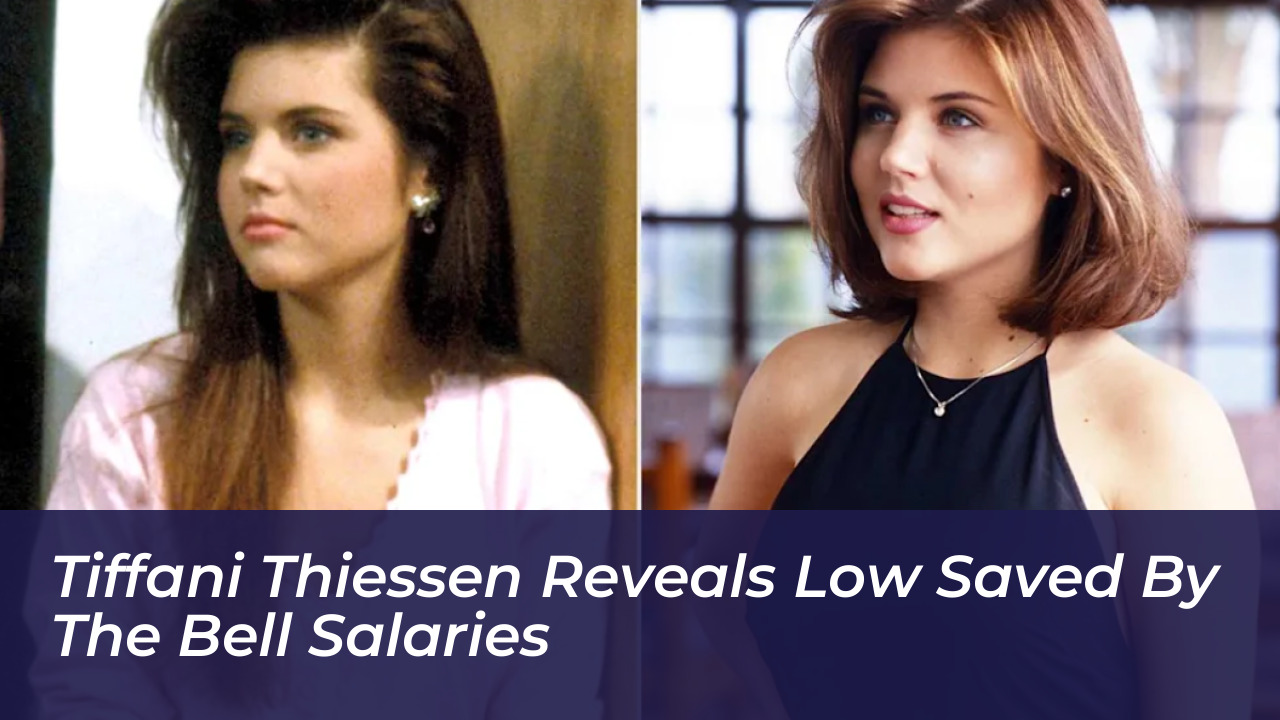

Television history is full of iconic programs that generated billions of dollars for networks while paying their stars meager wages. The hit teen sitcom Saved by the Bell remains one of the most glaring examples of this disparity. Running from 1989 to 1993 on NBC, the Saturday morning staple defined a generation. Yet, behind the bright colors and lockers of Bayside High, the teenage actors experienced a starkly different financial reality. Actress Tiffani Thiessen, who portrayed the beloved Kelly Kapowski, recently shed light on the stark compensation gap during the show’s original run. Her candid disclosures expose the contract mechanics of Saturday morning television, examine how cast members later built wealth, and detail critical lessons learned for child performers today.
Tiffani Thiessen Exposes Low Pay on Saved by the Bell
Minimum Wages for Maximum Culture Footprint
Speaking candidly on SiriusXM’s Page Six Radio, Tiffani Thiessen revealed that the core cast received minimal financial compensation between 1989 and 1992. The financial compensation for the principal cast bore little resemblance to the massive cultural footprint the show achieved globally. Young actors had virtually zero financial leverage or industry protection during initial negotiations. Cast members made very little money and simply focused on executing their demanding jobs under rigorous network television production schedules.
These disclosures match statements from co-stars Mark-Paul Gosselaar and Mario Lopez, exposing how early career exploitation shaped the financial beginnings of 1990s teen idols. Network executives held all the bargaining power while negotiating with minor actors and their legal guardians. The lack of union standards for Saturday morning programming left these performers exposed to flat-rate agreements.
The Schedule Burden Versus The Paycheck Reality
The grueling network filming schedules contrasted sharply with the actual earnings per episode. Mario Lopez, who played A.C. Slater, previously confirmed that he earned roughly $3,500 per episode during the height of the program’s popularity. While $3,500 sounded reasonable for a minor television appearance in the late 1980s, it paled in comparison to prime-time network salaries of the era.
Production days often stretched beyond twelve hours, including schooling on set, script rehearsals, and blocking scenes. The physical and mental toll on teenagers was high, but the compensation packages did not reflect the labor intensity. , unlike adult casts on shows who secured lucrative backend deals, the Bayside High alumni missed out on long-term financial rewards from their hard work.
The Financial Mechanics Behind 90s Teen TV Contracts
Unfavorable Preliminary Deals and Minor Contract Terms
Mark-Paul Gosselaar admitted on Watch What Happens Live with Andy Cohen that the actors made poor deals during their teenage years. Television executives locked the performers into low flat rates per episode without securing shares of future syndication revenue or merchandise sales. Independent contractor arrangements frequently bypassed robust protections for minor labor, leaving families with few options to contest unfair terms.
Legal guardians often lacked specialized entertainment attorneys to spot predatory clauses in preliminary contracts. Studios used this dynamic to secure long-term options on actors at fixed, below-market rates. As the show grew into a breakout hit, the compensation for the actors remained frozen according to their initial season contracts.
The Syndication Trap: Why Reruns Paid Zero Royalties
Syndication serves as the primary wealth generator for classic television programs, keeping stars financially secure decades after production wraps. As Saved by the Bell reruns played on international networks for decades, the original actors watched syndication profits flow directly to the network and production studio rather than the talent on screen.
The 1990s television model retained full syndication profits for production studios while original actors received no long-term rerun revenue. Additionally, the market was flooded with Bayside High apparel, school supplies, board games, and posters. Despite massive retail sales, the teenage cast received zero merchandise royalties from corporate licensing agreements.
How the Bayside High Cast Built Long-Term Wealth
The Strategic Shift to Prime-Time Television
Financial relief for Tiffani Thiessen arrived in 1994 when she transitioned from Saturday morning television to prime-time drama. Landing the role of Valerie Malone on Aaron Spelling’s Beverly Hills, 90210 fundamentally altered her career trajectory and income level. Working on the mega-hit allowed Thiessen to command standard prime-time salaries and secure better contractual terms.
Prime-time network shows operated under different union guidelines, higher production budgets, and standard adult contracts. This structural shift elevated her earning capacity significantly. The contrast between her compensation at Bayside High and her earnings on West Beverly High highlighted a major industry shift for young actors moving into adult television.
Real Estate Investments as the Primary Wealth Engine
Despite early financial setbacks, most of the Saved by the Bell cast navigated subsequent career opportunities to build substantial net worths through strategic investments. Real estate acquisition proved to be the primary wealth-building tool for the alumni, shielding them from the pitfalls of low starting salaries.
Mario Lopez invested his earnings into long-term California real estate, executing successful property flips in Burbank and Glendale before purchasing a multimillion-dollar estate in La Cañada Flintridge. Mark-Paul Gosselaar built a diverse property portfolio, highlighted by profitable transactions in Sherman Oaks and Los Angeles. Tiffani Thiessen secured long-term stability by investing in residential real estate across Encino and vacation properties in California. Elizabeth Berkley gained entry into exclusive Los Angeles housing markets through strategic investments.
The Tragic Exception: Dustin Diamond’s Financial Struggles
Not every cast member managed to convert early fame into lasting financial security. The tragic financial struggles of Dustin Diamond, who played Samuel Screech Powers, demonstrate the severe vulnerabilities faced by young performers operating without proper financial guidance.
Diamond faced bankruptcy in 2001 after struggling with childhood earnings mismanaged by parents and severe tax liabilities. His financial distress culminated in foreclosure threats on his Wisconsin home and ongoing legal battles before his death in 2021. His story remains a cautionary tale within the entertainment industry regarding the necessity of independent financial representation for minor actors.
Comparative Breakdown: Cast Salaries Versus Net Worth Today
To understand the scope of the pay disparity on Saved by the Bell, reviewing industry benchmarks provides valuable context regarding how production budgets distributed funds in the 1990s.
| Actor | Primary Role | Reported Early Salary | Primary Wealth Source | Estimated Net Worth |
|---|---|---|---|---|
| Tiffani Thiessen | Kelly Kapowski | Low flat rate | Prime-Time TV & Real Estate | $10 Million |
| Mario Lopez | A.C. Slater | ~$3,500 per episode | Hosting & Real Estate | $35 Million |
| Mark-Paul Gosselaar | Zack Morris | Standard minor contract | Prime-Time TV & Real Estate | $6 Million |
| Elizabeth Berkley | Jessie Spano | Standard minor contract | Film, TV & Investments | $10 Million |
| Dustin Diamond | Screech Powers | Standard minor contract | Managed Earnings / Losses | $300,000 (at passing) |
The Evolution of Minor Contracts: 1990s Exploitation Versus Modern Protections
Historical Gaps in Coogan Act Enforcement
Labor law updates, such as the evolution of California’s Coogan Act, now mandate that a portion of a minor actor’s earnings must be placed into a blocked trust account. In the late 1980s, enforcement and understanding of these financial protections were far weaker. Production companies routinely structured low-ball contractor agreements that bypassed robust protections for minor labor.
Modern child performers benefit from stricter oversight, mandatory schooling hours, and mandatory financial trust management. These legal adjustments prevent studios from utilizing loop-holes that previously trapped young actors in low-paying options contracts across multiple seasons.
From Saturday Morning Reruns to Modern Streaming Residuals
The syndication era of the 1990s operated on a fundamentally different economic model than modern streaming platforms. While 90s actors missed out on traditional reruns, today’s actors face ongoing battles over streaming residuals and data transparency.
Understanding how historical contracts stripped value from young talent helps industry unions negotiate better terms for modern digital platforms. The lessons learned from Bayside High continue to influence how child actors protect their intellectual property and secure fair compensation in an evolving media landscape.