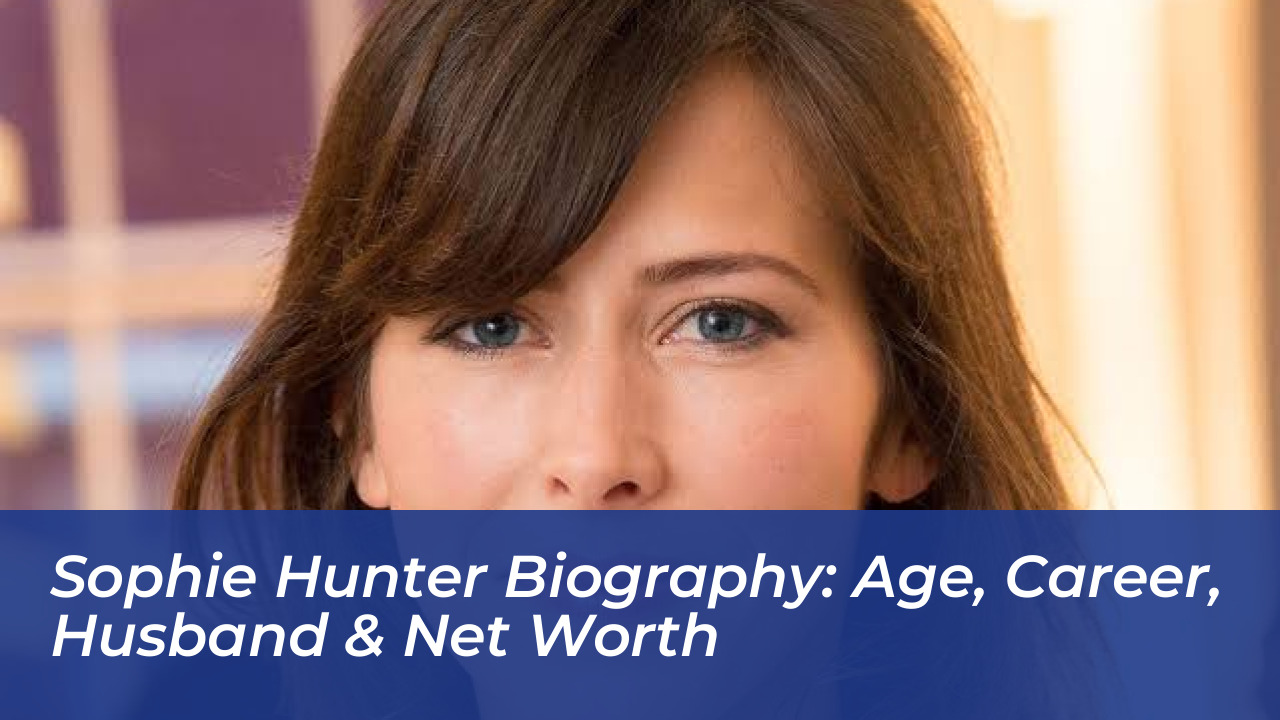
Sophie Irene Hunter stands as a prominent figure in contemporary international theatre and opera direction, celebrated for her multidisciplinary and avant-garde stagecraft. While widely recognized in global media as the wife of acclaimed British actor Benedict Cumberbatch, her professional identity encompasses extensive achievements as a playwright, filmmaker, former actress, and artistic director. Her trajectory blends elite academic grounding at Oxford with rigorous physical theatre training in Paris and New York, establishing her as a respected creative force independent of celebrity associations.
- Introduction to Sophie Hunter
- Early Life, Family Background, and Aristocratic Lineage
- Elite Education and International Training
- Theatrical and Opera Directing Career
- Acting, Film, and Musical Endeavors
- Awards, Honors, and Artistic Recognition
- Marriage to Benedict Cumberbatch
- Children and Family Life
- Physical Statistics, Personal Life, and Net Worth
- Frequently Asked Questions
- What is Sophie Hunter’s primary profession?
- When did Sophie Hunter and Benedict Cumberbatch marry?
- How many children do Sophie Hunter and Benedict Cumberbatch share?
- What are Sophie Hunter’s most notable directorial achievements?
Introduction to Sophie Hunter
Sophie Hunter has built an impressive career as an avant-garde theatre director, opera creator, and filmmaker. Her artistic vision thrives on pushing traditional boundaries, utilizing immersive multimedia projections, and exploring complex psychological landscapes. Rather than relying on commercial formulas, she focuses on site-specific performances and collaborative storytelling that challenge both performers and audiences.
While global tabloid coverage often frames her simply through her marriage to Benedict Cumberbatch, her professional CV tells a vastly different story. She operated successfully within London and New York theatre circles long before her high-profile wedding. Her ability to pivot between directing intimate avant-garde plays and massive orchestral opera productions highlights a rare versatility.
Her elite academic background paired with intensive international physical training shaped this multidisciplinary range. From the classic quadrangles of Oxford to the avant-garde performance labs of Paris and New York, her journey reflects a lifelong dedication to the dramatic arts. This foundation allows her to command respect across multiple artistic disciplines.
Early Life, Family Background, and Aristocratic Lineage
Born on March 16, 1978, in Hammersmith, London, England, Sophie Hunter grew up in a culturally enriched, intellectual environment. Her mother, Anna Katharine Hunter, and her father, Charles Rupert Hunter, raised her alongside her two younger brothers, Patrick and Timothy. Following her parents’ separation and her father’s subsequent remarriage, she gained two half-siblings, Samuel and Lily-Rose.
Hunter’s lineage connects directly to notable figures in British military, political, and artistic spheres. Her maternal grandfather, General Sir Michael James Gow, served as the Queen’s Aide-de-Camp during the 1980s and fought in the Second World War. Additionally, her maternal great-great-grandfather was John Edward Bernard Seely, 1st Baron Mottistone, a prominent First World War politician and army general.
Artistic influences also shaped her early years through her family connections. Her uncle, Julius Drake, is an internationally renowned classical pianist, embedding classical music and performance discipline deeply into her upbringing. This exposure to high-level artistic expression at an early age clearly laid the groundwork for her future creative pursuits.
Elite Education and International Training
Hunter attended St Paul’s Girls’ School in London, an institution known for academic rigor and strong arts programs, where she engaged actively in school plays, dance, and sports. Demonstrating an early aptitude for languages and literature, she matriculated at the University of Oxford. She concentrated on French and Italian, graduating with a Bachelor of Arts in Modern Languages in 2000.
Following her undergraduate studies, Hunter moved to France to immerse herself in physical and avant-garde theatre. She completed a rigorous two-year program at L’École Internationale de Theatre Jacques Lecoq in Paris. This training taught her to express complex narratives through movement, space, and gesture rather than relying solely on spoken dialogue.
Expanding her international training further, she relocated to New York City to study at the Saratoga International Theatre Institute under the direction of Anne Bogart. This exposure to Viewpoints and Tadashi Suzuki training methodologies drastically enhanced her directorial vocabulary, giving her the tools to stage ambitious experimental productions across global venues.
Theatrical and Opera Directing Career
Hunter began her professional journey as a stage and screen actress before shifting her primary focus behind the scenes. Her directorial career gained serious momentum when her theatre company, Boileroom, won the prestigious Oxford Samuel Beckett Theatre Trust Award in 2007. This recognition funded the production of The Terrific Electric, an experimental work staged at the Barbican Pit, which cemented her reputation for innovative multidisciplinary performance.
Her directorial portfolio spans major cultural institutions across Europe and North America. Notable credits include Lucretia, an interpretive production drawing inspiration from Benjamin Britten’s opera The Rape of Lucretia, and Ghosts, a directorial revival of Henrik Ibsen’s classic psychological drama in New York. She also co-created 69° South (The Shackleton Project) with the Phantom Limb Company, premiering at the Brooklyn Academy of Music.
Opera remains a core focus of her creative output, with directional credits encompassing Britten’s The Turn of the Screw, Kurt Weill’s Die sieben Todsünden, and Béla Bartók’s Bluebeard’s Castle. In addition to stage direction, Hunter has worked in immersive theatre, serving as creative director for Emursive productions such as Don’t Major in Debt Student House and The Forgotten. In 2026, Maestro Arts added her to its esteemed director roster, recognizing her extensive contributions to site-specific performance.
Acting, Film, and Musical Endeavors
Before prioritizing her directing career, Hunter appeared in various television, film, and theatre acting projects between 2004 and 2010. Her television appearances included guest roles in British crime and comedy series such as Midsomer Murders, Keen Eddie, My Life in Film, Ancient Rome: The Rise and Fall of an Empire, Torchwood, and Henry VIII: Mind of a Tyrant.
Her film credits feature performances in Vanity Fair as Maria Osborne, the short film Traffic Warden, Friends and Crocodiles, and the psychological thriller Burlesque Fairytales. Transitioning seamlessly into film production, she served as a producer for the dystopian survival drama The End We Start From in 2023, working alongside Sunnymarch, the production company co-founded by her husband.
A skilled pianist and musician, Hunter collaborated with British songwriter Guy Chambers to release a French-language music album titled The Isis Project in 2005. She followed this musical exploration with the release of the English-language EP Songs for a Boy in 2011, proving her creative instincts extend fluidly into the music industry.
Awards, Honors, and Artistic Recognition
Hunter’s experimental theatre contributions have earned her notable artistic accolades throughout her career. Winning the Oxford Samuel Beckett Theatre Trust Award in 2007 provided her with the early institutional backing needed to mount ambitious, avant-garde productions in prominent London venues.
Following this success, she secured an International Artist Fellowship spanning 2010 to 2011, granted by Location One in New York City. This fellowship allowed her to expand her artistic network in the United States and develop new cross-disciplinary performance concepts.
Critics frequently praise her immersive public art initiatives and site-specific installations for their emotional depth and spatial intelligence. Her inclusion on elite talent rosters underscores her ongoing influence in contemporary European stage direction.
Marriage to Benedict Cumberbatch
Hunter met actor Benedict Cumberbatch in 2009 while starring alongside him in the independent film Burlesque Fairytales. The two maintained a close friendship for several years before their professional rapport naturally transitioned into a romantic relationship.
Public awareness of their romance grew when they attended the French Open tennis tournament together in June 2014. In November 2014, the couple announced their engagement through a traditional classified notice in the births, deaths, and marriages column of The Times newspaper, charming the British public with their understated approach.
They married on February 14, 2015, in an intimate Valentine’s Day ceremony at the Church of St Peter and St Paul in Mottistone on the Isle of Wight. The celebration concluded with a private reception at Mottistone Manor, surrounded by close family and select industry friends.
Children and Family Life
Hunter and Cumberbatch share three sons, maintaining a fiercely private family life away from intense media scrutiny. Their first son, Christopher Carlton Cumberbatch, was born on June 1, 2015, shortly after their wedding.
Their second son, Hal Auden Cumberbatch, arrived on March 3, 2017, followed by their third son, Finn Cumberbatch, on January 11, 2019. The family resides primarily in the United Kingdom, where they deliberately shield their children from public exposure to ensure a balanced, normal upbringing.
Physical Statistics, Personal Life, and Net Worth
Hunter stands at a height of 1.73 meters (5 feet 8 inches) and maintains an active, health-conscious lifestyle. Beyond her native English, she possesses fluent command of both French and Italian, skills acquired during her academic studies and international theatre training in Paris.
Her personal interests include playing the classical piano, playing tennis, swimming, and practicing yoga. She also maintains a strong personal interest in Buddhism, which aligns with her calm, measured public demeanor.
Financial analysts estimate her independent net worth to range between $500,000 and $5 million, accumulated through her decades of work as a theatre director, opera creator, filmmaker, and former actress.
Frequently Asked Questions
What is Sophie Hunter’s primary profession?
Sophie Hunter works primarily as an avant-garde theatre director, opera creator, and filmmaker, though she also has a background in acting and classical music.
When did Sophie Hunter and Benedict Cumberbatch marry?
The couple married on February 14, 2015, during an intimate ceremony at Mottistone on the Isle of Wight.
How many children do Sophie Hunter and Benedict Cumberbatch share?
They share three sons named Christopher Carlton, Hal Auden, and Finn.
What are Sophie Hunter’s most notable directorial achievements?
Her notable works include directing The Terrific Electric at the Barbican Pit, 69° South with the Phantom Limb Company, and various operas including Britten’s works and The Turn of the Screw.