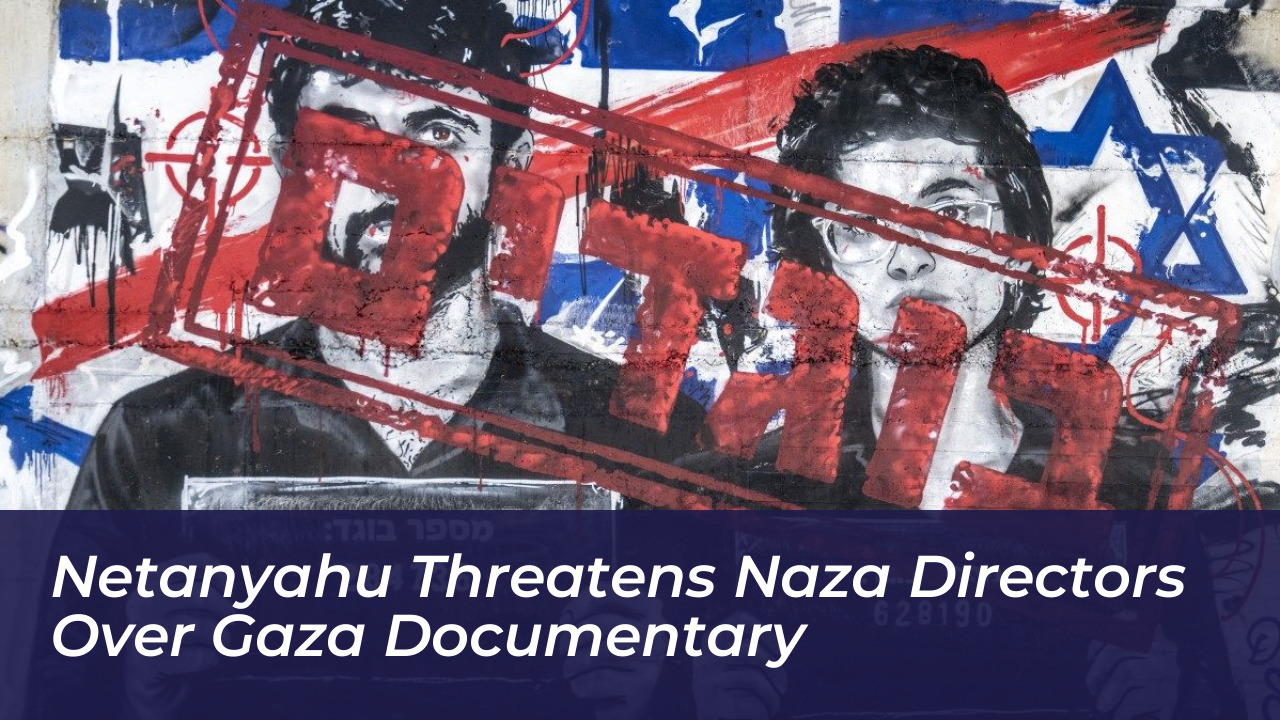
The intersection of documentary filmmaking, military intelligence, and state censorship reached a critical juncture in September 2026. Israeli Prime Minister Benjamin Netanyahu announced legislative plans to strip citizenship from citizens who defame military personnel abroad. This unprecedented political escalation directly targets Yuval Abraham and Rachel Szor, the co-directors of the controversial documentary film NAZA. The film exposes internal military mechanics regarding civilian casualties in Gaza, sparking fierce domestic backlash, international film festival acclaim, and profound constitutional debates over free expression and national loyalty.
- Anatomy of the Documentary NAZA
- Understanding the Hebrew Acronym and Core Premise
- Inside the Automated Targeting System
- Venice Acclaim and Domestic Political Backlash
- International Recognition at the Venice Film Festival
- Severe Domestic Condemnation Inside Israel
- Netanyahu’s Legislative Threat and Punitive Proposals
- The Two-Pronged Legislative Package
- Citizenship Revocation and Financial Penalties
- Legal Precedents and the Uniqueness of Targeting Jewish Israelis
- Evolution of Israeli Citizenship Laws
- The Constitutional Clash with the Law of Return
- Global Solidarity and the Defense of Free Expression
- Domestic Human Rights and Filmmaker Mobilization
- International Support and Media Defense
- Comparative Analysis of State Censorship Frameworks
- Frequently Asked Questions
- What is the documentary NAZA about?
- Why are the film directors facing backlash?
- What legislative actions has Netanyahu proposed?
- Conclusion
Anatomy of the Documentary NAZA
Understanding the Hebrew Acronym and Core Premise
The documentary NAZA takes its name from a Hebrew military acronym, Nezek Agavi, which translates roughly to collateral damage. The 80-minute film draws on three years of investigative reporting conducted in strict secrecy. It features anonymous testimonies from 24 Israeli intelligence officers, military planners, and soldiers who served during operations in Gaza. These whistleblowers describe an automated targeting ecosystem that maps buildings across the Gaza Strip and calculates projected civilian casualties prior to an airstrike.
According to interviews within the film, the system operates on sliding scales of acceptable collateral damage. In specific instances, military planners authorized strikes expected to cause hundreds of civilian deaths to eliminate a single targeted militant. The Guardian co-produced the project alongside the Israeli-Palestinian publication +972 Magazine and the Hebrew-language outlet Local Call, building directly upon investigative reporting published between 2023 and 2025.
Inside the Automated Targeting System
The technical architecture detailed in NAZA reveals a profound shift in how modern armies manage urban warfare through software algorithms. Intelligence analysts interviewed in the project explain how automated databases assign scores to structures and individuals based on real-time data feeds. These algorithms process vast volumes of communications and movement patterns to generate strike recommendations with minimal human verification.
By presenting firsthand accounts from those who operated these digital interfaces, the filmmakers sought to document the institutionalized calculus governing modern aerial bombardment. The reliance on automated systems removes traditional layers of moral accountability, turning life-and-death decisions into automated calculations managed by junior analysts.
Venice Acclaim and Domestic Political Backlash
International Recognition at the Venice Film Festival
NAZA made its world premiere at the Venice Film Festival in September 2026, where it earned a remarkable 25-minute standing ovation, setting a new record for the festival. It subsequently captured the Special Jury Prize, thrusting the project onto the global cinematic stage. Following this success, the film scheduled its North American premiere at the New York Film Festival at Lincoln Center.
While international audiences and cinema critics praised the technical rigor, courage, and journalistic integrity of the production, the domestic reaction inside Israel was swift and severe. Government officials, military brass, and right-wing political figures launched an aggressive campaign against the directors.

Severe Domestic Condemnation Inside Israel
Culture Minister Miki Zohar publicly accused Abraham and Szor of treason against the state, calling for the immediate revocation of their citizenship. National Security Minister Itamar Ben-Gvir labeled the creators an embarrassment to the nation, suggesting they belonged with Israel’s enemies in Gaza. Meanwhile, IDF Chief of the General Staff Eyal Zamir condemned the film as a blood libel driven by deliberate distortions of reality.
Military prosecutors quickly initiated leak investigations to identify the anonymous intelligence sources who spoke to the filmmakers. Right-wing activists and political groups organized protests outside the family homes of the directors, stoking intense public animosity and creating a hostile security environment for the creative team.
Netanyahu’s Legislative Threat and Punitive Proposals
The Two-Pronged Legislative Package
Escalating the political pressure, Prime Minister Benjamin Netanyahu announced on September 16, 2026, that his administration would advance two punitive bills through the Knesset. This legislative package targets citizens who criticize or defame military supporters and armed forces personnel abroad. The proposed measures represent a direct assault on traditional democratic norms protecting wartime dissent.
The first pillar grants the interior ministry the authority to strip citizenship from any individual who defames Israeli soldiers or the state internationally. The second pillar advances legislation increasing statutory damages for defamation twentyfold, raising civil claims to 1 million shekels without requiring proof of actual damage.
Citizenship Revocation and Financial Penalties
Netanyahu explicitly cited the NAZA filmmakers alongside past instances of left-wing political dissent and military leaks as justifications for the new laws. He asserted that individuals who portray soldiers as war criminals forfeit their right to belong to the Israeli civic community. By weaponizing citizenship status, the state aims to create a chilling effect across artistic and journalistic communities.
Legal experts note that these financial penalties are deliberately designed to bankrupt independent media outlets and independent investigative journalists who rely on international funding and distribution. The combination of criminal investigations and civil ruin creates an insurmountable barrier to critical reporting.
Legal Precedents and the Uniqueness of Targeting Jewish Israelis
Evolution of Israeli Citizenship Laws
The weaponization of citizenship revocation is not entirely new within the Israeli legal apparatus, but its application to Jewish citizens marks a stark historical departure. In 2022, the Supreme Court upheld a statute permitting the state to strip nationality from individuals who commit breaches of trust against the state, such as espionage or treason. This framework was expanded in 2023 to include individuals convicted of terrorism offenses.
Historically, these mechanisms were applied almost exclusively to Palestinian citizens of Israel or residents of East Jerusalem convicted of security violations. Stripping citizenship from Jewish-Israeli citizens by birth, who hold no other nationality, lacks any real-world precedent in the nation’s history.
The Constitutional Clash with the Law of Return
Legal scholars point out that previous attempts to revoke the citizenship of high-profile criminals, such as the assassin of Prime Minister Yitzhak Rabin, were rejected by the Supreme Court. The judiciary ruled that the foundational right of Jews to hold Israeli citizenship under the Law of Return supersedes punitive stripping.
Netanyahu’s new proposal attempts to bypass this judicial hurdle by redefining political speech and international documentary work as a supreme breach of loyalty. While legal experts suggest the Supreme Court would likely strike down such a law if passed, the mere introduction of the legislation signals a profound authoritarian shift in political discourse.
Global Solidarity and the Defense of Free Expression
Domestic Human Rights and Filmmaker Mobilization
As threats against Yuval Abraham and Rachel Szor intensified, international film institutions, human rights organizations, and local advocacy groups mobilized in their defense. Over 40 Israeli human rights organizations, including B’Tselem, Adalah, and Breaking the Silence, signed a joint statement condemning the institutional incitement against the filmmakers.
More than 1,500 Israeli filmmakers signed a petition defending freedom of expression and demanding that the government halt its campaign of intimidation. These domestic defenders argue that suppressing uncomfortable truths about military operations destroys the democratic fabric of the state from within.
International Support and Media Defense
International directors, including Laura Poitras, drew parallels between the threats faced by the NAZA creators and global assaults on investigative journalism. Major publication networks like The Guardian issued robust defenses emphasizing verified reporting and confidential testimonies over state censorship.
Global press freedom organizations continue to monitor the situation, offering legal and financial support to ensure the documentary reaches international audiences despite domestic government obstruction.
Comparative Analysis of State Censorship Frameworks
| Feature | Traditional Democratic Framework | Proposed Israeli Legislative Framework (2026) |
|---|---|---|
| Handling of Military Whistleblowers | Investigative shielding, legal debate over classified leaks, and protection of journalistic sources. | Criminal leak investigations, Shin Bet involvement, and framing sources as assisting enemies in wartime. |
| Consequences for Critical Filmmakers | Public debate, artistic review, and potential defamation lawsuits through standard civil courts. | Calls for treason charges, citizenship revocation, and twentyfold financial penalties ($330,000). |
| Application of Nationality Laws | Citizenship viewed as an unalienable right protected against political revocation. | Citizenship treated as conditional upon ideological loyalty and support for military actions. |
Frequently Asked Questions
What is the documentary NAZA about?
NAZA investigates military mechanics in Gaza, featuring anonymous accounts of automated targeting systems and civilian casualties.
Why are the film directors facing backlash?
Israeli officials claim the documentary defames the military and damages national security abroad.
What legislative actions has Netanyahu proposed?
New bills propose revoking citizenship for individuals who defame soldiers internationally and increasing financial penalties.
Conclusion
The fierce controversy surrounding the NAZA documentary redefines the boundaries of wartime reporting and state loyalty in Israel. By transforming investigative filmmaking into an act of treason, the government tests the absolute limits of its constitutional framework and democratic principles.
Ultimately, the legislative measures targeting citizenship as a tool of political suppression carry grave implications for free expression worldwide. As the legal battle unfolds, the outcome will determine whether investigative journalism can survive under the shadow of state retaliation during times of conflict.