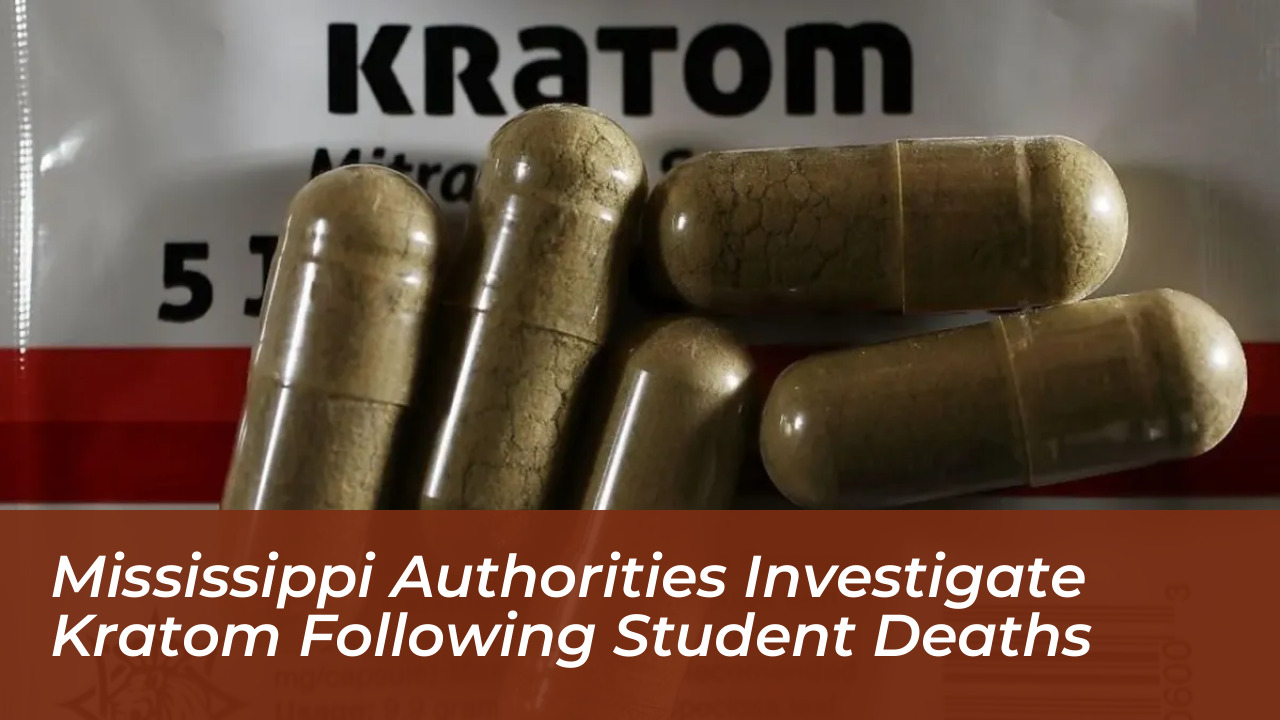
Law enforcement agencies and state officials in Mississippi are examining the circumstances surrounding the sudden deaths of two University of Mississippi students. Investigators discovered packaged retail kratom at both scenes, prompting local police to raid an Oxford tobacco shop and seize hundreds of units of the herbal substance. While official medical examiners have not confirmed the exact causes of death, the joint inquiry highlights growing concerns over unregulated botanical substances and potent chemical derivatives.
- The Tragic Incidents at the University of Mississippi
- Details of the Deceased Students
- Coroner and Toxicology Timelines
- Oxford Police Raid Retail Tobacco Shop
- The Search Warrant and Seizures
- Law Enforcement and Regulatory Caution
- Understanding Kratom and Concentrated 7-OH Derivatives
- What is Kratom
- The Danger of Concentrated 7-Hydroxymitragynine (7-OH)
- Regulatory Landscape and Public Health Warnings
- The Accessibility of Unregulated Botanical Products
- Direct Warnings from Local Authorities
- Harm Reduction and Emergency Response
- Emergency Preparedness on Campus
- Community Support and Prevention Messaging
- Frequently Asked Questions
- What caused the deaths of the two University of Mississippi students?
- What is packaged kratom and why is it under investigation?
- Are concentrated 7-OH products legal?
- What safety warnings have local authorities issued?
The Tragic Incidents at the University of Mississippi
Details of the Deceased Students
State and local authorities identified the deceased students as 20-year-old junior Robert Strang of Atlanta and 18-year-old freshman Aidan Hamilton of Englewood, Colorado. University officials confirmed that Strang was found in his off-campus residence, while Hamilton was discovered inside a campus dormitory. The sudden loss of these two young men sent immediate shockwaves through the local student body and the broader academic community.
University leadership mobilized comprehensive grief counseling resources to support students, classmates, and faculty members. Dr. Shawnboda Mead, the vice chancellor for student affairs, released formal statements expressing profound sorrow on behalf of the institution. Campus administrators urged students to utilize professional mental health services and to rely strictly on verified institutional bulletins rather than unverified social media rumors.
Coroner and Toxicology Timelines
The Lafayette County Coroner noted that autopsies were performed immediately following the discoveries of the students. However, definitive medical answers require comprehensive toxicology screenings. These specialized laboratory tests typically take between two to three weeks to process before pathologists can issue a final ruling on the cause of death.
State law enforcement officials noted that special legal mechanisms and harsher narcotics charges could be triggered if these expedited laboratory tests reveal specific controlled substances alongside or within the recovered herbal products. Prosecutors coordinate closely with forensic pathologists to ensure every piece of evidence undergoes rigorous chemical analysis.
Oxford Police Raid Retail Tobacco Shop
The Search Warrant and Seizures
Concurrent with the ongoing death investigations, local narcotics detectives executed a search warrant at an Oxford retail tobacco shop. Authorities seized hundreds of units of packaged kratom products from the storefront. Investigators are tracing the supply chain to determine whether the victims purchased their products from this specific establishment or similar commercial vendors across Lafayette County.
The operation reflects an aggressive stance by local authorities toward commercial vendors operating within university towns. Detectives review purchase logs, digital records, and inventory sheets to map out distribution channels and identify the specific brands and chemical formulations present in the seized merchandise.
Law Enforcement and Regulatory Caution
The Oxford Police Department emphasized that while packaged kratom was present at both fatality scenes, officers lack definitive proof that the substance caused the fatalities. Investigators continue to collaborate with federal, state, and local partners to piece together the timeline of events leading up to the tragedy.
Mississippi Governor Tate Reeves confirmed that the Mississippi Department of Public Safety and the Mississippi Bureau of Narcotics are actively assisting local jurisdictions with specialized investigative resources and expedited testing procedures. This multi-agency approach ensures that every forensic angle receives expert scrutiny.
Understanding Kratom and Concentrated 7-OH Derivatives
What is Kratom
Kratom is a tropical tree native to Southeast Asia scientifically known as Mitragyna speciosa. Leaves from the plant contain chemical compounds that interact with opioid receptors in the brain. At lower doses, consumers experience stimulant effects such as increased energy, alertness, and talkativeness. At higher doses, the substance produces sedative effects similar to prescription opioids.
The botanical product has gained massive commercial popularity over the past decade. It is marketed openly in various forms, including crushed leaves, powders, capsules, and liquid extracts. Despite its long history of traditional use in Southeast Asia, modern Western consumption patterns involve much higher concentrations and isolated chemical compounds.
The Danger of Concentrated 7-Hydroxymitragynine (7-OH)
Modern commercial markets feature advanced chemical extractions, notably 7-Hydroxymitragynine, commonly referred to as 7-OH. These concentrated products bypass the traditional mild alkaloid profile of the raw leaf, delivering potency levels that medical researchers compare to pharmaceutical narcotics. The isolation process strips away balancing plant compounds, creating a much more potent and hazardous substance.
The Food and Drug Administration maintains active warnings regarding these items, citing severe risks of dependence, addiction, respiratory depression, and adverse cardiovascular events. Medical toxicologists warn that consumers often underestimate the potency of these concentrated extracts because they are sold openly in standard retail environments.
Regulatory Landscape and Public Health Warnings
The Accessibility of Unregulated Botanical Products
The accessibility of kratom remains a pressing regulatory challenge. Convenience stores, gas stations, and online vendors sell the substance with minimal oversight in many jurisdictions. Public health advocates and medical professionals continuously petition federal regulators for strict nationwide restrictions or outright bans on concentrated alkaloid products.
Because manufacturing standards lack federal supervision, product purity varies wildly between brands. Consumers frequently consume batches containing unknown concentrations, heavy metals, or adulterants, increasing the likelihood of accidental overdose and severe adverse health reactions.
Direct Warnings from Local Authorities
In response to the Oxford incidents, the Lafayette County Metro Narcotics Department issued a direct warning to the public. Officials urged community members to avoid consuming kratom or any other unprescribed substance obtained from unregulated retail sources. Law enforcement agencies stress that natural labeling does not equate to safety.
Family members of the deceased students released heartfelt statements thanking the community for an overwhelming outpouring of support while requesting privacy during a period of immense grief. Law enforcement officials urge parents to engage in proactive conversations with young adults regarding the unpredictable dangers associated with unverified herbal and synthetic products.
Harm Reduction and Emergency Response
Emergency Preparedness on Campus
As investigators await laboratory results, public health officials emphasize immediate harm reduction measures across the Oxford campus. Local police departments highlighted the widespread availability of Narcan, an emergency nasal spray capable of reversing opioid-induced overdoses. Campus health clinics maintain robust supplies to ensure rapid intervention in medical emergencies.
While Narcan primarily targets classical opioids, medical personnel maintain supplies to address polysubstance toxicity scenarios. Healthcare workers train students and resident advisors on how to recognize overdose symptoms and administer nasal sprays safely while waiting for professional paramedics to arrive.
Community Support and Prevention Messaging
Community outreach programs focus on educating students about the risks of mixing substances or purchasing unverified supplements. Educational workshops provide factual data regarding chemical dependency, warning signs of toxicity, and the importance of seeking immediate medical help during a crisis.
Local leaders remain committed to transparent communication as the investigation unfolds. By combining rigorous law enforcement inquiries with proactive public health education, Oxford officials hope to prevent future tragedies and protect vulnerable student populations from unregulated chemical products.
Frequently Asked Questions
What caused the deaths of the two University of Mississippi students?
Official causes of death remain undetermined. Investigators are awaiting expedited toxicology reports from the coroner’s office, which typically require two to three weeks to complete before pathologists can release definitive findings.
What is packaged kratom and why is it under investigation?
Kratom is an herbal extract derived from a Southeast Asian tree. Investigators found packaged kratom at the scenes where both students died and subsequently raided a local retail tobacco shop to examine product safety, distribution networks, and supply chains.
Are concentrated 7-OH products legal?
Federal agencies do not currently schedule raw kratom uniformly across all states, but the FDA issues severe warnings against concentrated 7-Hydroxymitragynine products due to high addiction potential and severe adverse health risks.
What safety warnings have local authorities issued?
The Oxford Police Department and Lafayette County narcotics officials strongly urge the public to avoid consuming kratom or any unprescribed substance purchased from unregulated retail storefronts, emphasizing that natural products can still carry extreme health risks.