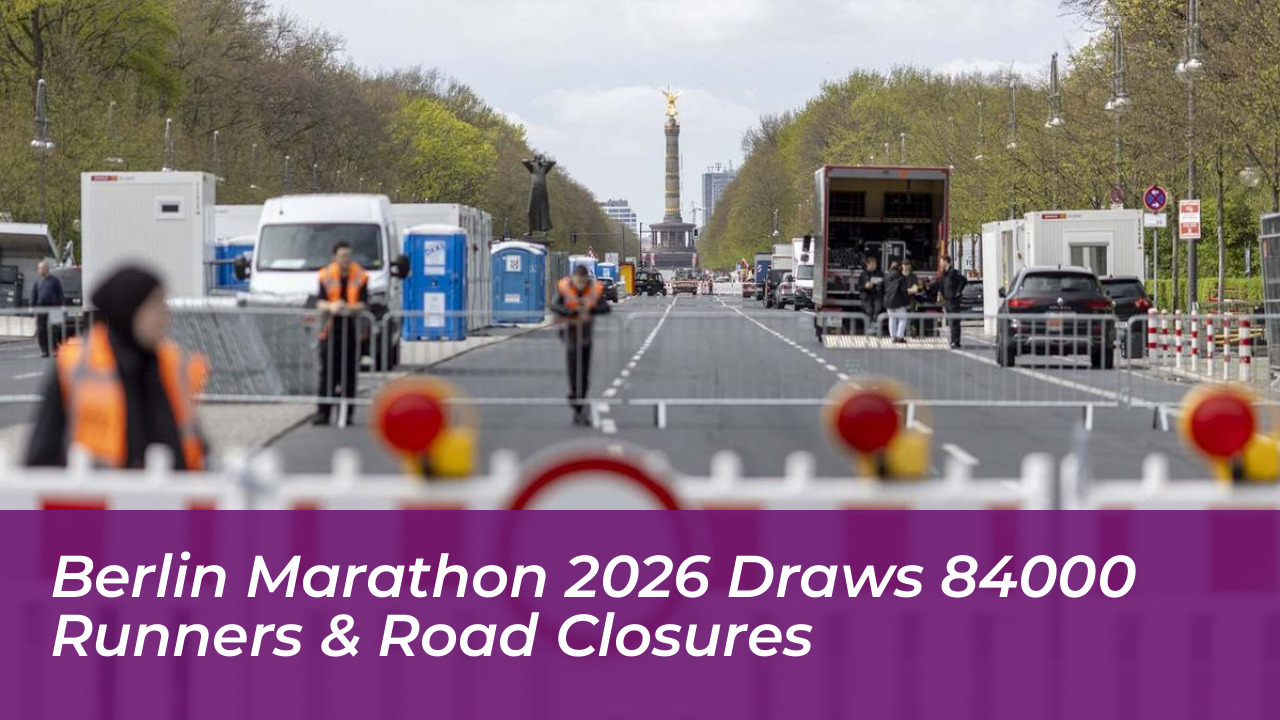
The 52nd edition of the BMW Berlin Marathon stands as a monumental test of endurance, urban logistics, and international participation. Scheduled for Sunday, September 27, 2026, this World Marathon Major brings together more than 84,000 participants from 162 nations. Athletes range from elite wheelchair racers and handbikers to roughly 56,000 main marathon runners. They converge on the German capital to conquer a legendary 42-kilometer course designed for speed. However, an athletic gathering of this scale creates massive disruptions across the metropolis.
- Introduction to the 52nd BMW Berlin Marathon
- Record-Breaking Scale and Global Participation
- Urban Logistics and the Citywide Footprint
- Scale, Statistics, and Course Infrastructure
- Behind the Scenes and Logistical Framework
- Political Friction and Government Building Access
- Security Perimeters Around the Reichstag
- Parliamentary Pushback and Legislative Disruption
- Comprehensive Timeline of Street Closures
- Early Infrastructure Build and Preparations
- Saturday Event Lockdowns
- Sunday Race Day Lockdown Schedule
- Impact on Public Transport and Traffic Alternatives
- Rail Networks as Urban Lifelines
- Surface Transit Disruptions and Pedestrian Crossings
- Frequently Asked Questions
- When is the BMW Berlin Marathon taking place?
- How many runners are participating in 2026?
- Which streets are closed during the marathon?
- How can I get around Berlin during the race?
Preparations transform central Berlin days in advance. Security perimeters, metal barriers, and grandstands reshape the city center long before the starting pistol fires. Municipal authorities enact extensive road closures that affect major thoroughfares, government buildings, and daily transit networks. This comprehensive analysis examines the operational realities of the 2026 event, exploring the massive participant turnout, the strict timeline of rolling street closures, and the intense political debate sparked by municipal restrictions around the Bundestag.
Introduction to the 52nd BMW Berlin Marathon
Record-Breaking Scale and Global Participation
The 52nd edition of the BMW Berlin Marathon is scheduled for Sunday, September 27, 2026. More than 84,000 total participants are registered across all events from 162 distinct nations. This massive field comprises elite wheelchair athletes, handbikers, inline skaters, and roughly 56,000 main marathon runners. Every athlete converges on a legendary flat and fast 42-kilometer course designed specifically for speed and world-record pacing.
Securing a spot in this international field requires navigating an ultra-competitive lottery system. The course legacy is cemented by historic achievements, most notably when Eliud Kipchoge set his legendary 2:01:09 record here in 2022. Elite distance runners consistently target this exact venue to secure personal bests and challenge global milestones.
Urban Logistics and the Citywide Footprint
Massive preparations transform central Berlin days ahead of the starting pistol. Security perimeters, metal barriers, and grandstands reshape the city center long before race day arrives. Comprehensive municipal traffic management creates half-century-scale disruptions across nine distinct city boroughs.
The operational reality balances a world-class sporting spectacle with complex urban mobility challenges. Organizers deploy thousands of volunteers, medical personnel, and security staff across the route. Sustainable hydration partnerships, including BRITA refill stations, minimize single-use plastic waste while advanced split recording relies on disposable MIKA TAG technology attached to every race bib.
Scale, Statistics, and Course Infrastructure
Behind the Scenes and Logistical Framework
Running an event for over 84,000 participants requires an immense operational apparatus. Volunteers distribute thousands of liters of water, sports drinks, and nourishment at frequent stations along the route. Medical tents equipped with advanced emergency care units line the perimeter to treat dehydration and exhaustion.
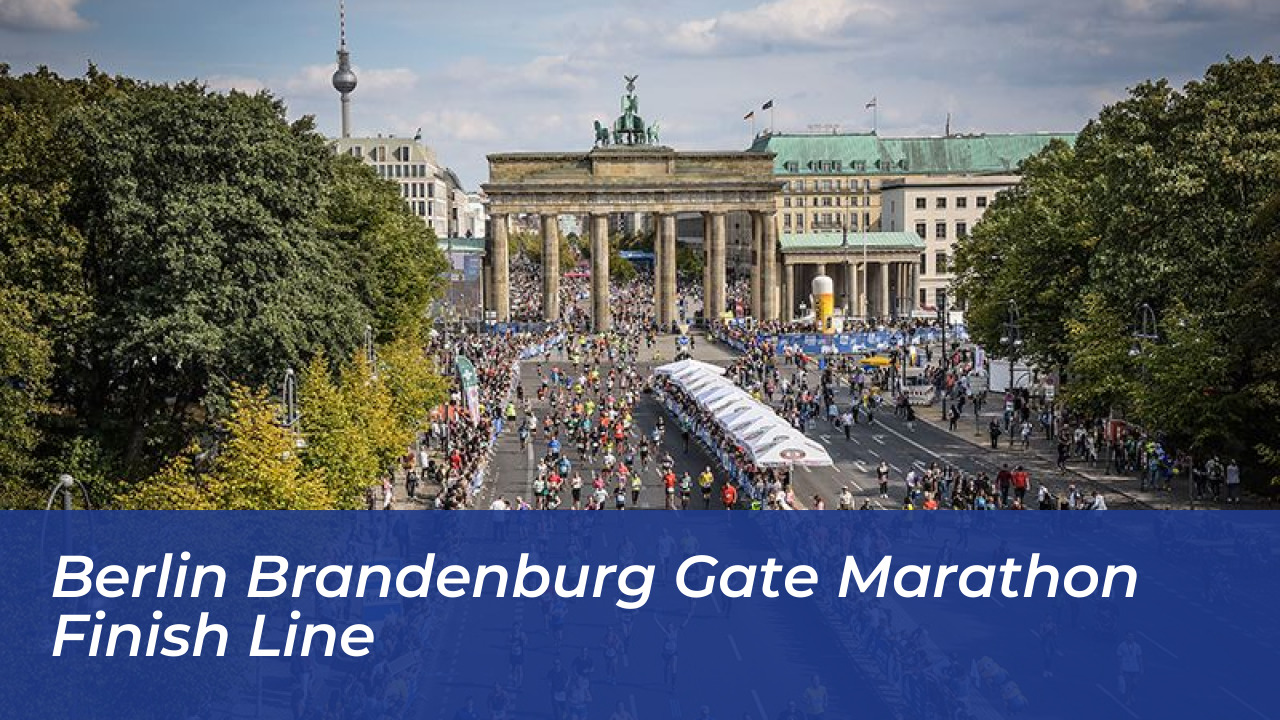
Advanced tracking systems ensure spectators can follow runners in real time. The disposable MIKA TAG on each participant’s bib communicates instantly with mat sensors spread across the 42-kilometer circuit. This infrastructure guarantees precise timing without causing bottlenecks at the finish line near the Brandenburg Gate.
Political Friction and Government Building Access
Security Perimeters Around the Reichstag
Heavy traffic barricades and security perimeters establish themselves around the Reichstag building early in race week. Major thoroughfares like Straße des 17. Juni and Ebertstraße face strict lockdowns extending into October. These measures create severe restrictions on vehicular and pedestrian access, impacting critical government infrastructure.
Lawmakers and civil servants face heavy delays entering the government district. Security checkpoints, pedestrian screening lanes, and commercial vehicle bans create tight bottlenecks. These friction points demonstrate how a massive urban sporting event forces federal operations to adapt to municipal event schedules.
Parliamentary Pushback and Legislative Disruption
Bundestag President Julia Klöckner publicly addresses transit disruptions during legislative sessions. Her critique highlights the creative yet disruptive measures enacted by municipal authorities regarding road closures. Friction points reveal the operational clash between hosting mass sporting events and maintaining a functioning national government.
There are very creative measures by the city of Berlin regarding road closures, even while this Bundestag wants to work and also has to work, noted Julia Klöckner during parliamentary proceedings. This public pushback underscores the ongoing tension between civic entertainment and legislative duty.
Comprehensive Timeline of Street Closures
Early Infrastructure Build and Preparations
Preparations begin weeks ahead of the main event. Fencing, grandstands, and media compounds occupy the central axis through the Tiergarten.
- September 21: Straße des 17. Juni closes between Großer Stern and the Brandenburg Gate at 06:00 hours alongside Yitzhak-Rabin-Straße.
- September 24: Restrictions expand into the government district, locking down Ebertstraße, John-Foster-Dulles-Allee, and Dorotheenstraße.
- September 25: Potsdamer Straße and Unter den Linden shut down between Friedrichstraße and the Brandenburg Gate.
Saturday Event Lockdowns
Saturday introduces additional athletic events that complicate ordinary sightseeing and travel plans across the city center.
- Generali 5K starts at 10:00 hours on Saturday, September 26, using the final five kilometers of the course.
- Inline skating event kicks off at 12:20 hours on a multi-lap city circuit.
- Extensive closures span Großer Stern, Ernst-Reuter-Platz, Otto-Suhr-Allee, Leipziger Straße, and Unter den Linden.
Sunday Race Day Lockdown Schedule
Sunday marks the peak of the restrictions, transforming the course into a hermetically sealed loop through nine Berlin boroughs.
- 05:00 hours: Altonaer Straße closes to all unauthorized traffic.
- 06:00 hours: Unter den Linden locks down between Pariser Platz and Friedrichstraße.
- 07:45 to 08:15 hours: Full barrier deployment across Mitte, Charlottenburg-Wilmersdorf, Friedrichshain, Kreuzberg, and Tempelhof-Schöneberg.
- Gradual reopening timeline starting from 14:00 hours in eastern districts through 17:30 hours in Mitte and western segments.
Impact on Public Transport and Traffic Alternatives
Rail Networks as Urban Lifelines
U-Bahn and S-Bahn systems serve as the primary conduits for cross-city travel beneath street-level closures. Stations directly adjacent to spectator hubs, such as Potsdamer Platz and Brandenburger Tor, experience severe crowding throughout the weekend.
Registered participants enjoy complimentary public transit access in fare zones A, B, and C from September 24 to September 27 via their official bib numbers. This perk encourages runners to leave personal vehicles at home and rely entirely on underground rail networks.
Surface Transit Disruptions and Pedestrian Crossings
Bus and tram lines suffer route splits, temporary suspensions, and diversions due to track intersections with the running course. Pedestrians must utilize designated underpasses at U-Bahn stations or stewarded surface crossing points.
Crossing opportunities diminish rapidly as elite and mass fields sweep past specific checkpoints. Spectators are advised to pick a viewing spot early and plan to stay in that sector until the running waves pass.
Frequently Asked Questions
When is the BMW Berlin Marathon taking place?
The 52nd edition of the BMW Berlin Marathon is scheduled for Sunday, September 27, 2026, with related events taking place throughout the preceding weekend.
How many runners are participating in 2026?
More than 84,000 total participants are registered across all events, including roughly 56,000 main marathon runners, wheelchair racers, handbikers, and inline skaters.
Which streets are closed during the marathon?
Major thoroughfares across nine boroughs are affected, including Straße des 17. Juni, Unter den Linden, Ebertstraße, and Potsdamer Straße, with closures rolling out progressively from September 21 through September 27.
How can I get around Berlin during the race?
The U-Bahn and S-Bahn underground rail networks remain fully operational and serve as the best alternative for crossing the city while surface streets are locked down.