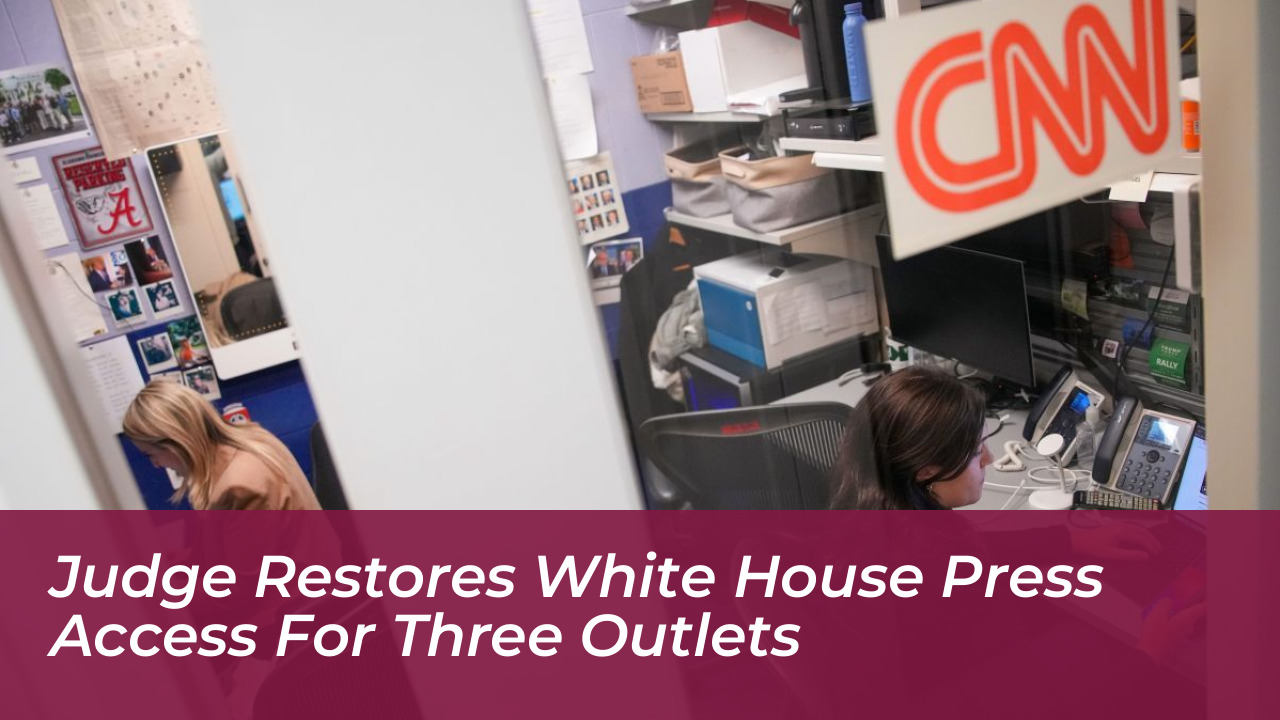
A recent federal court order disrupted executive branch attempts to restrict media access within Washington, highlighting ongoing debates over executive power and constitutional rights. US District Judge Timothy Kelly issued a temporary restraining order forcing the administration to reinstate press credentials for journalists representing CNN, MS NOW, and Politico. This judicial directive temporarily halts the press ban enacted by President Donald Trump, establishing a 14-day window during which reporters from the affected organizations regain their hard-pass access. Understanding the implications of this case requires a close look at the intersection of executive privilege, constitutional protections, and the daily realities of the Washington press corps.
- Federal Court Intervention and the White House Press Ban
- Overview of Judge Timothy Kelly’s Ruling
- Origins of the Dispute
- Constitutional Arguments and Due Process Standard
- First and Fifth Amendment Claims
- Executive Privilege and National Security Defense
- Immediate Fallout Across the Washington Press Corps
- Solidarity Among Broadcast Networks
- External Political Reactions
- Legal Timeline and Upcoming Court Deadlines
- Compressed Litigation Schedule
- Comparative Overview of Press Credential Litigation
- Broader Implications for Executive Authority
- Testing Legal Boundaries of Federal Property Control
- Historical Precedents in Press Access Disputes
- Operational Challenges for White House Correspondents
- Security Protocols and Pass Reinstatement
- Frequently Asked Questions
- What sparked the legal battle over White House press credentials?
- What legal grounds did the court use to issue the restraining order?
- How long does the temporary restraining order last?
- Did other news organizations support the banned outlets?
Federal Court Intervention and the White House Press Ban
Overview of Judge Timothy Kelly’s Ruling
US District Judge Timothy Kelly issued a temporary restraining order forcing the administration to reinstate press credentials. The judicial directive temporarily halts the press ban enacted by President Donald Trump. A 14-day window is established during which reporters from affected organizations regain hard-pass access.
The swift judicial action prevents the executive branch from locking out specific newsrooms while the broader legal questions are sorted out. Such temporary restraining orders are rare in press access disputes, signaling that the court found immediate harm in the administration’s actions.
Origins of the Dispute
The legal conflict began when officials deactivated or confiscated permanent press badges from reporters. Administration officials cited continuous negative coverage and alleged the distribution of fabricated reports as justification for the credential revocation.
Affected media organizations quickly filed suit in federal court over access restrictions. They argued that targeting specific outlets for their editorial stance violates foundational free press guarantees and upends decades of established protocol.
Constitutional Arguments and Due Process Standard
First and Fifth Amendment Claims
Plaintiffs successfully demonstrated a likelihood of success on their core claim regarding constitutional protections. The court determined that the removal of hard passes occurred without constitutionally adequate due process.
Legal arguments center heavily on viewpoint-based discrimination and procedural safeguards. The Fifth Amendment ensures that the government cannot deprive individuals or organizations of a liberty or property interest without fair procedures, a standard the court found lacking in this case.
Executive Privilege and National Security Defense
Government attorneys asserted that White House press access remains an executive privilege rather than an absolute right. They argued the administration holds broad authority over estate grounds and credential management.
However, the judicial opinion rejected the administration’s national security defense due to a lack of factual backing. Judge Kelly noted that the administrative record failed to prove maintaining credentials poses an active danger to the country or executive operations.
Immediate Fallout Across the Washington Press Corps
Solidarity Among Broadcast Networks
Major networks participating in the television pool announced a temporary suspension of pooled coverage for presidential events. Networks involved included FOX News Media, ABC News, CBS News, CNN, and NBC News.
This unified response highlighted industry opposition to executive access restrictions. Broadcasters recognized that a precedent set against one outlet could easily apply to others in the future, prompting a collective defense of reporting infrastructure.
External Political Reactions
New York political figures publicly invited banned reporters to alternative press briefings. The exclusion of outlets amplified the national debate over executive transparency and media boundaries.
Elected officials from various jurisdictions weighed in, utilizing the controversy to discuss the importance of an open and questioning press corps during executive proceedings.
Legal Timeline and Upcoming Court Deadlines
Compressed Litigation Schedule
The 14-day temporary restraining order establishes a compressed litigation schedule overseen by Judge Kelly. Both legal teams must prepare substantive arguments before the temporary relief expires, determining whether the court converts the order into a long-term preliminary injunction.
Monday marks the deadline for plaintiffs to submit formal requests for a preliminary injunction. Friday, October 2 targets the Department of Justice to file its official response and defense, while Monday, October 5 requires final written arguments delivered to the federal court before subsequent rulings.
Comparative Overview of Press Credential Litigation
| Case Element | Current Litigation | Historical Precedents |
|---|---|---|
| Affected Outlets | CNN, MS NOW, Politico | Individual correspondents |
| Primary Legal Claim | First Amendment and Fifth Amendment Due Process | Due Process and Equal Protection |
| Initial Judicial Relief | 14-Day Temporary Restraining Order | Preliminary Injunctions |
Broader Implications for Executive Authority
Testing Legal Boundaries of Federal Property Control
The litigation tests executive control over federal property and communications apparatuses. This case directly involves blanket restrictions targeting entire media organizations simultaneously rather than individuals.
The final outcome will reshape how future administrations manage press credentials. If the preliminary injunction stands, it limits the executive branch’s ability to use badge revocations as a punitive tool against critical news organizations.
Historical Precedents in Press Access Disputes
Past legal challenges establish that designated public forums cannot have access revoked arbitrarily. Federal judges consistently intervene to protect journalists from viewpoint-based discrimination.
Judicial oversight ensures executive discretion does not supersede First Amendment protections. Once the government opens a forum like the White House briefing room, it must adhere to strict constitutional standards when altering access.
Operational Challenges for White House Correspondents
Security Protocols and Pass Reinstatement
Secret Service and the White House Press Office must synchronize to update physical security systems. Restoring hard passes requires immediate reprogramming to allow entry for affected teams.
Newsrooms updated deployment strategies, ensuring robust legal monitoring runs parallel to daily reporting. Journalists managing these reinstated credentials face unique daily hurdles while covering breaking national news under intense scrutiny.
Frequently Asked Questions
What sparked the legal battle over White House press credentials?
The dispute started when administration officials deactivated permanent press badges for reporters from specific outlets. Officials cited continuous negative coverage and alleged reporting inaccuracies as the primary reasons for revoking credentials.
What legal grounds did the court use to issue the restraining order?
Judge Kelly focused primarily on First Amendment viewpoint discrimination and Fifth Amendment due process violations. The court found that removing credentials without a fair hearing or clear standards breached constitutional protections.
How long does the temporary restraining order last?
The temporary restraining order remains in effect for a strict 14-day period. This compressed timeframe forces both legal teams to present comprehensive arguments before a decision on a preliminary injunction.
Did other news organizations support the banned outlets?
Major television networks demonstrated industry solidarity by temporarily suspending pooled coverage for presidential events. Broadcasters recognized the broader threat to journalism standards posed by targeted executive restrictions.