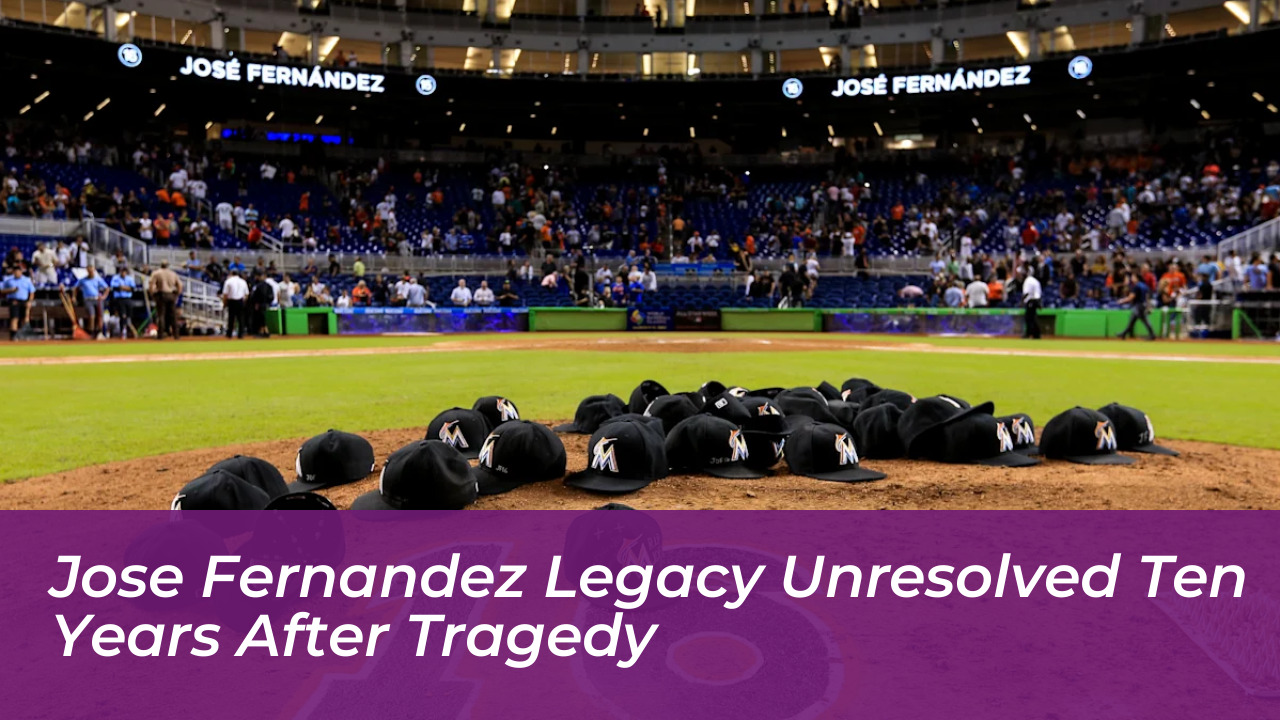
Ten years after a high-speed boating accident claimed the life of Miami Marlins star pitcher Jose Fernandez on September 25, 2016, Major League Baseball and South Florida continue to navigate a profound cultural paradox. Fernandez was only 24 years old when his vessel struck a jetty off the coast of Miami, ending his life and the lives of his two passengers, Emilio Macias and Eduardo Rivero. The initial public response was raw, unfiltered grief. The Marlins famously wore his No. 16 jersey during their first game following the tragedy, and local leaders proposed street renamings and memorial statues to commemorate the charismatic phenom. Subsequent investigations fundamentally altered that narrative through toxicology findings confirming intoxication and drug use. Today, loanDepot Park maintains minimal nods to the pitcher, leaving the baseball ecosystem to struggle with reconciling athletic brilliance with personal accountability.
- Introduction: A Decade of Silence and Unresolved Memory
- The Immigrant Narrative and the American Dream
- Escape from Cuba and the Resilience of a Phenom
- Symbol of Hope for the Cuban-American Community
- Milestones and Moments in Time
- Institutional Hesitation and the Path of Least Resistance
- The Quiet Response from Major League Baseball
- Weighing the Lives Lost Against Athletic Achievement
- Shifting Cultural Norms and the Modern Game
- Redefining Player Expression on the Mound
- Laying the Groundwork for the Let the Kids Play Era
- Balancing Brilliance and Human Fallibility
- Comparing Historical Tragedies in Baseball
- Accepting the Moral Complexity of Icons
- Conclusion: Confronting a Complex Decade
Introduction: A Decade of Silence and Unresolved Memory
The tragic loss sent shockwaves through the sports world that still reverberate a decade later. Fans remember the electric slider and the infectious smile that brought life to a struggling franchise. Yet, the facts of that September night demand a sobering assessment that tempers pure nostalgia.
Institutional responses reflect this ongoing tension. Sports organizations often struggle with how to memorialize figures who experienced sudden downfalls or tragic errors in judgment. For the Marlins, acknowledging Jose Fernandez means balancing the incredible joy he brought the fanbase with the devastating reality of the accident.
The Immigrant Narrative and the American Dream
Escape from Cuba and the Resilience of a Phenom
Born in Santa Clara, Cuba, Fernandez made four harrowing attempts to escape the island nation by raft with his family before successfully defecting. These early trials forged a fierce competitive spirit and an unmatched work ethic. During his fourth attempt, his mother fell overboard into the turbulent waters of the Straits of Florida, prompting Fernandez to dive in and rescue her.
The family eventually settled in Tampa, Florida, where Fernandez emerged as one of the premier high school pitching prospects in the country. His incredible arm strength and poise under pressure immediately caught the attention of scouts, setting the stage for a rapid ascent through the professional ranks.
Symbol of Hope for the Cuban-American Community
His journey embodied the classic immigrant success story, characterized by relentless hard work and familial devotion. When he struck out batters with unrestrained passion, he symbolized hope for the Cuban-American community in Miami and beyond. That immigrant origin story forms an essential pillar of his legacy, contrasting sharply with the reckless choices that ended his life.
Communities in South Florida saw their own struggles and triumphs reflected in his rise. This deep cultural connection explains why the grief following his death was so acute and why the subsequent revelations proved so difficult to process.
Milestones and Moments in Time
Reviewing the timeline of his life highlights the sharp contrast between his professional triumphs and the abrupt end of his journey.
| Milestone / Event | Year | Significance in Fernandez Legacy |
|---|---|---|
| Defection from Cuba | 2007 | Established his backstory of resilience, overcoming imprisonment and ocean perils. |
| MLB Draft (1st Round) | 2011 | Selected 14th overall by the Miami Marlins, beginning his professional career. |
| NL Rookie of the Year | 2013 | Dominated the National League with a 2.19 ERA and 187 strikeouts at age 21. |
| Tragic Boating Accident | 2016 | Died alongside two passengers off Miami Beach; toxicology reports confirmed intoxication. |
Institutional Hesitation and the Path of Least Resistance
The Quiet Response from Major League Baseball
Major League Baseball and the Marlins organization chose a path of minimal visibility regarding Fernandez in the decade following his passing. When the franchise hosted the 2017 All-Star Game at loanDepot Park, officials deliberately avoided official video packages or formal tributes. Individual players offered subtle nods, such as Bryce Harper wearing custom cleats and Cardinals pitcher Carlos Martinez drawing initials in the dirt, but the league maintained formal silence.
This calculated avoidance protected the organization from ongoing public relations backlash. Honoring a player whose actions caused multiple fatalities presents a public relations nightmare for modern sports executives. Consequently, quiet historical preservation replaced active celebration.
Weighing the Lives Lost Against Athletic Achievement
This institutional reticence stems from the delicate nature of the accident. Because Fernandez was steering the vessel at high speed in the dark while intoxicated, his actions directly caused the deaths of two innocent passengers. Honoring him with a prominent stadium statue or jersey retirement would risk trivializing the loss of Macias and Rivero.
Legal settlements and private grief resolution followed the initial police reports, sealing the reality of the tragedy. The organization understood that active veneration was impossible without ignoring the victims who lost their lives alongside the star athlete.
Shifting Cultural Norms and the Modern Game
Redefining Player Expression on the Mound
While the Marlins organization minimized physical memorials, the broader culture of Major League Baseball absorbed a lasting shift from Fernandez’s dynamic style of play. Before his arrival, unwritten rules often dictated strict decorum, discouraging pitchers from showing overt emotion on the mound. Fernandez changed that paradigm by roaring after strikeouts, pumping his fists, and displaying unrestrained joy.
That expressive energy helped lay the groundwork for the modern Let the Kids Play era across the sport. Contemporary pitchers regularly celebrate big strikeouts with emotional intensity, treating high-leverage moments with theatrical enthusiasm.
Laying the Groundwork for the Let the Kids Play Era
Fernandez accelerated this cultural modernization, ensuring his influence on player expression remains a positive, enduring athletic legacy. Fans connected deeply with his authentic display of emotion, which transformed routine strikeouts into memorable spectacles.
The modern game embraces personality and flair in ways that would have shocked traditionalists twenty years ago. The Jose Fernandez legacy includes this permanent shift toward expressive, joyful competition on the diamond.
Balancing Brilliance and Human Fallibility
Comparing Historical Tragedies in Baseball
Sports history contains numerous examples of iconic figures whose lives ended abruptly amid controversy or tragedy, forcing public reckonings with human fallibility. Roberto Clemente perished in a 1972 plane crash while delivering aid to earthquake victims in Nicaragua, cementing a legacy of humanitarian heroism. Len Bias died from a cocaine-induced cardiac arrhythmia in 1986, two days after being drafted by the Boston Celtics, triggering national debates on substance abuse in sports. Daryl Kile passed away unexpectedly from coronary artery disease during the 2002 season, resulting in profound communal mourning across baseball.
These historical parallels demonstrate how sports communities process sudden loss. Each tragedy forces a unique evaluation of character, mortality, and the complex nature of athletic idols.
Accepting the Moral Complexity of Icons
Unlike Clemente, whose final act was purely altruistic, or Kile, who died of natural causes, Fernandez occupies a morally complex category. He was simultaneously an inspiring immigrant achiever and the driver of a preventable fatal accident. Processing this reality requires acknowledging that human beings are capable of extraordinary athletic grace and catastrophic lapses in judgment simultaneously.
Holding these two opposing truths allows observers to view his story with clear eyes. Avoiding sugarcoated hagiography or unrelenting cynicism provides a balanced framework for understanding his impact.
Conclusion: Confronting a Complex Decade
Ten years after the fateful September night off Miami Beach, the legacy of Jose Fernandez remains suspended between athletic adulation and solemn accountability. Choosing the path of least resistance allowed the franchise to avoid continuous controversy, but true closure requires a willingness to hold multiple truths at once.
Fernandez electrified a moribund franchise, inspired an immigrant community, and permanently influenced how major league players express joy on the diamond, even as his reckless decision destroyed three lives and shattered families. Confronting that complete, unvarnished reality is the only responsible way to honor his memory a decade later.