The publication of Swan Song: Diana, My Sister by Earl Charles Spencer through Penguin Michael Joseph provides an unprecedented, unfiltered look at the life of Princess Diana and the inner workings of the House of Windsor. Spanning 350 pages of personal diaries, historical records, and direct recollections, the memoir re-examines modern British history nearly three decades after Diana’s tragic death. Writing from his ancestral estate at Althorp in Northamptonshire, Spencer challenges long-held public narratives surrounding the royal family. This explosive release immediately triggered international debate and prompted a rare, direct public rebuttal from Buckingham Palace, revitalizing global discussions on institutional behavior, media ethics, and enduring grief.
- Unpacking Swan Song: The Catalyst and Controversy
- Earl Charles Spencer and the Althorp Archives
- Buckingham Palace Responds
- The 1997 Funeral Procession Dispute
- Clashes Over the Royal Princes
- Regret and Sensory Overload
- Reclaiming Diana’s Childhood and Family Legacy
- Dispelling Myths of Misery
- Historical Ties to the Monarchy
- Generational Trauma Within the Spencer Lineage
- A Century of Family Strain
- A Neurological Re-Evaluation of Princess Diana
- ADHD, Dyslexia, and Emotional Patterns
- Frequently Asked Questions
- When was Swan Song: Diana, My Sister published?
- What prompted Buckingham Palace to issue a public statement?
- Did Earl Spencer walk behind the funeral casket?
Unpacking Swan Song: The Catalyst and Controversy
Earl Charles Spencer and the Althorp Archives
Althorp in Northamptonshire serves as the physical and intellectual foundation where Spencer compiled this volume. By integrating personal diaries with direct historical records, the text challenges existing public accounts that gloss over the realities of royal life. Spencer approaches this historical undertaking through a unique lens, heavily influenced by his late-in-life diagnosis of Attention Deficit Hyperactivity Disorder. This neurological framework shapes his acute pursuit of historical accuracy and an uncompromising sense of justice regarding his family’s legacy.

The memoirs contrast romanticized versions of history with hard documentation. Spencer draws upon decades of personal archives to reconstruct the timeline of events that defined his sister’s public and private struggles. His goal remains establishing concrete facts rather than seeking vengeance, utilizing his platform as a professional historian to correct public misconceptions.
Buckingham Palace Responds
The release of Swan Song provoked an extraordinary administrative response. On September 16, 2026, Buckingham Palace issued a formal statement addressing the claims made in the memoir. While maintaining a general policy of silence regarding books about the monarchy, the Palace directly targeted Spencer’s framing of events, noting that the pain of fraternal grief can cloud reason, affect judgment, and colour memory in ways others do not recognize.
Prominent royal figures quickly rallied to defend King Charles III. Dickie Arbiter, who served as press secretary to Queen Elizabeth II in 1997, publicly maintained that Prince Charles experienced profound devastation following the news from Paris. Veteran royal reporter Jennie Bond similarly characterized Spencer’s account as a one-sided recollection born from decades of underlying friction between the aristocratic Spencer family and the sovereign institution.
The 1997 Funeral Procession Dispute
Clashes Over the Royal Princes
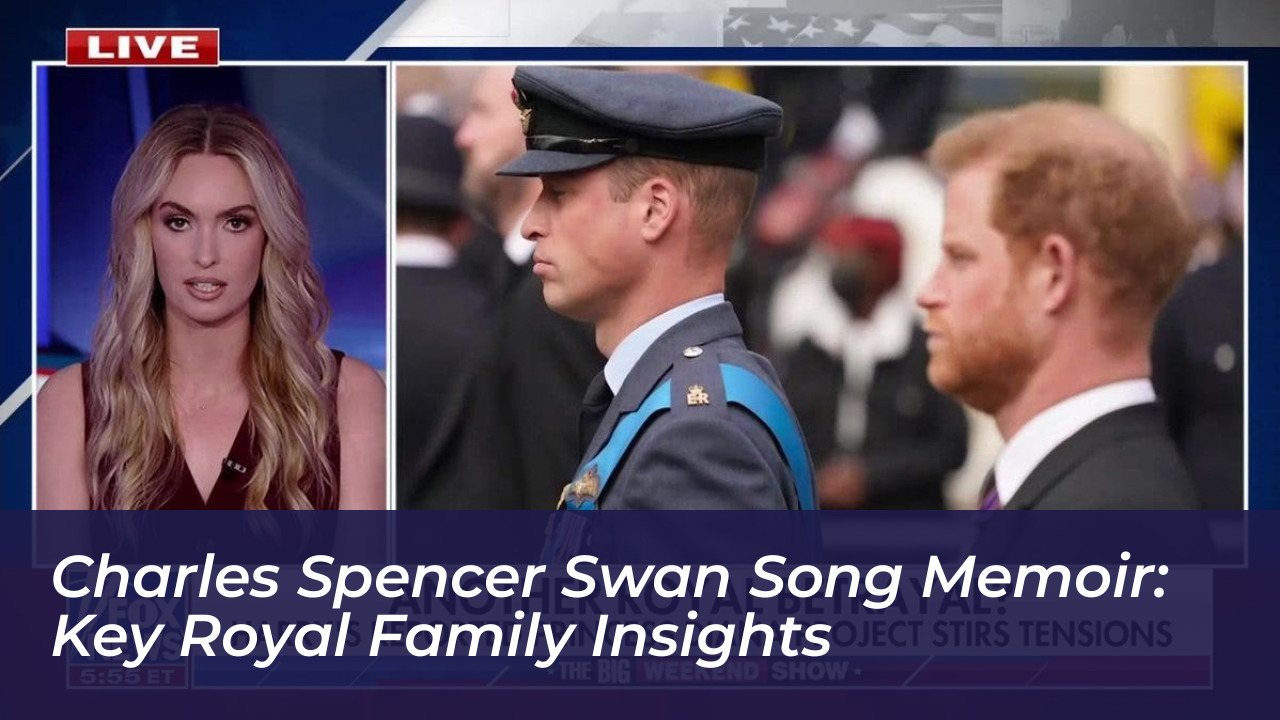
The most explosive revelations in the memoir concern the intense logistical battles surrounding Princess Diana’s funeral on September 6, 1997. As Diana’s designated legal guardian, Spencer resisted plans requiring her young sons, Prince William and Prince Harry, to walk behind their mother’s casket through the streets of London. Spencer immediately rejected the proposal during initial phone calls, labeling the arrangement monstrous and unnatural for grieving children.

When royal officials insisted that the instruction came directly from the Prince of Wales, Spencer reasserted that Diana would never have consented to such an ordeal. Prince Charles soon contacted Spencer directly on a private line. When Spencer questioned the decision, Charles cited his own experience walking behind the coffin of Lord Mountbatten in 1979. Spencer countered that Charles was thirty years old at the time and that Mountbatten was not his parent.
This exchange deteriorated rapidly. According to Spencer, Charles reacted with fury, uttering a dismissive phrase that caused Spencer to terminate the call instantly. This volatile confrontation served as the direct catalyst for Spencer’s scathing eulogy inside Westminster Abbey, where he vowed that Diana’s blood family would fiercely protect her sons.
Regret and Sensory Overload
Spencer ultimately walked in the funeral procession alongside Prince William, Prince Harry, Prince Philip, and Prince Charles. Decades later, he expresses deep remorse for failing to pull his nephews from the line of march. He vividly recalls the psychological toll of the public procession, detailing sensory overload characterized by alternating zones of absolute silence and overwhelming vocal grief that generated recurring nightmares for years afterward.
Reclaiming Diana’s Childhood and Family Legacy
Dispelling Myths of Misery
A central objective of Swan Song is dismantling the narrative that Princess Diana endured a uniformly miserable childhood. While acknowledging that the departure of their mother, Frances Shand Kydd, fractured the household, Spencer emphasizes that their father, John Spencer, created a warm and vibrant home environment at Althorp. Interviews with domestic staff, including a childhood nanny named Sally, paint a picture of Diana as an exceptionally joyful young girl.
John Spencer struggled with hidden depression following his divorce, yet he worked tirelessly to shield his children from personal distress. He filled their daily lives with encouragement and emotional stability. Spencer argues that public perception unfairly reduces his sister’s early life to a tragedy, ignoring the genuine moments of familial happiness experienced within the estate walls.
Historical Ties to the Monarchy
The memoir explores deep historical links between the Spencer family and the British monarchy that predated Diana’s marriage. Spencer reveals that his father harbored romantic feelings for Queen Elizabeth II during his youth while serving as an army officer attached to the royal household. However, Lord Mountbatten intervened, informing the young John Spencer that he was an unsuitable match for the monarch and ordering him to step away.
Generational Trauma Within the Spencer Lineage
A Century of Family Strain
Spencer traces a century of generational trauma within his family tree to explain the emotional vulnerabilities of his lineage. This history begins with the tragic death of his great-grandmother in childbirth in 1906. Subsequent tragedies, including the birth and death of infant John in 1960, placed immense psychological strain on the household.
Societal pressures to produce a male heir fractured the marriage of John Spencer and Frances Shand Kydd. The relentless demand for a dynastic successor created an environment where maternal and paternal grief went unaddressed, directly impacting the emotional resilience of the subsequent generation.
A Neurological Re-Evaluation of Princess Diana
ADHD, Dyslexia, and Emotional Patterns
Applying modern frameworks of neurodivergence provides a fresh perspective on Princess Diana’s behavioral traits and emotional struggles. Spencer utilizes his own late diagnosis of Attention Deficit Hyperactivity Disorder to re-examine the heightened rejection sensitivity and impulsivity that characterized his sister’s life under the public microscope.
Recognizing these neurodivergent patterns reframes public understanding of royal scandals and interpersonal conflicts. Spencer concludes his memoir with a definitive mission to correct historical misconceptions, bridging the gap between flawed media caricatures and the complex reality of the Spencer and Windsor dynasties.
Frequently Asked Questions
When was Swan Song: Diana, My Sister published?
The memoir was published in late September 2026 by Penguin Michael Joseph.
What prompted Buckingham Palace to issue a public statement?
The Palace responded to Spencer’s claims regarding telephone conversations with the then-Prince of Wales following Diana’s death in 1997, noting that grief can cloud memory.
Did Earl Spencer walk behind the funeral casket?
Yes, Spencer walked in the procession alongside Prince William, Prince Harry, Prince Philip, and Prince Charles, though he expresses deep regret for doing so.