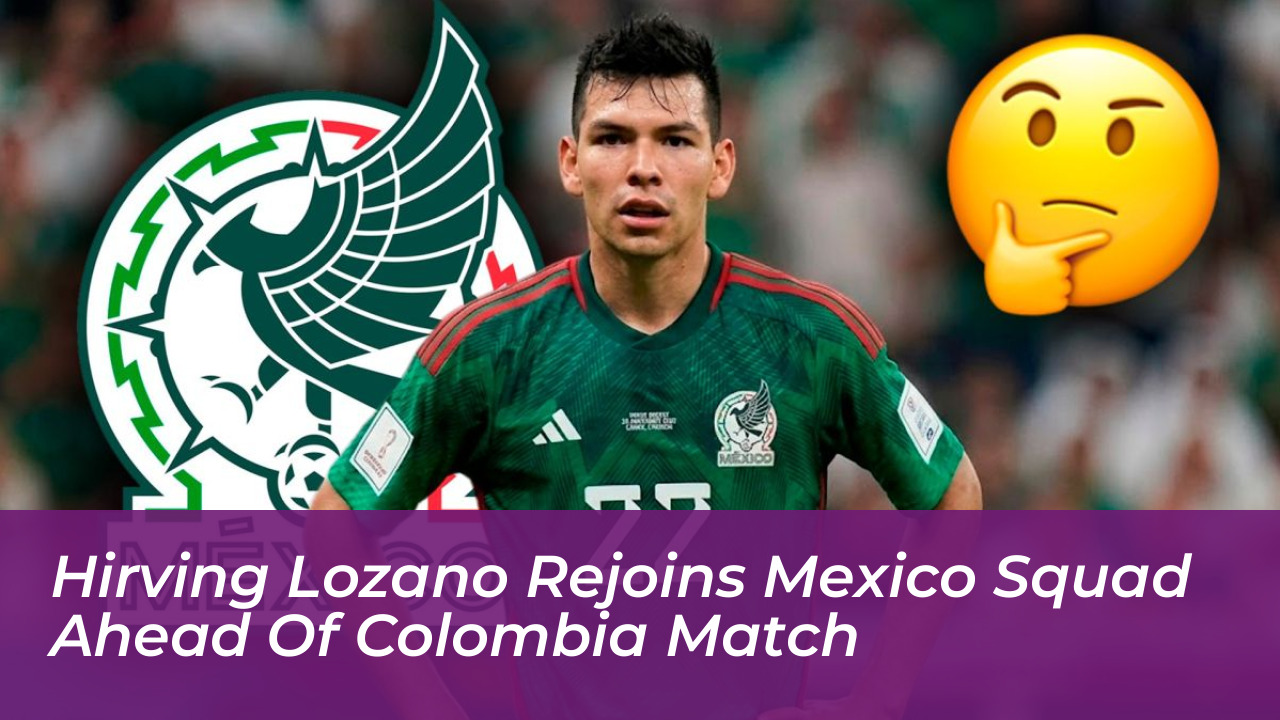
Hirving Lozano makes a triumphant return to the Mexican national team training camp in Baltimore, Maryland. The LA Galaxy winger steps back into the international fold after an eleven-month absence. His last appearance for El Tri occurred during a goalless draw against Uruguay on November 15, 2025. New head coach Rafael Marquez wastes no time integrating the veteran attacker into a 30-man roster designed to evaluate talent ahead of the 2030 World Cup cycle.
- Hirving Lozano National Team Return
- The Rafael Marquez Era and Tactical Vision for El Tri
- Transition from Assistant to Permanent Manager
- Building Toward the 2030 World Cycle
- Revitalizing Career Paths: From San Diego FC to LA Galaxy
- Overcoming Club Strife and Missing the 2026 World Cup
- Resurgence in Major League Soccer
- High-Stakes Autumn Friendlies in the United States
- The September and October Match Schedule
- Roster Challenges: Injuries and Strategic Adjustments
- Absence of Key Talents Raul Jimenez and Julian Quinones
- Goalkeeping Transition and Alex Padilla’s Call-Up
- Domestic Controversy and Liga MX Representation
- Chivas Shatters the Two-Player Gentleman’s Agreement
- Club America and Domestic Influence
- Generational Bridge: Mentorship in the Baltimore Camp
- Filling the Leadership Void Left by Guillermo Ochoa
- Bonding with Rising Star Gilberto Mora
- Rebuilding the Attack Without Established Scorers
- Santiago Gimenez Takes Center Stage
- Utilizing Flank Speed and New Combinations
- Frequently Asked Questions
- Why was Hirving Lozano absent from the Mexico national team for eleven months?
- Who are the notable absences from Rafael Marquez’s first Mexico squad?
- Which club contributed the highest number of players to the squad?
- What are the upcoming matches for the Mexican national team?
Lozano endured a difficult period with San Diego FC that left him without regular club football and forced him to miss the 2026 World Cup entirely. A subsequent loan move to the LA Galaxy in August revitalized his professional career. Strong performances in Major League Soccer convinced Marquez to hand the 31-year-old winger a fresh opportunity to prove his worth on the international stage.
Hirving Lozano National Team Return
Hirving Lozano rejoins the Mexico squad after an eleven-month absence following a turbulent club period. The winger faced severe hurdles in Major League Soccer initially, which stalled his momentum and kept him out of the spotlight. Now, he aims to reclaim his spot as an undisputed starter.
El Tri enters a new developmental phase under permanent head coach Rafael Marquez. The team looks past the disappointment of previous cycles and embraces a modern tactical blueprint aimed at nurturing young prospects while relying on hardened veterans.
The Rafael Marquez Era and Tactical Vision for El Tri
Transition from Assistant to Permanent Manager
Marquez steps into the top job after serving as an assistant to Javier Aguirre, bringing immediate tactical continuity. Marquez inherits a squad in transition, balancing veteran presence with exciting young talent. The new manager emphasizes continuity while building toward future international tournaments.
Marquez notes that he is not starting from zero due to his previous involvement with the coaching staff. This familiarity allows the technical team to implement tactical adjustments swiftly without confusing the player pool during international windows.
Building Toward the 2030 World Cycle
The technical staff selects a 30-man roster designed to evaluate talent, blend experience, and test fresh formations. These preparatory matches help scout depth across every position. Youngsters receive valuable minutes alongside seasoned professionals to build long-term squad cohesion.
The upcoming friendly matches serve as immediate testing grounds for new tactical formations and player combinations. Marquez wants high-intensity pressing and quick transitions from defense to attack, demanding physical excellence from every squad member.
Revitalizing Career Paths: From San Diego FC to LA Galaxy
Overcoming Club Strife and Missing the 2026 World Cup
Lozano faced major challenges during his stint with San Diego FC that left him sidelined and absent from major tournaments. A contractual dispute and lack of playing time threatened to derail his career prematurely. Missing the grand stage of the 2026 World Cup served as a painful turning point for the dynamic winger.
Determined to rewrite his narrative, Lozano forced a change in scenery. He needed an environment that guaranteed minutes, tactical freedom, and competitive pressure.
Resurgence in Major League Soccer
An August loan move to the LA Galaxy restored his match fitness, sharpness, and overall form. Lozano rediscovered his trademark acceleration, dribbling terror, and eye for goal on American pitches. His productive displays in Southern California turned heads in the national team office.
Rafael Marquez monitored these club performances closely. Recognizing the player’s regained confidence and physical readiness, the coaching staff finalized the recall for the autumn fixtures.
High-Stakes Autumn Friendlies in the United States
The September and October Match Schedule
Mexico enters a demanding stretch of autumn friendlies hosted across the United States. These matches provide vital competitive minutes for players vying for permanent spots in the national pool.
- September 26, 2026: Mexico vs. Colombia
- September 29, 2026: Mexico vs. Peru
- October 3, 2026: Mexico vs. United States
- October 6, 2026: Mexico vs. Chile
Traveling across different cities in the United States tests the physical endurance of the squad. The coaching staff plans systematic player rotations to prevent fatigue and evaluate every single invitee.
Roster Challenges: Injuries and Strategic Adjustments
Absence of Key Talents Raul Jimenez and Julian Quinones
Star forward Raul Jimenez and Ballon d’Or nominee Julian Quinones miss the September and October fixtures due to recent club injuries. Their absence forces the coaching staff to rethink how to break down low defensive blocks.
Marquez must find alternative ways to generate goals and occupy central defenders without his primary talisman. This opens the door for fringe forwards to step into the spotlight.
Goalkeeping Transition and Alex Padilla’s Call-Up
Injuries to Luis Angel Malagon and Carlos Acevedo open the door for Athletic Club goalkeeper Alex Padilla to stake a claim. Padilla aims to establish himself as a long-term option between the posts for El Tri. The young shot-stopper brings European experience to the camp.
The goalkeeping department undergoes a generational shift. With veteran figures stepping aside, younger keepers get rare opportunities to prove their temperament in high-stakes international friendlies.
Domestic Controversy and Liga MX Representation
Chivas Shatters the Two-Player Gentleman’s Agreement
Liga MX clubs previously agreed to a tentative limit of two player call-ups per team. Chivas shattered this agreement by sending six players to the national camp.
Guadalajara provides the defensive and midfield backbone for this international window. Players like Raul Rangel, Diego Campillo, Roberto Alvarado, Hugo Camberos, Santiago Sandoval, and Luis Romo make up the Chivas contingent.
Club America and Domestic Influence
Club America follows closely with three selections, signaling a heavy domestic influence despite heavy MLS representation from players like Lozano and German Berterame.
Balancing domestic club interests with national team demands remains a delicate political tightrope for the Mexican federation. Cooperation between club managers and the national team staff dictates the long-term success of these camps.
Generational Bridge: Mentorship in the Baltimore Camp
Filling the Leadership Void Left by Guillermo Ochoa
Lozano steps into a veteran mentorship role following the international retirement of 41-year-old goalkeeper Guillermo Ochoa. Ochoa previously acted as a primary mentor for young prospects during previous World Cup cycles. Lozano now shares his European and MLS experience with the next wave of Mexican football talent.
Lozano embraces this newfound responsibility. Instead of just focusing on his own performance, he actively communicates tactical details and professional habits to younger squad members.
Bonding with Rising Star Gilberto Mora
Training sessions in Baltimore highlight a generational bridge within the squad. Lozano participates in high-intensity speed and directional drills alongside young Tijuana standout Gilberto Mora.
Fans in attendance offer standing ovations as the veteran winger forms a lighthearted bond with the teenage prospect. These positive dynamics build chemistry and foster a winning culture within the locker room.
Rebuilding the Attack Without Established Scorers
Santiago Gimenez Takes Center Stage
Santiago Gimenez assumes primary striking responsibilities for the national team following his transfer to Porto. He must translate his club form onto the international stage to keep the attack flowing.
Defenders focus heavily on Gimenez, which creates pockets of space on the wings. This tactical reality directly benefits attacking midfielders and wide forwards.
Utilizing Flank Speed and New Combinations
Marquez intends to stretch opposing defenses using pace on the flanks, utilizing Lozano’s direct running style alongside younger creators to unlock stubborn defensive blocks.
Quick combination play in the final third will compensate for the lack of traditional target men. The fluid front three aims to overwhelm opponents through relentless movement.
Frequently Asked Questions
Why was Hirving Lozano absent from the Mexico national team for eleven months?
Lozano missed nearly a year of international duty due to a contractual falling out with San Diego FC. This dispute left him without club football for several months and forced him to miss the 2026 World Cup entirely. His recent transfer to the LA Galaxy restored his match fitness and earned him a recall from Rafael Marquez.
Who are the notable absences from Rafael Marquez’s first Mexico squad?
Star striker Raul Jimenez and Ballon d’Or nominee Julian Quinones are notable omissions from the roster. Both players missed out due to injuries sustained at their respective club teams during the domestic season.
Which club contributed the highest number of players to the squad?
Chivas contributed the highest number of players with six representatives. This breaks an initial gentlemen’s agreement among Liga MX clubs to limit selections to two players per team.
What are the upcoming matches for the Mexican national team?
Mexico plays a series of friendly matches in the United States, facing Colombia on September 26, Peru on September 29, the United States on October 3, and Chile on October 6.