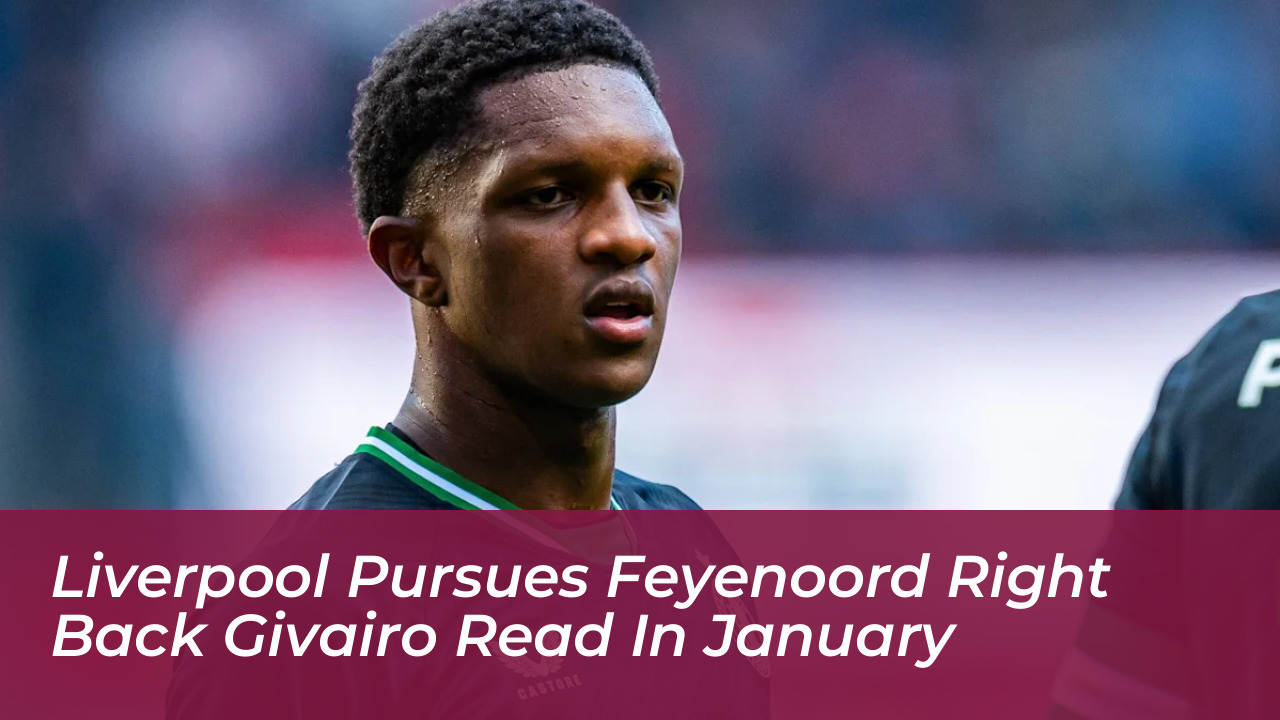
Premier League powerhouse Liverpool has placed Feyenoord right back Givairo Read firmly on their radar ahead of the upcoming January transfer window. Manager Arne Slot deals with mounting defensive vulnerabilities, and the club scouts the Eredivisie market for tactical solutions. The 20-year-old Netherlands Under-21 international has caught the attention of several English clubs following a stellar start to the domestic campaign.
- Defensive Instability at Anfield Forces January Action
- The Creative Void Left by Trent Alexander-Arnold
- Fitness Setbacks and Tactical Adaptations
- Givairo Read Profile and Eredivisie Impact
- Offensive Output and Modern Full-Back Attributes
- Tactical Versatility in Modern Systems
- Market Valuation and Financial Pressures at De Kuip
- Transfer Fee Expectations and Contractual Situation
- Internal Financial Constraints at De Kuip
- Intense Premier League Competition for Read’s Signature
- Rival Interest from Domestic Contenders
- Projected Bidding War in the Winter Window
- Strategic Advantages for Liverpool in the January Race
- Financial and Squad Impact Analysis
- Frequently Asked Questions
- Who is Givairo Read?
- Why is Liverpool targeting a right back in January?
- How much will Givairo Read cost?
- Which other clubs want to sign Givairo Read?
Defensive Instability at Anfield Forces January Action
Liverpool faces acute tactical limitations on the right side of defense. The squad struggles to maintain defensive solidity while missing key personnel who dictate the tempo of matches. Squad rotation has become a massive headache for the coaching staff as fixtures pile up across multiple competitions.
Defensive transition phases require absolute concentration and physical resilience from every member of the backline. Opponents regularly exploit vacant spaces left behind by advanced full-backs during quick counter-attacks. Addressing this structural vulnerability remains the primary objective for the recruitment team this winter.
The Creative Void Left by Trent Alexander-Arnold
The departure of Trent Alexander-Arnold left a massive creative void in the squad. Liverpool lost elite playmaking and precise crossing ability from deep areas, which had fueled their attack for seasons. Finding a replacement who can replicate that level of offensive output remains a daunting task for the recruitment department.
Creating high-value scoring chances from wide areas demands exceptional technical proficiency and vision. Opponents often double-team modern full-backs to shut down crossing lanes and restrict progressive passing angles. Tactical adjustments must account for these defensive pressures without sacrificing attacking width.
Fitness Setbacks and Tactical Adaptations
Meanwhile, Conor Bradley suffers from persistent fitness setbacks that sideline him during critical fixtures. Squad depth takes a significant hit whenever natural specialists miss extended periods through injury. Slot implements emergency tactical measures to cover the position adequately.
Utilizing makeshift options out of position exposes a lack of natural depth within the defensive department. Securing a specialist right back becomes paramount for maintaining a top-four challenge and competing in European competitions. Squad balance heavily relies on natural positional instincts during high-intensity matches.
Defensive stability requires seamless communication between center backs and wide defenders across every ninety-minute fixture. Minor lapses in concentration often result in costly goals conceded against efficient domestic opponents. Modern coaching staffs emphasize rigorous positional discipline during weekly training sessions.
Givairo Read Profile and Eredivisie Impact
Givairo Read has emerged as one of the most exciting young defensive prospects in Dutch football. His rapid development has surprised many pundits, but those watching the Eredivisie closely recognize his immense talent. He handles high-pressure moments with remarkable maturity for his age.
Technical scouts admire his composure when receiving possession under intense pressing from opposing forwards. Such confidence allows his team to build attacks smoothly from deep defensive zones. Sustaining this level of performance across multiple competitions validates his potential.
Offensive Output and Modern Full-Back Attributes
The 20-year-old boasts extraordinary offensive output, registering four assists in his opening seven Eredivisie appearances this season. Feyenoord relies heavily on his overlapping runs, defensive recovery speed, and composure under pressure in build-up phases.
Scouts praise his modern full-back profile. He defends proactively, intercepts passes cleanly, and delivers accurate crosses into the penalty box. His tactical intelligence allows him to invert into midfield or hold the wide channel effectively. Such attributes align with the tactical demands of modern Premier League systems.
Tactical Versatility in Modern Systems
Modern managers demand full-backs who can function as auxiliary midfielders during possession phases. Read displays this exact capability in the Dutch top flight. His clean interception numbers and positional awareness reduce defensive transition risks for his club.
Switching fluidly between defensive and offensive shapes creates numerical superiorities in central midfield areas. Analytical models rate this tactical flexibility very highly when evaluating prospective defensive signings. Executing these complex patterns requires advanced football intelligence and stamina.
Market Valuation and Financial Pressures at De Kuip
Acquiring Read requires significant financial commitment from any prospective buying club. Eredivisie clubs drive hard bargains for their best young talents, especially when long-term contracts are involved. Understanding these financial dynamics helps explain why the race for his signature heats up.
Negotiating winter transfers often commands a premium price due to the scarcity of available elite players. Selling clubs hold all the leverage when key contributors remain tied down by long-term agreements. Financial planning dictates how aggressively sporting directors pursue their primary targets.
Transfer Fee Expectations and Contractual Situation
Transfermarkt values the defender around 21 million pounds, though market inflation and rival interest could push the final fee higher. Read remains contracted at Feyenoord until June 2029. This long-term agreement places the Eredivisie side in a commanding bargaining position.
Any prospective buyer must present a substantial proposal to convince club directors to sell a core starter midway through a title charge. Clubs rarely part ways with valuable starters easily during the winter trading period without a massive financial incentive.
Internal Financial Constraints at De Kuip
Feyenoord technical director Dévy Rigaux recently admitted that internal financial constraints are tighter than anticipated. This monetary pressure might force the Dutch club to entertain lucrative mid-season bids for prized assets despite their sporting ambitions.
Balancing books while maintaining competitive squad standards poses a constant challenge for continental European clubs. Strategic player sales often fund future squad investments and infrastructure improvements. External market forces frequently dictate these difficult corporate decisions.
Intense Premier League Competition for Read’s Signature
Liverpool faces stiff resistance from domestic rivals who also need defensive reinforcements. The battle for elite young talent in Europe often sparks intense bidding wars among English clubs. Several sporting directors have identified Read as a priority target.
Scouting networks across Europe monitor Eredivisie fixtures meticulously to spot emerging talents before valuations skyrocket. Early identification provides a distinct advantage in securing pre-agreements or initiating formal talks. Competition remains fierce among clubs chasing elite defensive prospects.
Rival Interest from Domestic Contenders
Arsenal tracks the youngster closely as manager Mikel Arteta seeks cover for injured full-backs. Manchester City also monitors the Dutch defender as part of their continuous squad regeneration strategy. Previous interest from Nottingham Forest and Everton proves that recruitment departments across England have tracked Read’s trajectory for months.
Premier League clubs possess substantial financial resources to fund ambitious winter transfer window acquisitions. Convincing a player to choose one destination over another often depends on projected playing time. Sporting projects must offer clear development pathways to attract top-tier prospects.
Projected Bidding War in the Winter Window
The presence of multiple suitors sets the stage for a competitive bidding war when the winter window opens. Clubs will likely try to outmaneuver each other with early bids and structured add-ons. Strategic timing will dictate which club successfully secures an agreement with Feyenoord.
Bidding wars typically inflate initial valuations well beyond standard market estimates. Boardrooms must weigh the sporting necessity against the long-term financial impact of such expenditures. Decisive action often separates successful transfer campaigns from missed opportunities.
Strategic Advantages for Liverpool in the January Race
Liverpool holds distinct advantages over competing suitors in this market race. Anfield provides a clear, unobstructed pathway to immediate first-team minutes given the ongoing injury crisis and tactical adaptations on the right side. Young prospects look for genuine development pathways rather than prolonged bench appearances.
The club recruitment team favors data-driven acquisitions that offer high resale value alongside immediate tactical fit. Read matches this recruitment philosophy precisely. At 20 years old, his ceiling remains exceptionally high, offering value for both short-term needs and long-term squad stability.
Financial and Squad Impact Analysis
The financial outlay required to land Read represents a calculated investment rather than a panic buy. Early identification points to structured planning by the Merseyside recruitment department. Integrating a dynamic young full-back transforms the right flank and injects fresh energy into the squad.
Squad harmony and balanced wage structures remain vital considerations during major recruitment drives. Introducing young talents helps maintain a sustainable age profile across the entire first-team squad. Long-term planning ensures seamless transitions when senior players eventually move on.
| Metric | Givairo Read Statistics |
|---|---|
| Current Club | Feyenoord |
| Age | 20 |
| Position | Right Back |
| Contract Expiry | June 2029 |
| Estimated Valuation | £21 Million to £23.5 Million |
| 2026 Eredivisie Output | 4 Assists in 7 Appearances |
Frequently Asked Questions
Who is Givairo Read?
Givairo Read is a 20-year-old Dutch professional footballer who plays as a right back for Eredivisie club Feyenoord and represents the Netherlands at the Under-21 international level.
Why is Liverpool targeting a right back in January?
Liverpool needs defensive reinforcements due to Conor Bradley’s long-term injury history, tactical adaptations required on the right flank, and the need for natural depth under Arne Slot.
How much will Givairo Read cost?
Transfermarkt values the defender around 21 million pounds. However, because his contract runs until 2029 and multiple clubs show interest, Feyenoord will likely demand a significantly higher fee.
Which other clubs want to sign Givairo Read?
Arsenal and Manchester City are actively tracking the Feyenoord defender alongside Liverpool, creating a competitive market for his signature.