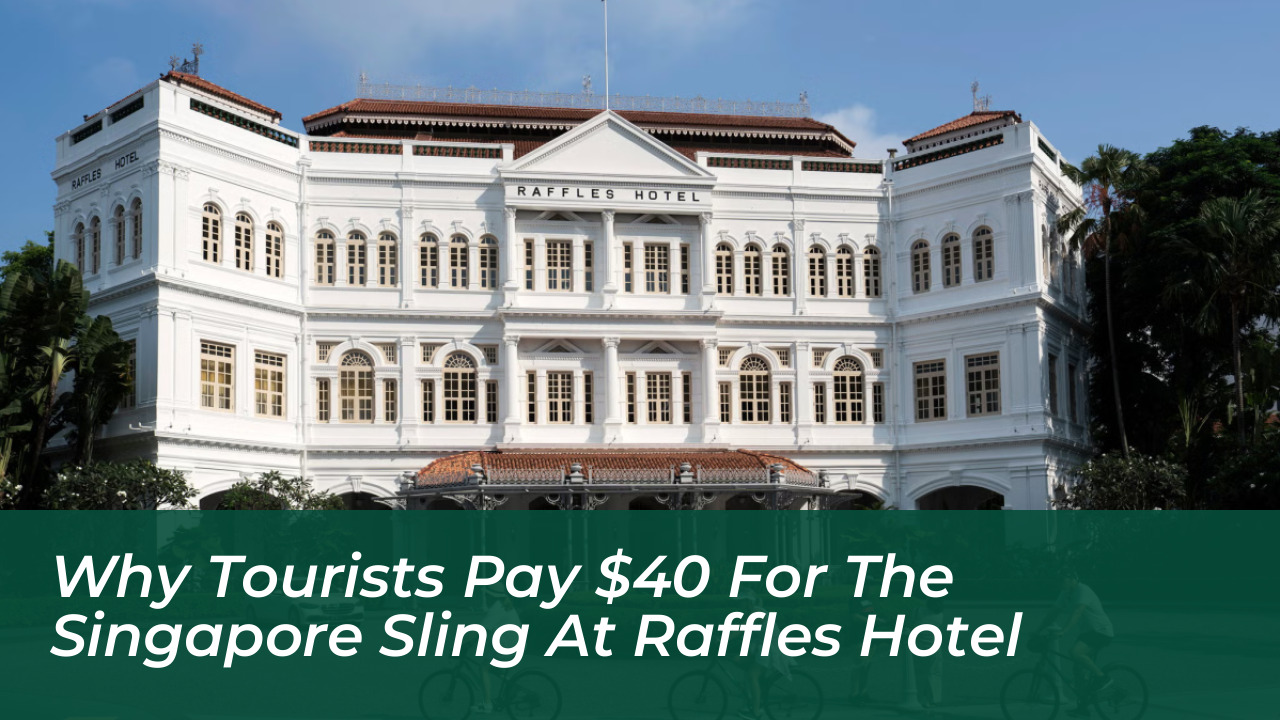
The iconic Long Bar inside Singapore’s historic Raffles Hotel continues to draw massive daily crowds of international travelers and curious locals alike. Visitors line up long before its 11 a.m. opening, paying approximately $40 USD for a single cocktail known globally as the Singapore Sling. Despite Singapore’s modern reputation for world-class, award-winning mixology and cutting-edge craft cocktail bars, this historic pink gin drink remains an undeniable tourism titan. Understanding why thousands of travelers happily pay this steep price requires looking beyond the liquid in the glass and examining the unique cultural ritual, colonial architecture, and century-old traditions that define the experience.
- Decoding the Raffles Hotel Singapore Sling Phenomenon
- The Historical Origins of the Singapore Sling
- Created in 1915 During the British Colonial Era
- Literary Figures and Wartime Recipe Recovery
- Anatomy of the 40 Dollar Cocktail
- Breaking Down the Ingredient List
- Liquid Merit Versus Modern Mixology Standards
- The Peanut Shell Tradition and Legal Exemptions
- A Unique Twist on Singapore Cleanliness Laws
- The Psychological Impact of Theatrical Charm
- The Architecture and Atmosphere of Raffles Hotel
- Neoclassical Landmarks and Restoration Efforts
- Navigating Crowds and Timing Your Visit
- Evaluating the Tourist Trap Debate
- Separating Authenticity from Overpriced Novelty
Operating daily at high volume, the establishment sells approximately 1,000 servings of the cocktail each day. An impressive nine out of 10 patrons select the signature beverage over any other menu item on offer. This phenomenon represents a fascinating intersection of global tourism, heritage marketing, and institutional resilience. While modern cocktail enthusiasts frequently debate the value proposition, the numbers prove that the cultural pull of the Long Bar remains remarkably strong.
Decoding the Raffles Hotel Singapore Sling Phenomenon
Daily lines snake through the corridors of the restored property, proving that heritage branding holds immense power in contemporary travel. Tourists are not merely buying a drink; they are purchasing a ticket into a living museum. The steady crowds reflect a broader consumer desire for authentic, place-based experiences that connect them to a destination’s past.
The institutional resilience of the Long Bar is staggering. Trends in the beverage industry come and go, yet this specific venue remains immune to changing fashions. By anchoring its identity to the British colonial era, the hotel created a timeless destination that defies normal economic logic. Volume metrics confirm that tourist demand stays consistent across both peak holiday seasons and slower travel months.
The Historical Origins of the Singapore Sling
Created in 1915 During the British Colonial Era
The story of the Singapore Sling begins in 1915 during the height of the British colonial era. A Chinese-born bartender named Ngiam Tong Boon, working at the Raffles Hotel Long Bar, formulated a pink gin cocktail designed to bypass the social conventions of the period. During the early 20th century, strict etiquette discouraged women from consuming alcohol openly in public spaces. Straight spirits carried a distinct social stigma that respectable society avoided.
Ngiam crafted a fruity, vibrant, pink-hued beverage that resembled a harmless fruit punch at a glance. This clever disguise allowed female patrons to sip alcohol socially without breaking decorum. The recipe quickly spread through colonial society and captured the imaginations of international literary figures and celebrities who passed through the hotel guest books.
Literary Figures and Wartime Recipe Recovery
Somerset Maugham, Rudyard Kipling, and Charlie Chaplin all spent time within the walls of Raffles, cementing the drink’s legendary status through their writings and visits. During the Japanese Occupation of Singapore in World War II, the original written recipe was famously lost. Hotel staff later reconstructed the formulation from a surviving bartender’s notebook after the war ended.
Historians and modern bartenders frequently debate whether the current iteration matches Ngiam Tong Boon’s exact 1915 creation. Some former bartenders dispute the inclusion of pineapple juice in the original formulation, suggesting the drink was originally tarter and less tropical. Nevertheless, the modern Raffles Hotel Long Bar version is universally recognized as the canonical Singapore Sling and serves as the global blueprint for tropical hotel bars.
Anatomy of the 40 Dollar Cocktail
Breaking Down the Ingredient List
At approximately $40 USD after taxes, the Singapore Sling sits at the top end of the city-state’s pricing spectrum. It costs more than double the price of technically superior cocktails found in independent craft bars across the downtown core. Analyzing the exact ingredients clarifies what patrons receive for their investment:
- London Dry Gin (30 ml): Serves as the primary spirit base, though its character is largely muted by the sweet mixers.
- Cherry Heering (15 ml): Provides a rich, fruit-forward cherry note that contributes to the drink’s signature deep pink coloration.
- Bénédictine (7.5 ml): Adds a subtle herbal complexity in the background.
- Cointreau: Introduces an orange liqueur dimension that balances the fruit profile.
- Fresh Pineapple Juice (120 ml): Dominates the volume and flavor profile, making the drink noticeably sweet.
- Lime Juice: Provides necessary acidity to cut through the heavy fruit sugars.
- Grenadine and Angostura Bitters: Add color depth and final aromatic balance.
The resulting beverage sits at approximately 14 to 16 percent alcohol by volume when mixed. It arrives in a tall highball glass garnished with a fresh pineapple slice and a bright red cherry.
Liquid Merit Versus Modern Mixology Standards
Evaluated purely as a technical cocktail by modern mixology standards, it is sweet, simple, and dominated by pineapple juice. It lacks the sharp balance and spirit-forward profile that contemporary craft cocktail enthusiasts typically expect at this price point. However, expecting a cutting-edge craft beverage misses the entire point of ordering a drink rooted in a century of tradition.
| Venue Type | Average Price (SGD) | Cocktail Style | Primary Value Driver |
|---|---|---|---|
| Raffles Long Bar | $39 – $50+ | Sweet, historical, fruit-forward | Heritage setting, peanut-shell ritual, colonial history |
| Independent Craft Bars | $25 – $35 | Technically precise, spirit-forward | Liquid craftsmanship, innovative mixology, intimate ambiance |
| Local Hawker Centre | $8 – $12 | Cold Lager (Tiger / Heineken) | Instant refreshment in a tropical climate |
The Peanut Shell Tradition and Legal Exemptions
A Unique Twist on Singapore Cleanliness Laws
One of the most remarkable elements of the Long Bar experience is its famous physical interaction with the room. Upon arrival, servers present patrons with a complimentary bag of unshelled peanuts. The established house custom invites guests to crack open the shells at the table and throw the discarded debris directly onto the floor.
Walking across the room produces a distinct, crunchy sound as shoes trample over layers of discarded husks. This playful custom creates a fascinating paradox within Singapore. The city-state maintains a fierce global reputation for immaculate cleanliness, enforcing strict anti-littering laws and heavy public fines that can reach up to $1,000 for dropping waste in public areas.
The Psychological Impact of Theatrical Charm
The Long Bar holds a rare, officially sanctioned exemption from these regulations. It stands as the only public venue in Singapore where littering on the floor is actively encouraged rather than penalized. This deliberate reversal of local social norms adds a layer of theatrical charm that keeps tourists amused and engaged.
Sensory elements like the crunchy floor noise create an unforgettable ritual that stays with visitors long after they leave. The tactile nature of cracking peanuts breaks down formal barriers, encouraging strangers to chat and share tables in a way few luxury hotel bars manage to achieve.
The Architecture and Atmosphere of Raffles Hotel
Neoclassical Landmarks and Restoration Efforts
Beyond the glass, the physical environment of Raffles Hotel provides significant context for the steep drink prices. Built in 1887 by the Sarkies brothers as a modest 10-room bungalow, the property expanded steadily through the British colonial period into a sprawling neoclassical landmark. It is protected as a National Monument of Singapore, ensuring its architectural preservation.
Following an extensive, careful restoration project between 2017 and 2019, the hotel reopened with its historic fabric intact. Teak flooring, high ceilings, Peranakan tilework, and lush tropical foliage transport visitors directly into the nineteenth century. Maintaining such expansive heritage grounds requires heavy capital investment, which is partially subsidized by high-margin tourist offerings like the famous cocktail.
Navigating Crowds and Timing Your Visit
Visiting the Long Bar requires strategy to avoid the longest queues. Mid-afternoon slots often provide a more relaxed atmosphere compared to the chaotic evening rushes when tour groups descend upon the property. Arriving right when doors open at 11 a.m. guarantees quick seating and a chance to soak in the colonial ambiance without feeling rushed.
Evaluating the Tourist Trap Debate
Separating Authenticity from Overpriced Novelty
Critics frequently label the Raffles Hotel experience a classic tourist trap due to the inflated beverage pricing. Weighing the cost against the non-repeatable historical experience helps put the price into perspective. Travelers are paying for maintenance of a historic monument, attentive service dressed in traditional uniforms, and a globally recognized cultural milestone.
Categorizing the Long Bar requires looking beyond the liquid in the glass. While a local kopitiam offers cheaper refreshment, it cannot offer a seat where Somerset Maugham once wrote his tropical tales. For those who value living history and cultural rituals, the $40 investment delivers a memorable story that justifies the price tag.