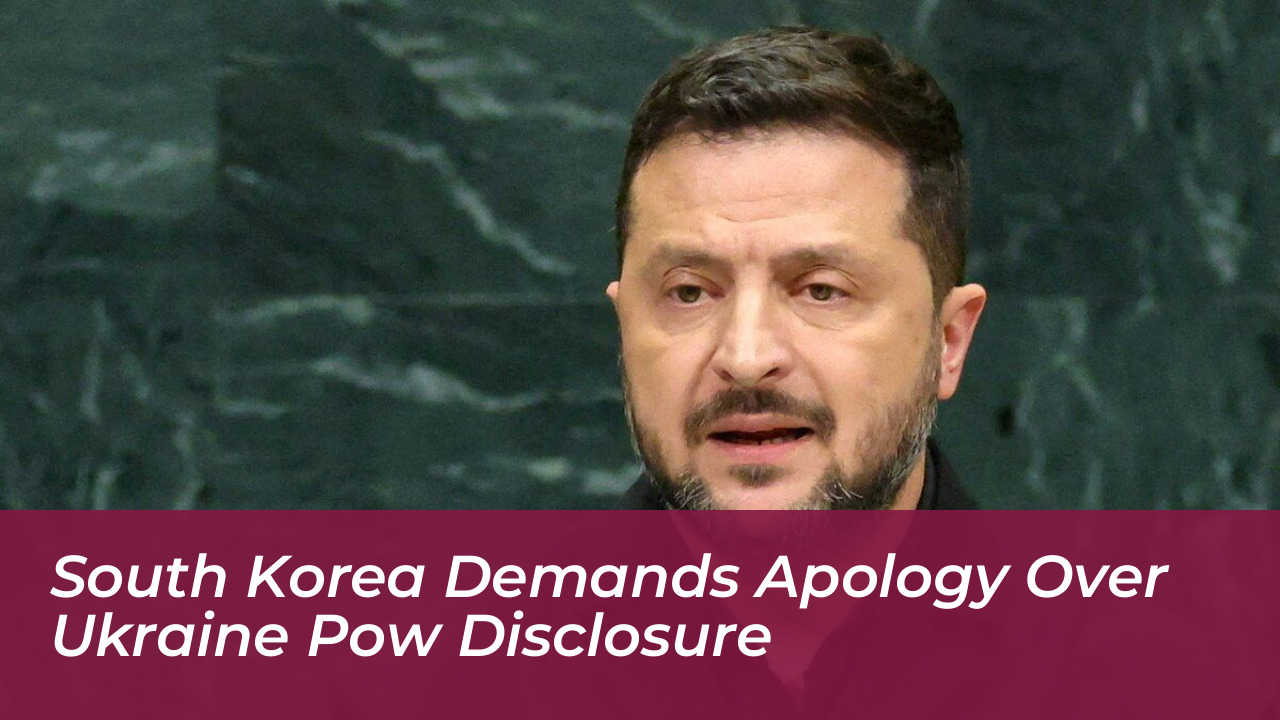
Diplomatic Friction Erupts Between Seoul and Kyiv Over Captured North Korean Troops

A significant diplomatic rift has emerged between Seoul and Kyiv after South Korea’s presidential office demanded a formal explanation and apology from Ukraine. The friction stems from Ukrainian President Volodymyr Zelenskyy’s public disclosure during the United Nations General Assembly that Kyiv had transferred two captured North Korean prisoners of war (POWs) to South Korea-a move Seoul asserts violated a strict bilateral non-disclosure agreement.
- Diplomatic Friction Erupts Between Seoul and Kyiv Over Captured North Korean Troops
- Seoul Accuses Ukraine of Breaching Confidentiality Agreement
- Kyiv Defends Disclosure as Statement of Fact
- Capture in Kursk and the Human Toll of North Korea’s Deployment
- Key Milestones in Bilateral POW Coordination
- Strategic Implications for South Korean Foreign Policy
According to South Korean officials, the two nations had explicitly agreed to keep the operation confidential due to acute security, diplomatic, and humanitarian risks. Seoul warned that revealing the transfer publicly severely damages bilateral trust and complicates delicate geopolitical efforts on the Korean Peninsula.
Seoul Accuses Ukraine of Breaching Confidentiality Agreement
The dispute intensified after Seong Ghi-hong, senior presidential secretary for public relations in Seoul, issued a firm statement expressing “strong regret” over Ukraine’s unilateral public announcement and its subsequent denial that a secrecy agreement existed. Seong emphasized that the South Korean government is actively reviewing additional measures in response to the breach.
According to Seoul’s account, Ukrainian negotiators had repeatedly requested secrecy through diplomatic channels prior to the handover. Kyiv initially sought confidentiality out of concern for potential domestic backlash, fearing public criticism that Ukraine had forfeited an opportunity to exchange the North Korean troops for Ukrainian POWs held by Russia. South Korea agreed to the strict non-disclosure protocol to protect the safety of the two soldiers and their families remaining in North Korea.
South Korean President Lee Jae Myung also addressed the controversy, stating publicly that the breach was deeply regrettable. In a post on social media platform X, President Lee emphasized that keeping the operation covert was necessary given the complex diplomatic, military, and humanitarian ramifications involved.
Kyiv Defends Disclosure as Statement of Fact
In response to Seoul’s official protest, Ukrainian officials pushed back against the accusations. Dmytro Lytvyn, an advisor to President Zelenskyy, defended the announcement by describing Ukraine as an “open country” and arguing that maintaining complete secrecy over the handover would have been impractical.
“From the entire story-which is long and detailed-we reported only the fact itself, that they were sent to the Republic of Korea.”
The contradiction between Seoul’s insistence on a non-disclosure agreement and Kyiv’s assertion of open transparency has raised immediate questions regarding future intelligence sharing and diplomatic cooperation between the two nations.
Capture in Kursk and the Human Toll of North Korea’s Deployment
The two North Korean soldiers at the center of the dispute were captured alive by Ukrainian forces in Russia’s Kursk region in January 2025. They were the first North Korean combatants confirmed to be taken alive since Pyongyang began deploying military units to assist Moscow’s war effort in late 2024.
South Korean intelligence estimates that North Korea deployed between 14,000 and 15,000 troops to support Russian military operations, concentrated heavily in the contested Kursk border sector. Western and South Korean intelligence agencies report that these forces suffered severe casualties, with over 6,000 North Korean soldiers estimated to have been killed in combat.
Key Milestones in Bilateral POW Coordination
- March Foreign Ministers Meeting: High-level talks established initial bilateral cooperation regarding captured North Korean military personnel.
- July NATO Summit in Ankara: President Lee Jae Myung and President Volodymyr Zelenskyy met directly, agreeing that North Korean POWs expressing a desire to defect should be handled in accordance with international law and humanitarian principles.
Strategic Implications for South Korean Foreign Policy
The public controversy comes at a delicate moment for South Korean foreign policy. The administration of President Lee Jae Myung has been cautious regarding direct military involvement in the European conflict, resisting pressure to supply lethal weaponry or air defense systems directly to Ukraine.
Analysts note that the public revelation complicates Seoul’s broader strategic priorities:
- Peninsular Diplomacy: Unilateral publicity regarding North Korean defectors risks triggering aggressive responses from Pyongyang at a time when Seoul is attempting to revive inter-Korean dialogue.
- Bilateral Arms Transfers: The breakdown in diplomatic trust makes it significantly less likely that South Korea will agree to future requests for military equipment or direct defense support for Kyiv.
- Superpower Dynamics: The fallout occurs as Washington signals potential willingness to re-engage in direct diplomacy with Pyongyang, making stability on the Korean Peninsula a high priority for South Korean planners.
As both capitals evaluate their next steps, Seoul maintains that restoring diplomatic trust requires a clear acknowledgment and apology from Kyiv, while Ukraine continues to focus on highlighting the international dimension of Russia’s war effort.