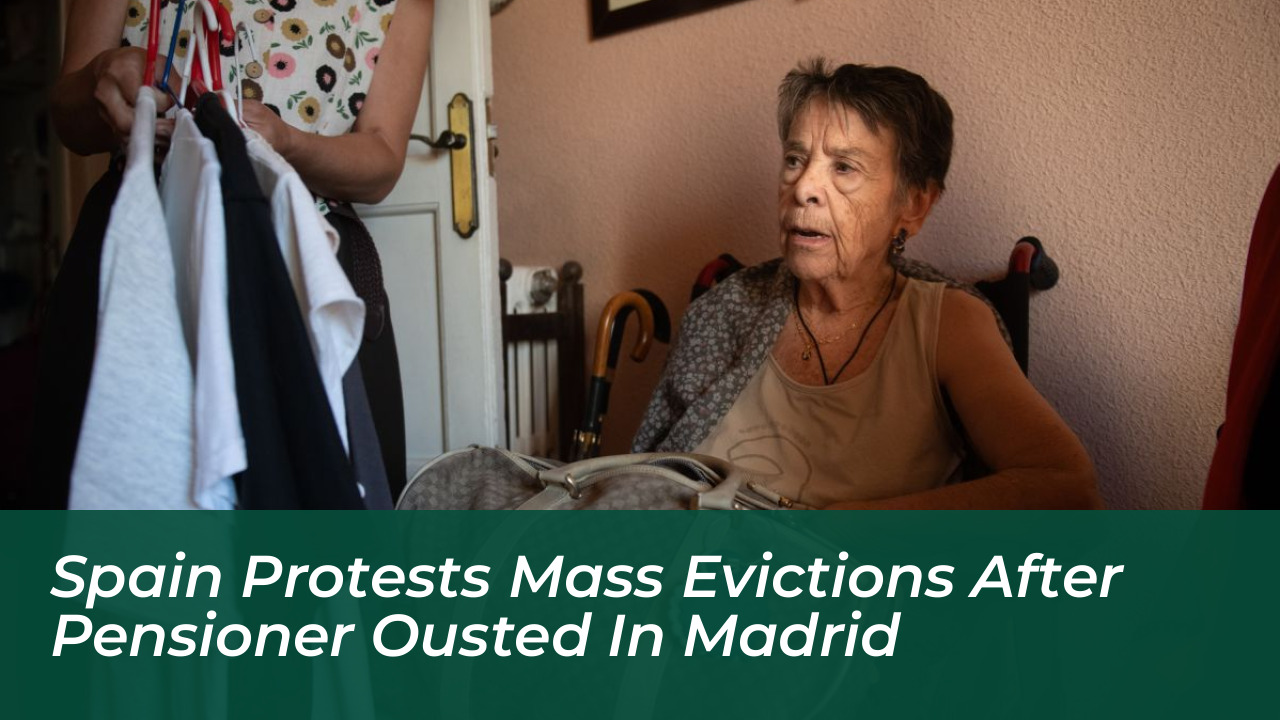
Mass demonstrations and an overnight encampment erupted across Spain on September 26 after authorities evicted 87-year-old Maricarmen Abascal from her Madrid apartment of 70 years, sparking nationwide outrage over the country’s soaring housing costs and the perceived lack of tenant protections.
Demonstrators pitched around 100 tents in Madrid’s historic Puerta del Sol plaza following a march that drew tens of thousands of participants. The crowds demanded an immediate end to evictions without alternative accommodation, stronger tenant safeguards, and stricter measures against lease fraud. Alicia del Río, a spokeswoman for the Tenants’ Union, told journalists that protesters intend to remain camped in the square at least until upcoming government cabinet meetings.
The Eviction of Maricarmen Abascal
Abascal, a wheelchair user who had lived in her Retiro neighborhood home since 1956, was forcibly removed on a stretcher on September 23. The eviction followed a decision by the investment fund Urbagestión to increase her monthly rent from 500 euros to 2,650 euros. Although the fund subsequently reduced its demand to 1,650 euros, the revised amount still exceeded her 1,300-euro monthly pension, ultimately triggering widespread public fury.
“Maricarmen has been, in a way, the last straw that sparked this social unrest,” said protester Simón de la Riva. Spanish media reported that her father had originally rented the apartment in 1956 under historical rent controls before subsequent ownership transfers to corporate entities.
Broader Housing Crisis in Spain

The demonstrations have drawn sharp parallels to Spain’s historic 2011 “indignados movement,” reflecting deeply rooted public frustrations over urban affordability. Housing analysts note that rapid tourism growth, the proliferation of short-term vacation rentals, and shifting demographics have severely strained urban housing supplies. According to the Bank of Spain, the country faced a shortfall of approximately 550,000 homes last year alone.
, Spain ranks near the bottom of Organization for Economic Co-operation and Development (OECD) nations regarding subsidized public rental housing, which accounts for less than 2% of the national housing stock compared to an 8% European Union average. Protesters have vowed to maintain pressure on policymakers until comprehensive structural reforms are enacted.