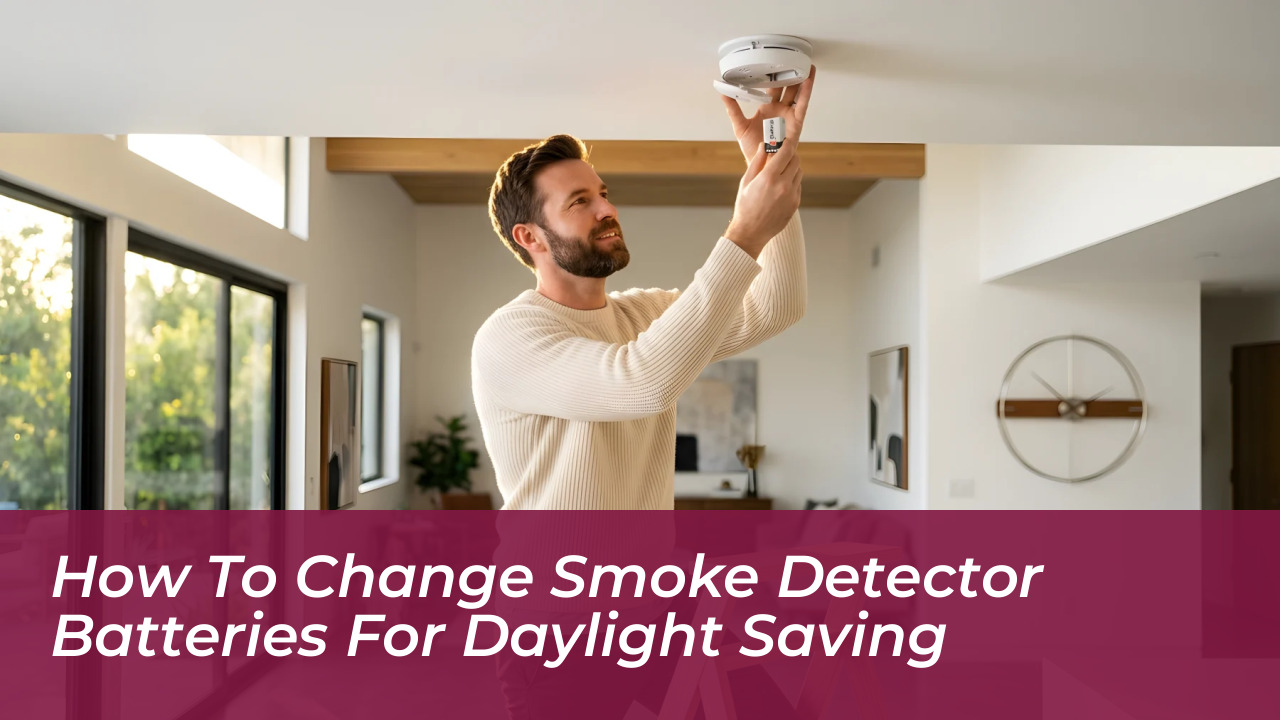
Pairing your smoke detector battery replacement with the biannual clock change is one of the simplest home safety habits you can build. Taking ten minutes during the shift into or out of daylight saving time ensures that early-warning alarms remain fully powered before emergency situations occur. While modern building codes often mandate hardwired units, the overwhelming majority of residential alarms rely on battery backups during power disruptions. Without a reliable power cell, a unit cannot sound the critical alarm when smoke accumulates.
Due to high traffic on this story, please verify you are not a bot to instantly unlock the remaining content. Takes only 5 seconds!
Verify & Continue ReadingWhy the Daylight Saving Routine Saves Lives
Safety organizations and fire prevention officials across the United States promote a simple reminder: change your clocks, change your batteries. Establishing this automatic trigger removes the guesswork from routine maintenance. Smoke sensors operate continuously, gradually draining auxiliary power cells even when no alert sounds. When a battery weakens past a safe threshold, the device typically begins emitting high-pitched chirps at intermittent intervals.
Postponing maintenance until an alarm begins chirping creates avoidable hazards. Chirps frequently begin in the middle of the night as ambient room temperatures drop. This leads frustrated occupants to disconnect units entirely without inserting a replacement. A disconnected alarm provides zero protection. Treating seasonal time changes as mandatory inspection checkpoints eliminates low-battery chirping before it disrupts your household.
Step-by-Step: Replacing the Battery Correctly
Handling delicate electronic housings requires steady footing and the right supplies. Gather a sturdy step stool, fresh manufacturer-approved batteries (typically 9-volt or AA cells), and a clean microfiber cloth before beginning.
- Disconnect power and dismount: If your alarm connects to household electrical wiring, switch off the corresponding circuit breaker first. Gently twist the alarm body counter-clockwise to detach it from its ceiling mounting bracket. For hardwired units, squeeze the plastic prongs on the Quick Connect wire harness to detach it safely.
- Access the compartment: Open the rear or side battery hatch. Some models utilize a sliding tray, while others feature a snap-latch door secured by a small tab.
- Remove the depleted cell: Pull the old battery free, taking care not to pull against thin internal wiring. Check the battery terminal contacts inside the housing for corrosion or dust buildup.
- Clean the sensor chamber: Use a dry cloth or a vacuum attachment to pull accumulated lint and cobwebs away from the perimeter vents. Dirt buildup can trigger false alarms or blind the internal optical sensor.
- Insert the fresh battery: Align positive and negative terminals strictly according to the molded diagrams inside the compartment. Seat the cell firmly and latch the cover.
- Remount and test: Align the unit notches with the ceiling bracket and twist clockwise until it clicks into place. Press and hold the primary test button until the loud horn sounds.
Alarm Lifespans and Sealed Units
Not every modern alarm accepts a removable cell. Many newer devices feature sealed 10-year lithium power supplies designed to last the entire lifespan of the unit. For sealed devices, the seasonal shift serves as an operational inspection rather than a battery swap. If you press the test button on a sealed unit and hear no sound, or if the unit reaches the ten-year mark stamped on the back plate, the entire device requires immediate replacement.
| Alarm Power Type | Daylight Saving Action Required |
|---|---|
| 9-Volt or AA Replaceable | Install fresh alkaline cell and test sensor |
| Hardwired with Battery Backup | Swap backup battery and inspect wire harness |
| Sealed 10-Year Lithium Unit | Test horn, vacuum vents, and check expiry date |
Common Myths About Detector Maintenance
A widespread misconception suggests that as long as a small LED light blinks on the casing, the internal sensor functions properly. In truth, the indicator light merely confirms that electricity reaches the circuit board, not that the detection chamber remains sensitive to smoke particles.
Another dangerous practice involves using rechargeable batteries inside protective alarms. Most rechargeable cells exhibit steeper discharge curves, dropping from operational voltage to complete failure far too rapidly to trigger adequate warning chirps. Standard high-capacity alkaline cells or designated lithium alternatives specified by the device manufacturer remain the industry benchmark for dependable sensor performance.
Never rely on aerosol sprays or actual open flames to test residential units during routine seasonal checks. The built-in test button verifies sensor function, electronic circuits, and sound output without leaving residue on internal components. Check every floor of your home, paying close attention to hallway intersections and sleeping areas where audible alerts matter most.
Frequently Asked Questions
How often should I change my smoke detector batteries?
You should replace removable smoke detector batteries at least once a year. Tying the task to the biannual Daylight Saving Time clock changes ensures optimal protection.
What should I do if my smoke detector keeps chirping after a battery change?
If a brand-new battery does not stop the chirping, try vacuuming dust out of the sensor vents. If the chirping persists, the unit may be expired or internally damaged and requires total replacement.
Can I use rechargeable batteries in my smoke alarm?
No. Fire safety experts strongly advise against using rechargeable batteries because they lose charge too rapidly, often dropping voltage without providing the necessary low-battery warning chirps.
How do I know if my smoke detector is expired?
Detach the unit from its ceiling or wall mount and check the manufacturing date printed on the back label. All residential smoke alarms must be completely replaced every 10 years.
Are hardwired smoke alarms exempt from battery maintenance?
No. While hardwired alarms draw power from your home’s electrical grid, they feature internal backup batteries that must be replaced regularly to maintain protection during power outages.