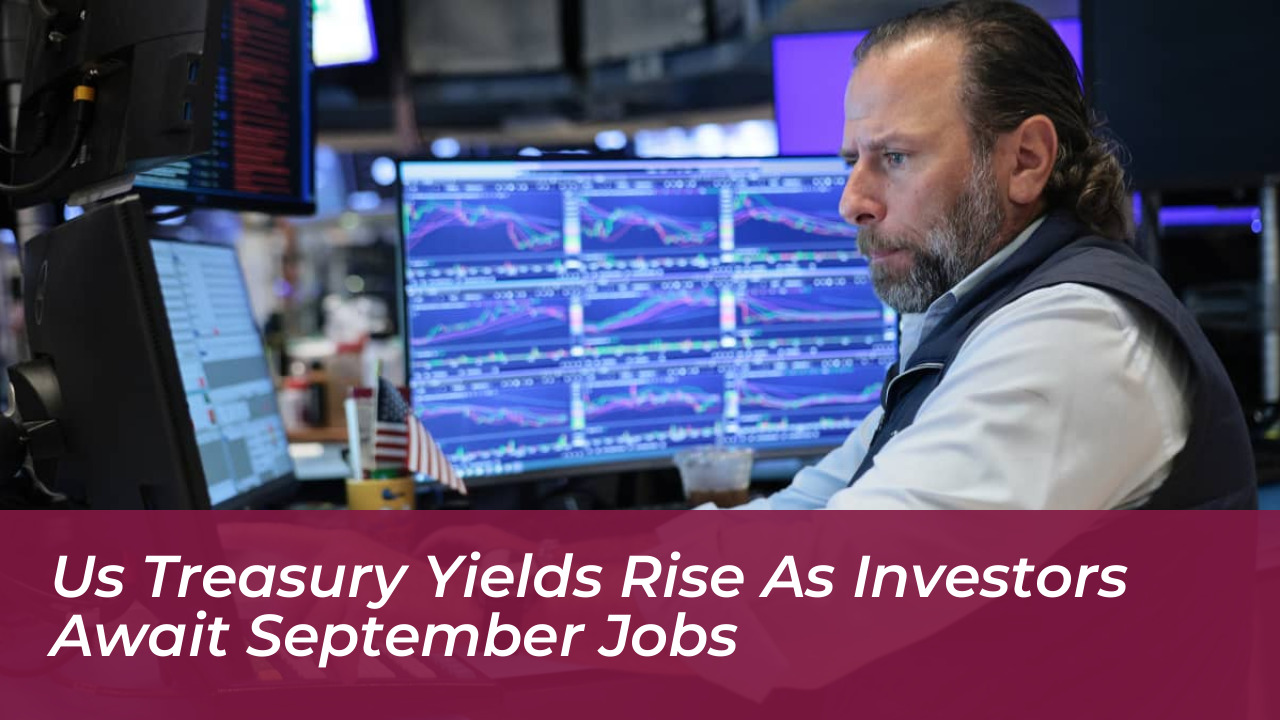
U.S. Treasury yields moved slightly higher on Friday. Financial markets evaluated a week marked by a global government bond selloff while awaiting the release of critical U.S. employment statistics. The market movements reflect ongoing anxieties regarding persistent inflation and hawkish statements from central bank officials. These factors have reinforced expectations that borrowing costs will remain elevated for an extended period.
Due to high traffic on this story, please verify you are not a bot to instantly unlock the remaining content. Takes only 5 seconds!
Verify & Continue ReadingBenchmark Treasury Yield Movements
The benchmark 10-year Treasury yield rose less than 1 basis point to 5.243%. It had reached multiyear peaks earlier in the week on Thursday. Meanwhile, the 30-year Treasury bond yield climbed over 1 basis point to 5.618%, coming off a striking 24-year high recorded in the prior session. In contrast, the 2-year Treasury note yield remained virtually unchanged at 4.787%. One basis point is equal to 0.01%. Bond yields and prices move in opposite directions.
The modest uptick in U.S. yields coincided with easing pressure on global debt instruments elsewhere. Benchmark 10-year yields across major European economies dropped by approximately 3 basis points following heavy selling earlier in the week. Analysts note that these international fluctuations underscore a broader, synchronized reassessment of sovereign debt values.
Market Expectations and the Upcoming Jobs Report
On Friday, investors tuned in for September’s crucial nonfarm payrolls report. Dow Jones consensus estimates projected that the U.S. economy added 84,000 jobs, with the unemployment rate expected to hold steady at 4.1%. Market participants closely parse these figures to gauge the resilience of the labor market and its potential impact on upcoming Federal Reserve policy decisions.
"Clearly, the monthly jobs reports are always a macro highlight, but this is an important one, as the continued data resilience has been a huge factor supporting US risk assets, and it’s also given the Fed space to start hiking rates," Deutsche Bank analysts wrote in a note to clients.
Federal Reserve Outlook and Interest Rate Probabilities
Following weeks of shifting commentary from central bank policymakers-including debates over whether sticky inflation warrants further tightening-traders are recalibrating their expectations. CME Group’s FedWatch Tool indicates that traders are currently pricing in a 72% chance that the central bank will keep interest rates unchanged during its upcoming October meeting.
- 10-Year Treasury Yield: Up less than 1 basis point to 5.243%
- 30-Year Treasury Bond Yield: Up over 1 basis point to 5.618%
- 2-Year Treasury Note Yield: Unchanged at 4.787%
- Market Consensus: 84,000 jobs added with a 4.1% unemployment rate
Broader Economic Pressures and Investor Sentiment
Investor caution extends beyond domestic employment figures. Persistent concerns over elevated energy prices, driven partly by Middle East conflicts, continue to weigh on markets. Worries regarding high national debt levels and fiscal policies also weigh heavily on long-term bond market outlooks. International institutional investors have begun trimming government debt allocations, pointing to a more cautious global fixed-income environment heading into the final quarter of the year.