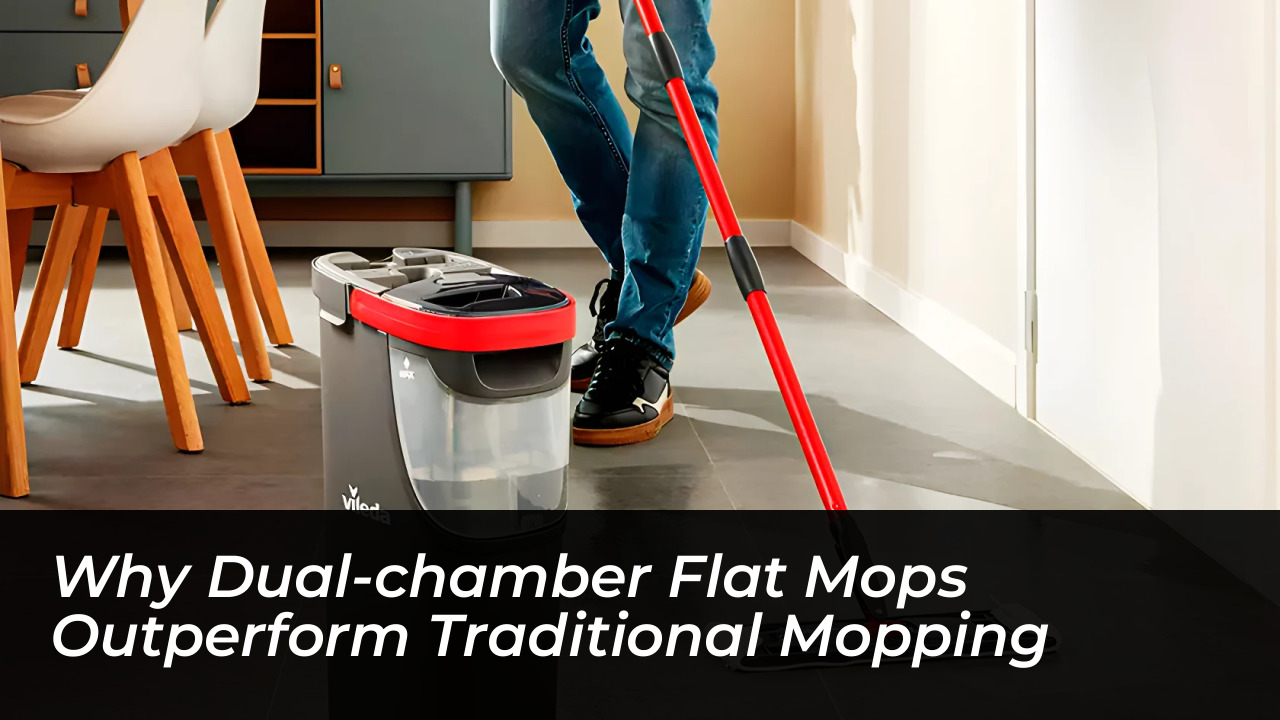
For decades, household floor cleaning relied on a simple, flawed formula: a cotton string mop and a single-cavity bucket filled with soapy water. While familiar, this traditional setup forces users to continuously drag contaminated runoff back across bare floorboards. Dual-chamber flat mop systems have emerged to solve this persistent flaw in domestic cleaning, transforming how homeowners maintain delicate surfaces like engineered hardwood, natural parquet, and moisture-sensitive tile.
Due to high traffic on this story, please verify you are not a bot to instantly unlock the remaining content. Takes only 5 seconds!
Verify & Continue ReadingBy isolating dirty wastewater into an independent recovery tank while feeding fresh, controlled liquid to an ultra-dense microfiber pad, modern flat mop configurations eliminate floor pooling and protect delicate flooring from scratches and warping. Understanding the mechanics behind this cleaning shift reveals why traditional mopping is rapidly becoming a relic of the past.
The Hidden Flaw of Single-Cavity Mop Buckets
The defining weakness of traditional single-bucket mopping is water contamination. After the initial dip and wring, every subsequent rinse deposits dislodged soil, fine grit, and bacteria right back onto the mop head. This turns the cleaning liquid into a murky suspension of abrasive particles.
When this dirty liquid is pushed back across adjacent floor areas, it leaves behind micro-scratches and a dulling residue that compromises protective floor sealants over time. Daily foot traffic brings an unavoidable accumulation of abrasive dust, accidental spills, and tracked-in debris. Dragging a saturated string mop across finished seals leaves standing puddles that seep into plank seams, causing swelling and warping in natural timber.
How Dual-Chamber Water Separation Works
The architecture of modern systems-such as the Vileda H2Pro, True & Tidy Square Spin Mop, and various multi-chamber flat sets-eliminates cross-contamination entirely through mechanical water isolation. These systems utilize dedicated compartments to keep clean solution and dirty wastewater physically separated throughout the entire cleaning session.
As the flat microfiber pad passes through an integrated wringing mechanism or scraper blades, dirty runoff funnels directly into an isolated drainage reservoir. Meanwhile, a separate clean fluid chamber re-wets the pad to the exact moisture level required for safe contact. This balanced moisture control prevents surface puddling on moisture-sensitive timber and ensures that every pass across the floor utilizes uncontaminated solution.
Key Engineering Advantages Over String Mops
- Controlled Dampness: Prevents oversaturation, allowing floors to dry rapidly and reducing slip-and-fall hazards.
- Microfiber Density: High-density synthetic split-fibers lift dirt mechanically, cutting down on heavy chemical and water use.
- Ergonomic Handling: Telescopic aluminum or stainless steel handles reduce lumbar strain and provide rigid leverage.
- 360-Degree Maneuverability: Ultra-flat swivel heads slide easily beneath low-clearance furniture and into tight wall corners.
Comparing Floor Care Efficiency: Flat Mops vs. Traditional Setups
To fully appreciate why homeowners and facility managers are transitioning away from standard buckets, a direct comparison of performance metrics highlights the operational differences:
| Feature / Metric | Traditional String Mop & Single Bucket | Modern Dual-Chamber Flat Mop System |
|---|---|---|
| Water Hygiene | Shared water container; clean and dirty liquids mix immediately. | Strictly isolated clean solution and wastewater recovery chambers. |
| Surface Compatibility | Risk of water damage and warping on hardwood and parquet seams. | Engineered for safe use on hardwood, tile, marble, and laminate. |
| Coverage Per Fill | Requires frequent water changes every few hundred square feet. | Cleans up to 1,000 to 3,000 square feet depending on tank capacity. |
| Mop Head Lifespan | Cotton fibers degrade quickly; lasts roughly 30 wash cycles. | Reusable microfiber pads withstand up to 500 machine-wash cycles. |
Protecting Hardwood and Tile Floor Finishes
Widespread consumer assumptions often dictate that visible soaking yields a cleaner hard-surface floor. In practice, flooding hard finishes dissolves top-coat sealers and forces particulate matter directly into grout joints or parquet seams. Porous materials like terra cotta, marble, and natural wood require controlled moisture rather than soaking saturation.
Flat microfiber systems rely on electrostatic grab and fiber density instead of fluid volume. The specialized pads glide smoothly, capturing fine dust and lifting stubborn stains in a single physical pass. By preventing standing water, these systems safeguard flooring investments against premature wear, edge-warping, and sealant degradation.
Complementary Cleaning Practices for Optimal Results
Upgrading your everyday floor care routine extends beyond purchasing a new bucket. To achieve spotless results across diverse home layouts, pair your dual-chamber flat mop with complementary cleaning habits:
- Pre-Clean Debris: Always sweep or vacuum loose dirt and pet hair before damp mopping to prevent turning fine grit into abrasive mud.
- Match Pad Dampness: Follow manufacturer recommendations regarding plank sealants to select appropriate moisture levels.
- Proper Laundering: Machine-wash microfiber pads without fabric softeners to maintain electrostatic absorption across repeated cleaning cycles.
- Vertical Storage: Hang mop heads and store tanks dry to inhibit bacterial growth and mold formation.
Frequently Asked Questions
Why is a single-chamber mop bucket harmful to hard floors?
Single-chamber buckets mix clean solution and dirty runoff together. Every time you rinse the mop, you reintroduce dislodged soil and bacteria back onto the mop head, redistributing grime across your hardwood or tile rather than removing it.
How do dual-chamber flat mops prevent water damage on hardwood?
These systems use integrated mechanical wringers and isolated clean-water reservoirs to deliver precise, measured moisture to the microfiber pad. This prevents excess pooling, standing water, and liquid seepage into natural wood seams.
Are microfiber flat mop pads reusable?
Yes. Unlike traditional cotton string mops that degrade rapidly, high-density microfiber pads are machine-washable and designed to withstand hundreds of wash cycles while retaining their cleaning efficacy.
Do dual-chamber systems reduce cleaning time?
Yes. Because the clean water stays uncontaminated and the bucket covers significantly more square footage per fill, users do not need to constantly empty and refill the bucket midway through a cleaning session.
Can dual-chamber flat mops be used on tile and laminate floors?
Absolutely. Dual-chamber flat mop systems are engineered for versatility, safely cleaning hardwood, engineered wood, laminate, ceramic tile, luxury vinyl plank, and marble surfaces.